

Last Tuesday, Mark discovered that bringing home a second pup wasn’t the “instant friendship” he imagined when his older dog began snarling at the front door. It’s a high-stakes moment that contributes to the 15% of owners who return a pet within the first seven days due to household tension. You want a happy, integrated pack, but the fear of a territorial fight is keeping you on edge. We understand that frustration. You deserve the confidence that comes with knowing exactly how to introduce dogs without the chaos.
At Sit Means Sit, we transform that anxiety into absolute mastery. Our approach isn’t about crossing your fingers; it’s about reliable, off-leash control. We promise to replace your confusion with a proven framework that ensures safety from the very first sniff. This guide breaks down our industry-leading method for neutral territory meetings, household boundaries, and the consistent leadership required for a lifetime of harmony. Get ready to take charge and create the peaceful, adventurous home your dogs deserve.
Key Takeaways
- Master the art of the first impression by prioritizing calm focus and total control over immediate social interaction.
- Discover the Parallel Walk Protocol, our proven method for how to introduce dogs by building focus and neutralizing distractions in motion.
- Gain the confidence to handle high-stakes reactivity and “lock-on” behavior with techniques that ensure off-leash control in any environment.
- Secure long-term harmony in your home by implementing a 48-hour decompression period and removing high-value triggers before entry.
- Identify the critical signs that require professional intervention and see how immersive training can rapidly transform social struggles into success.
The Foundation of a Successful Canine Introduction
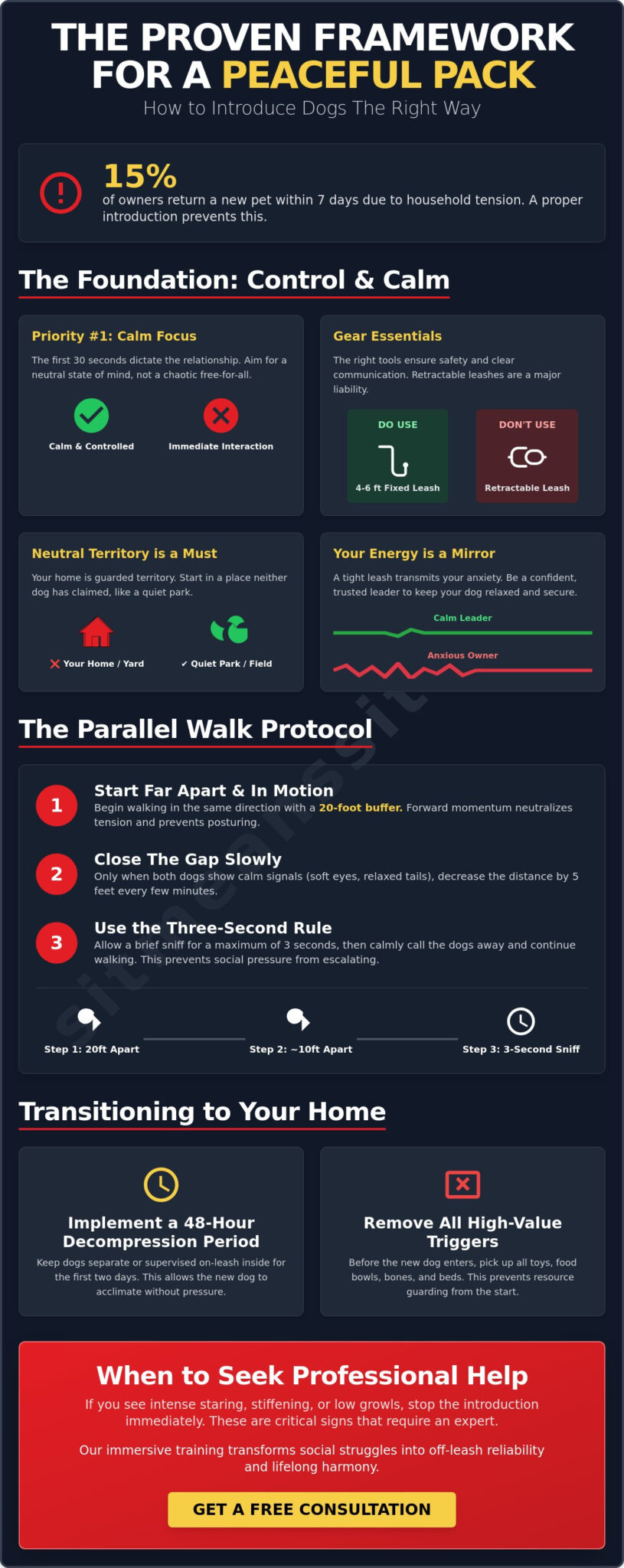
A successful introduction isn’t a chaotic free-for-all; it’s a controlled process that prioritizes calm focus over immediate social interaction. When you are learning how to introduce dogs, you must understand that the first 30 seconds often dictate the long-term trajectory of the entire relationship. A botched first meeting can create 6 to 12 months of avoidable tension and remedial training. We focus on achieving a neutral state of mind for both the handler and the dog before any physical contact occurs. This ensures that the dogs remain in a learning frame of mind rather than a reactive or defensive one.
Preparation begins with your gear. Use a 4-6 foot fixed leash for every introduction. Retractable leashes are a massive liability because they provide zero physical control and can cause friction burns or entanglement injuries if the dogs move suddenly. A fixed leash allows you to communicate clearly through the line without the ambiguity of a spring-loaded cord. Our goal is always “freedom through obedience,” and that starts with using the right tools to maintain safety and reliability in high-stakes environments.
Neutral Territory: The Only Place to Start
The most common mistake owners make is introducing a new dog at the front door. This is a high-pressure zone where the resident dog feels a natural instinct to guard their territory. Instead, choose a location neither dog has claimed or frequented regularly. A spacious, quiet park or an open field is the ideal setting. These environments minimize environmental stress and provide enough room for the dogs to observe each other from a distance of at least 20 feet. Understanding canine body language helps you identify when a dog feels crowded, so having that extra space is vital for a peaceful start.
The Role of the Handler’s Energy
Your dog is a mirror of your emotions. If you’re nervous, they’ll be nervous. Tightening the leash transmits anxiety directly down the line, signaling to your dog that a threat is present. You must maintain a confident, trusted leader persona to keep the dogs relaxed. Use short, declarative commands to set the tone for the meeting. When you provide clear boundaries, your dog feels secure. By mastering how to introduce dogs with a calm and assertive presence, you replace owner frustration with a sense of empowerment. In our 15 years of industry-leading experience, we’ve seen this shift in handler energy transform thousands of potentially volatile situations into successful, lifelong bonds.
Step-by-Step: The Parallel Walk Protocol
Movement is a powerful tool for neutralizing tension. Static, face-to-face greetings often lead to posturing or defensive behavior because dogs feel trapped by the leash. Learning how to introduce dogs effectively starts with the parallel walk. This method uses forward momentum to keep dogs focused on the walk rather than the stranger at the end of the other leash. It builds a shared experience without the pressure of direct eye contact.
Begin the session at a distance where both dogs remain calm. For most pairs, this means a 20-foot buffer on opposite sides of a street or a wide field. Walk in the same direction at a steady pace. Keep the leashes loose; a tight leash signals your own anxiety to the dog. Aim for 10 minutes of synchronized walking before you even consider narrowing the gap. If you notice your dog is struggling to stay calm, our trainers can help you establish reliable obedience in high-distraction environments.
Closing the Gap Safely
Only move closer when both dogs show soft eyes and relaxed tails. If a dog is stiff or staring intensely, maintain your current distance. Once they are walking calmly, decrease the space by five feet every few minutes. This gradual approach creates a sense of safety. When you finally allow the dogs to interact, use the Three-Second Rule. Allow a quick sniff for exactly three seconds, then immediately move away. This short burst of contact prevents the social pressure from boiling over into a snap or a growl. This protocol is the gold standard for how to introduce dogs because it mirrors natural pack behavior where animals move together toward a common goal.
Handling Early Excitement or Barking
Not all noise is a sign of trouble. You must distinguish between “happy-frustrated” barking and genuine aggression. Frustrated dogs often lunge or whine because they want to play but lack the impulse control to wait. Aggressive dogs show stiffened bodies and low, guttural growls. Reading body language is a skill every owner needs. Best Friends Animal Society’s guide offers excellent insights into these subtle shifts in canine communication.
- Use Redirection: If your dog barks, use a quick command to regain their focus. A sharp “Sit” or “Heel” reminds them that you are the leader in this situation.
- Increase Distance: If the barking persists for more than 30 seconds, you are too close. Immediately increase the distance to reset their emotional state.
- End on a Win: Always stop the session while both dogs are behaving well. Ending on a high note ensures the next meeting starts with a positive association.
Consistency is the key to transformation. By following this structured protocol, you replace chaos with control. You aren’t just managing a meeting; you are teaching your dog how to exist peacefully in a world full of distractions. This is how you achieve true freedom through obedience.
Managing High-Stakes Distractions and Reactivity
High-stakes introductions require more than just hope. They require total control. When you are learning how to introduce dogs, you will likely encounter a dog that “locks on” or fixates. This intense, unblinking stare is a precursor to reactive behavior. If your dog is staring, they aren’t listening. You must break that mental loop immediately to keep the situation safe.
Many owners rely on “treat-only” methods, but these frequently fail during high-arousal moments. A piece of chicken cannot compete with the adrenaline of a potential fight. When a dog’s arousal hits a peak level, their brain stops processing food rewards. They aren’t being stubborn; they are physically unable to focus on a snack. This is why clear, consistent communication is the only way to ensure safety.
We utilize the Remote Training Collar to provide that necessary clarity. It acts as a digital tap on the shoulder that pierces through the distraction. This tool provides the foundation for off-leash control even while the dogs are on a leash. It turns your commands into a definitive contract. When you say “Sit,” it happens regardless of what the other dog is doing. This reliability is the difference between a peaceful greeting and a chaotic vet visit.
Achieving Reliable Focus
Your dog needs to understand that the presence of another animal is not a signal to lose their mind. Professional dog behavioral training prepares your pet for social success by proofing behaviors in the real world. We move beyond the quiet living room and into high-stress environments. This process transitions your dog from reacting to listening. By the time the introduction happens, your dog is already conditioned to prioritize your voice over their own impulses.
Introducing Reactive or Aggressive Dogs
Safety protocols are non-negotiable for dogs with a history of lunging or biting. Muzzles are a fantastic tool for these scenarios. They provide a safety net that boosts handler confidence. When you aren’t worried about a bite, your body language stays calm, which helps the dog stay calm too. If your dog’s reactivity is unmanageable, you need aggressive dog training to regain a sense of security. We focus on establishing strict boundaries and predictable outcomes. Knowing how to introduce dogs with a history of aggression starts with a foundation of absolute obedience and expert supervision.
Transitioning the Introduction to Your Home
You’ve successfully handled the neutral ground meeting. Now, the real work begins. Bringing a new dog into your home requires a tactical approach to prevent territorial friction. Your home is the resident dog’s kingdom, and you must manage the transition with absolute authority. This isn’t just about walking through the front door; it’s about setting a foundation of respect from the very first second.
Implement a strict 24 to 48-hour decompression period. During this window, dogs should remain physically separated inside the house. This allows the new arrival to lower their cortisol levels and process their new surroundings without the pressure of a roommate. High stress leads to reactive behavior, and decompression is the cure. Use crates and baby gates to create a “see but don’t touch” environment. This setup allows them to observe each other’s routines safely while you maintain total control of the space.
Before any dogs enter the house, perform a sweep of the environment. Remove every high-value trigger. This includes:
- Favorite squeaky toys and chew bones
- Food and water bowls
- Bedding that the resident dog “claims”
- Tight hallways or “dead ends” where a dog could feel cornered
Guarding is a natural instinct, but you can prevent it by removing the objects worth guarding. Establish clear household boundaries early to ensure neither dog feels the need to police the other.
The First Walk into the House
Don’t just open the front door and hope for the best. Bring your resident dog back outside for one final pack walk with the new dog before entering. Once you reach the threshold, let the new dog explore the yard and the interior alone for 20 minutes. This reduces the “intruder” sensation for the resident dog because the new dog’s scent is already present. When they finally interact inside, keep both leashes on. Let them drag the leashes for at least 60 minutes. This gives you a handle to grab if you need to redirect energy instantly.
Long-Term Integration Strategies
Success is measured by the first month, not just the first day. Schedule 15 minutes of individual one-on-one time for each dog every day. This prevents jealousy and ensures your bond stays strong with both animals. Professional dog obedience training provides the common language your household needs to thrive. When both dogs understand the same set of commands, you gain the ability to manage distractions and prevent flare-ups before they start.
Learning how to introduce dogs effectively means staying vigilant during “down-time.” Watch for stiffened body language or fixed staring. If you see tension, use a command to break the focus. Structure creates freedom, and your leadership is what allows both dogs to eventually relax and enjoy each other’s company. Mastering how to introduce dogs is the first step toward a peaceful, multi-dog home where everyone knows their role.
When to Seek Professional Intervention
Learning how to introduce dogs is a process that requires patience and keen observation. While many owners successfully navigate this transition, there is a fine line between normal posturing and dangerous escalation. You shouldn’t simply “let them sort it out” if the energy in the room feels volatile. When safety becomes a concern, the smartest move is to step back and bring in a professional who can read the subtle shifts in canine body language that most people miss.
Professional intervention isn’t a sign of failure; it’s a commitment to your pack’s long-term success. Our trainers see thousands of dogs every year and can identify the exact moment a greeting turns from curious to confrontational. We replace the guesswork with a proven system that ensures every interaction is controlled and productive.
Red Flags That Require an Expert
- Persistent Stiffening or Staring: If a dog freezes, holds its breath, or stares intensely without blinking, a strike may be imminent.
- Low-Frequency Growling: This isn’t play growling. It’s a deep, vibrating warning that doesn’t stop when you attempt to redirect the dog’s attention.
- Unprovoked Lunging: If a dog attempts to bite or lunges during a parallel walk, the foundation of trust is broken and needs professional repair.
- Shutting Down: Extreme fear, such as a dog hiding, shaking, or refusing to eat, indicates that the stress levels are too high for a standard introduction.
The Sit Means Sit Advantage
We believe in a results-oriented approach that works for any dog, any age, and any breed. When local owners struggle with how to introduce dogs in a multi-pet household, our board and train program offers the fastest path to harmony. These immersive programs take the pressure off the owner and place the dog in a structured environment where they learn social reliability 24 hours a day. This 10 to 14 day immersion builds a rock-solid foundation of obedience that carries over into the home.
Our methodology focuses on “off-leash control,” giving you the confidence to manage your dogs in any situation. We don’t just train the dogs; we empower the owners. You will go from feeling frustrated and anxious to feeling like a confident leader who can handle high-distraction environments with ease. We have helped over 100,000 families achieve a peaceful home life through our industry-leading techniques.
Don’t let tension dictate the atmosphere of your home. Contact us today for a free evaluation and start your journey to a happy, obedient home!
Start Your Journey Toward Total Canine Confidence
Mastering how to introduce dogs requires more than just a sturdy leash and a hopeful attitude. It demands a structured approach. You’ve learned that the parallel walk protocol establishes neutral ground while managing high-stakes distractions prevents reactivity before it starts. By setting clear boundaries from day one, you transform potential conflict into a peaceful partnership that thrives inside and outside your home.
Sit Means Sit brings over 25 years of experience to every session, creating “freedom through obedience” for families nationwide. Our industry-leading experts specialize in off-leash control and behavioral transformation. We deliver proven results with any dog, any age, and any breed. Don’t let the stress of a new introduction hold you back from the adventurous lifestyle you deserve. We’re here to replace your frustration with absolute pride in your pet’s behavior.
Schedule Your Free Training Evaluation Today!
Take the first step toward a happier, more harmonious household today. You’ve got the tools, and we’re ready to help you master them.
Frequently Asked Questions
Is it better to introduce dogs on or off-leash?
Start your introduction on-leash in a neutral outdoor space to maintain 100% control over the interaction. Sit Means Sit trainers recommend using a loose lead to prevent the tension that often triggers defensive lunging. When you master how to introduce dogs with this structured approach, you create the safety necessary to eventually transition to off-leash freedom.
How long does it typically take for two dogs to get used to each other?
Most dogs require 14 to 21 days to establish a stable social hierarchy and feel comfortable in each other’s presence. This three week window allows their adrenaline levels to return to baseline after the initial meeting. Consistency with household boundaries during this time ensures a smooth transformation into a peaceful, multi-dog home.
What should I do if my dogs start fighting during an introduction?
Interrupt the conflict immediately using a loud noise or a physical barrier like a baby gate. Never put your hands between two fighting dogs, as this leads to accidental bites. Once you separate them, re-establish your leadership by returning to basic obedience commands. This immediate reset shows your dogs that you’re in control of the environment.
Can I introduce a puppy to an older dog the same way?
Yes, you can use the same structured steps, but you must limit interactions to 5 or 10 minute intervals. Data shows that 60% of senior dogs find the high energy of a puppy overwhelming. By managing the puppy’s excitement through clear commands, you protect the older dog’s boundaries and build a happy relationship for any dog, any age, and any breed.
What are the signs that an introduction is going well?
Look for “play bows,” relaxed body postures, and wiggly tail movements from both animals. Understanding how to introduce dogs effectively means recognizing these soft facial expressions and rhythmic breathing patterns early. These positive markers indicate that your dogs are ready for more distractions and longer periods of shared time.
Is it normal for dogs to growl when they first meet?
Growling is a natural form of communication, but it’s a 100% clear sign that one dog needs more space. Don’t punish the growl, as this removes a dog’s ability to warn you before they bite. Instead, calmly increase the distance between the dogs and wait for their energy to settle. Our results-oriented approach focuses on redirecting that focus back to you.
Should I let my dogs “work it out” themselves?
Never let dogs “work it out” because this approach leads to physical injury and long-term behavioral trauma. You are the leader of the pack, and it’s your job to set the rules. Providing clear structure prevents 90% of household conflicts and ensures that every interaction remains safe and productive.
Can a dog behaviorist help with a dog that hates other dogs?
Professional trainers at Sit Means Sit specialize in transforming reactive dogs into confident, well-behaved companions. Our industry-leading programs have a proven track record of solving aggression issues that seem impossible to owners. We provide the tools for off-leash control, allowing you to enjoy a lifestyle of adventure without the fear of your dog’s reactions.
Comments are closed.