
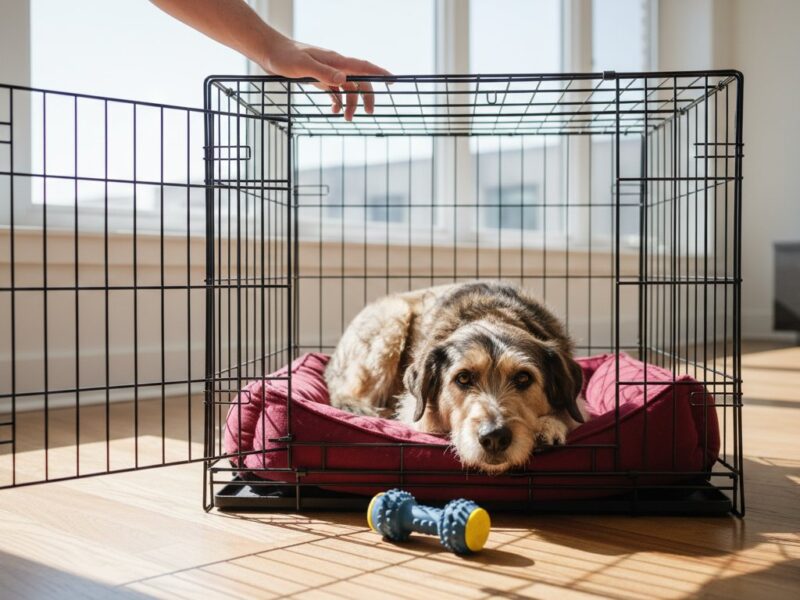
What if the very tool you fear is “locking up” your new companion is actually the secret to their total emotional freedom? Most owners feel a deep sense of guilt when considering crate training an adult rescue dog, especially when they worry about triggering past trauma or causing more stress. You want your home to be a sanctuary, not a prison; however, watching your dog whine at night or destroy the sofa while you’re away is heartbreaking. It’s natural to feel like you’re failing them, but the truth is that a lack of clear boundaries is what’s actually fueling their anxiety.
We’re here to replace that frustration with absolute confidence. By implementing a professional-grade strategy built on structure and security, you can transform your rescue dog’s transition from a chaotic struggle into a massive success. This definitive guide breaks down the exact methodology used in elite Board and Train programs to turn the crate into a high-value den. You’ll learn how to build lasting confidence, stop the nighttime crying, and create a reliable routine that leads to a more adventurous and joyful life together.
Key Takeaways
- Discover why crate training an adult rescue dog is the ultimate “reset button” for establishing security in a new environment.
- Learn to distinguish between biological den instincts and past trauma to address your dog’s unique emotional needs.
- Master a professional 4-step roadmap that uses mealtime anchors to build 100% positive associations.
- Identify the strategic hardware and placement choices that turn a simple enclosure into a high-value sanctuary.
- Recognize when an immersive professional reset is the right choice for overcoming deep-seated behavioral challenges.
Why Crate Training Is Your Rescue Dog’s Secret to Success
Crate training isn’t just a convenience for you; it’s a psychological lifeline for your dog. Think of it as teaching your dog to view a secure enclosure as their own personal sanctuary. While puppies are blank slates, adult rescues often carry the weight of a complicated history. They need a reset button to understand how your specific household functions. Crate training an adult rescue dog provides that essential pause. It allows them to observe their new world without the pressure of participating in it immediately. By applying proven dog training principles, you can ensure the crate becomes a place of high-value rest rather than a source of stress.
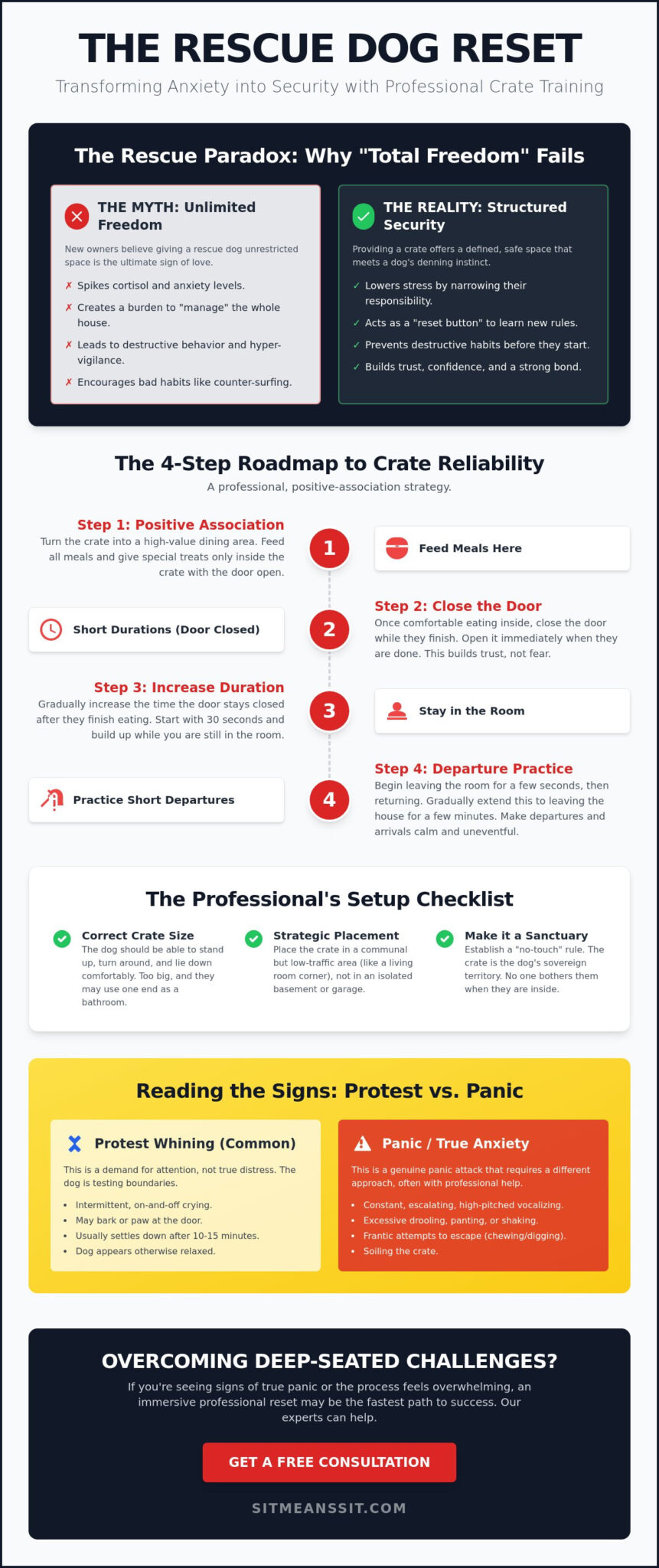
Many new owners fall into what we call the Rescue Paradox. They believe that granting total, unlimited freedom from the moment the dog walks through the door is the ultimate sign of love. The opposite is true. Unrestricted space in an unfamiliar environment actually spikes a dog’s cortisol levels. They feel the need to manage every square inch of the house. This leads to pacing, whining, and hyper-vigilance. By providing a crate, you narrow their scope of responsibility. You are telling them that you have the rest of the house handled. They can simply focus on relaxing. This structure prevents bad habits like counter-surfing or door-bolting before they ever start.
Structure as the Ultimate Form of Love
Shift your mindset today. Confinement is a human concept; security is a canine one. When you provide clear boundaries, you are offering protection. A rescue dog that doesn’t have a defined space often feels forced to patrol the home. They bark at every sound and guard every door because they think it’s their job. Structure replaces that burden with peace. It builds a relationship based on respect and clear expectations from day one. This is the fastest way to earn your dog’s trust and loyalty. Discipline isn’t a restriction. It’s the foundation for a future filled with off-leash adventures and total confidence.
Preventing Destruction and House-Soiling
A crate leverages a dog’s natural instinct to keep their sleeping area clean. This is a powerful tool for house-training an adult dog whose history you don’t fully know. During the critical decompression period, your rescue is learning the difference between a chew toy and a table leg. Crate training an adult rescue dog prevents destructive habits from taking root. It is the safest place for your pet when you aren’t there to supervise. You wouldn’t leave a toddler alone in a kitchen; don’t leave an anxious rescue dog alone with your furniture. Use the crate to ensure they stay safe while they learn the rules of your home.
Understanding the Rescue Mindset: Den Instinct vs. Past Trauma
Your rescue dog isn’t a human in a fur coat. They are biological den animals. In the wild, canines seek out small, dark, and enclosed spaces to protect themselves from predators and the elements. This instinct doesn’t disappear just because they’ve moved into your living room. When you begin crate training an adult rescue dog, you are tapping into a deep-seated desire for safety. While many owners worry that a crate feels like a cage, your dog sees a potential fortress. Adult dogs often adapt to this structure faster than puppies because they have a greater need for a “reset” from the chaos of the shelter system.
Assessing a dog’s history without a paper trail requires keen observation. You must differentiate between “confinement distress” and true “separation anxiety.” Confinement distress is often a learned response to being trapped without a purpose. Separation anxiety is a deeper emotional panic related to your absence. If you find the process overwhelming, specialized Private Lessons can provide the professional eyes needed to decode these behaviors. Following established guides for crate training an older dog will help you build a positive association from the ground up, regardless of their past.
The Psychology of the ‘Safe Zone’
Establish a “no-touch” rule immediately. The crate must be your dog’s sovereign territory where they are never bothered by children, guests, or even you. This turns the enclosure into a high-value sanctuary that actively lowers cortisol levels. When a rescue dog knows they have a place to retreat, they stop feeling the need to stay in a state of constant “high alert.” This secure environment fosters independence. It teaches them how to self-soothe in a high-stimulation world. You aren’t just giving them a bed; you’re giving them emotional autonomy.
Identifying Real Trauma Indicators
Learn to read the difference between protest and panic. Protest whining is common. It’s a demand for attention or an expression of slight annoyance. Panic is different. Look for true phobia indicators: excessive drooling, self-injury, or frantic digging at the crate floor. If your dog is simply “grumbling,” you must stay the course to reinforce the boundaries. However, if you see signs of a genuine phobia, you need to slow the process down. Crate training an adult rescue dog requires a balance of firm leadership and empathetic observation. Knowing when to push through and when to pivot is the hallmark of a confident owner.
Setting the Stage for Success: The Professional Setup
Mastering the environment is the first step to success. You cannot expect a transformation if the foundation is weak. Start by choosing the right hardware. Wire crates offer maximum visibility and airflow, which is ideal for dogs who want to stay connected to the family. Plastic “airline” crates provide a more enclosed, den-like feel. These are often better for dogs that are easily overstimulated by movement. Crate training an adult rescue dog requires you to match the tool to the temperament. Get this wrong, and you’re fighting an uphill battle from day one.
Strategic placement is your next priority. Do not hide the crate in a lonely basement or a drafty garage. Your dog is a social pack animal. Place the crate in the “heart of the home,” such as the living room or a quiet corner of the kitchen. This allows them to feel included without being overwhelmed. Expert advice on Crate Training for rescue dogs emphasizes that the crate should be a place of security, not isolation. Follow the “Goldilocks” rule for sizing. The crate must be large enough for them to stand up, turn around, and lie down comfortably. If it’s too large, they may use one end as a bathroom, which stalls your progress.
Creating an Irresistible Environment
Turn the crate into a high-value recovery zone. Use white noise or a fan to drown out startling household sounds. Drape a breathable cover over a wire crate to limit visual triggers. This simple step can rapidly lower a rescue dog’s stress levels. Always provide “crate-only” treats like a stuffed rubber toy. These high-value rewards ensure the dog associates the space with pleasure. Ensure the temperature is consistent and the airflow is steady. A comfortable dog is a calm dog. When you control the environment, you control the outcome.
The ‘No-Fail’ Crate Introduction
Never force your dog into the crate. Let them explore it on their own terms with the door propped open. Use the “Treat Trail” technique. Drop a line of high-value snacks leading into the back of the den. This builds immediate positive associations. Feed every meal inside the crate. This creates a powerful biological bond between the space and the dog’s most basic needs. If you find your dog is still hesitant, consider enrolling in Private Lessons to refine your approach. Patience during this phase pays massive dividends in long-term reliability.
The Sit Means Sit Dog Training 4-Step Roadmap to Crate Reliability
Success requires a definitive plan. You’ve set the stage; now it’s time to execute the strategy. Crate training an adult rescue dog is about building a sequence of wins. Each step reinforces the next. At Sit Means Sit Dog Training, we move at your dog’s pace while remaining the confident leader. If they struggle, don’t panic. Simply drop back one step and solidify the foundation before moving forward again. Consistent practice is the only way to achieve mastery.
Step 1: The ‘Open Door’ Policy. Start by making the crate a place of discovery. Prop the door open and toss high-value treats inside. Your dog should enter and exit freely. We want 100% positive association here. If they won’t go in, place the treats near the entrance and move them deeper over several sessions. Step 2: The ‘Mealtime Anchor.’ Use their biological drive to your advantage. Feed every meal inside the crate. Once they’re comfortable eating, close the door for the duration of the meal. Open it the second they finish. This teaches them that the closed door is temporary and rewarding.
Step 3: The ‘Quiet Command.’ This is where many owners fail. Never release a whining dog. You must teach them that calm behavior is the only key that opens the door. Wait for a moment of silence, then praise and release. This builds essential emotional regulation. Step 4: The ‘Distance Challenge.’ Now, build independence. Ask for a “crate” command, close the door, and step back. Start with three feet. Then ten feet. Then leave the room. If you need hands-on help mastering these transitions, our Private Lessons provide the one-on-one coaching you need to succeed.
Mastering Duration and Distance
Use the ‘yo-yo’ method to build reliability. Leave the room for five seconds, then return. Next time, wait thirty seconds. Then two minutes. This prevents the dog from predicting your return. It teaches them that you always come back. Ignore the ‘protest’ barking completely. Any attention, even a verbal correction, is a reward for the noise. Reward only the silence. Integrate this into your daily routine. Put the dog in the crate while you fold laundry or wash dishes. Normalizing the behavior removes the anxiety of being crated.
The ‘Freedom Ladder’: Moving Beyond the Crate
The crate is the foundation, not the forever limit. You’ll know your dog is ready for the next rung when they’re calm, house-trained, and non-destructive for several weeks. Start with supervised house freedom. Let them drag a leash while you watch. If they succeed, graduate them to a “safe room” like a laundry room with a baby gate. Eventually, they earn total house access. However, keep the crate available. Most dogs will continue to use it as their preferred bedroom for life. It remains their ultimate sanctuary in a high-stimulation world.
Accelerating Results: When to Seek Professional Training
Home training has its limits when you’re dealing with a dog’s complex past. Sometimes, the weight of previous trauma requires more than a DIY approach. Crate training an adult rescue dog becomes a challenge when deep-seated anxieties lead to persistent stalling or panic. You don’t have to navigate this struggle alone. A professional reset provides the clarity and consistency your dog needs to finally feel safe. This is where expertise transforms your daily frustration into a sense of empowerment and pride.
An immersive Board and Train program is the gold standard for rescue transitions. It removes the dog from the environment where they’ve practiced anxious habits and places them in a structured, professional setting. Our experts build a foundation of security around the clock, ensuring the crate is viewed as a high-value sanctuary. Once the foundation is set, private lessons ensure you master the hand-off. You’ll learn exactly how to maintain these new boundaries and keep the momentum going in your own home.
The ultimate goal is total obedience. Crate training is the structural starting point, but it’s just the beginning of your journey. True liberation comes when your dog can handle high-stimulation environments with perfect focus. Imagine a future where your rescue dog isn’t just behaving in a crate, but walking perfectly off-leash at a crowded park. We help you achieve that level of mastery through steady practice and reliable commands.
The Sit Means Sit Dog Training Advantage
We deliver results that change lives. Our approach replaces your uncertainty with absolute confidence. We use specialized tools and proven methodologies to facilitate clear communication with your dog. This isn’t about suggestions; it’s about a relationship where a directive is a definitive agreement. When you say “Sit,” it means “Sit,” anywhere and anytime. Sit Means Sit Dog Training prioritizes the bond with your animal while respecting the necessity of firm boundaries. This discipline is the key to a more joyful life for both of you.
Next Steps for You and Your Dog
Stop guessing and start leading. Schedule a free evaluation today to assess your rescue dog’s unique needs. You’ll join a community of owners who have transformed their pets from anxious rescues into confident, adventurous companions. This is your invitation to a better lifestyle. Structure is the only path to real freedom. Let’s start building that secure future together right now. Your dog is waiting for a leader; be the one they need.
Start Your Journey Toward Total Freedom
You now have the definitive blueprint to replace anxiety with authority. From understanding the biological den instinct to mastering our 4-step roadmap, you’ve moved past the “locking up” guilt and toward true security. Crate training an adult rescue dog is the first essential step in a lifelong partnership built on clear boundaries and high-value rewards. You’ve learned how to turn a simple enclosure into a sanctuary that fosters independence, calm, and lasting reliability.
Sit Means Sit Dog Training brings over 25 years of professional experience to help you bridge the gap between shelter stress and household harmony. Our specialized Board and Train programs and expert guidance for complex behaviors ensure you achieve rapid, reliable results that go far beyond the crate. We provide the technical mastery and emotional support needed to replace frustration with empowerment. We don’t just teach commands; we deliver a lifestyle change where your dog earns the freedom to explore the world with total confidence.
Take the lead and watch your companion thrive in their new life. Your adventurous future starts with a single decision. We’re ready to help you succeed.
Frequently Asked Questions
Is it cruel to crate train an adult dog that was never crated before?
No, crate training is an act of leadership that provides your dog with a necessary sense of security. Dogs are den animals by nature; they thrive when they have a predictable, enclosed space to call their own. Providing this structure isn’t about restriction. It’s about giving them a sanctuary where they can truly relax without the pressure of guarding your entire home. You are giving them a gift of peace.
How long can I safely leave my adult rescue dog in a crate?
Limit crating to four or five hours at a time during the day for an adult dog. While crates are essential for safety and structure, your dog still needs regular opportunities for exercise, hydration, and social interaction. If your schedule requires longer periods of confinement, consider a Day Training program or professional care from The Fur Seasons to ensure your dog receives the engagement they need while you are away. This balance keeps them physically healthy and mentally sharp.
What should I do if my rescue dog starts barking or howling in the crate?
Wait for a clear moment of silence before you acknowledge or release your dog. Responding to barking or howling teaches them that noise is the key to the door. This reinforces the very behavior you want to stop. Remain calm and wait for them to settle. Rewarding the quiet state is the only way to build lasting reliability and peace in your home. Discipline requires your consistency.
Should I put a bed in the crate for my rescue dog?
Start with a bare crate or a durable, chew-proof mat until you are certain your dog won’t destroy bedding. Many rescue dogs may chew or soil soft beds during the initial decompression period. Once they have demonstrated reliability and respect for their space, you can introduce a comfortable bed. Safety and cleanliness must always come before luxury during the training phase. Protect your dog by managing their environment carefully.
My rescue dog is terrified of the crate; what is the first step I should take?
Prop the door open or remove it entirely to let your dog explore the space without fear of confinement. Feed every meal right next to the crate, then gradually move the bowl inside over several days. This slow, positive exposure builds trust and removes the pressure of the enclosure. If the fear persists, specialized Private Lessons can help you navigate these deep-seated anxieties with professional precision and care.
Is it okay to use the crate as a punishment for bad behavior?
Never use the crate as a form of punishment. The den must remain a high-value sanctuary where your dog feels safe and protected. If you associate the crate with your anger or frustration, the dog will develop a negative association that destroys their sense of security. Keep every interaction with the crate neutral or positive to ensure it remains a place of recovery. Your goal is a dog that loves their space.
How do I know if my dog has separation anxiety or just needs crate training?
Distinguish between protest and panic by observing their behavior when you leave. A dog that needs crate training an adult rescue dog will often whine or bark briefly then settle down. True separation anxiety involves frantic, self-injuring attempts to escape, excessive drooling, or destructive panic. If you suspect a genuine phobia, professional intervention is necessary to safely manage their emotional state. Don’t guess when it comes to their well-being.
Can I crate train a dog that has never been house-broken?
Yes, crate training an adult rescue dog is the most effective way to establish house-breaking habits. Dogs have a natural instinct to keep their sleeping area clean. By utilizing a correctly sized crate, you encourage them to hold their bladder until you take them outside. This creates a clear routine that rapidly replaces confusion with reliable, clean behavior in your home. Structure is the fastest path to a clean house.
Comments are closed.