
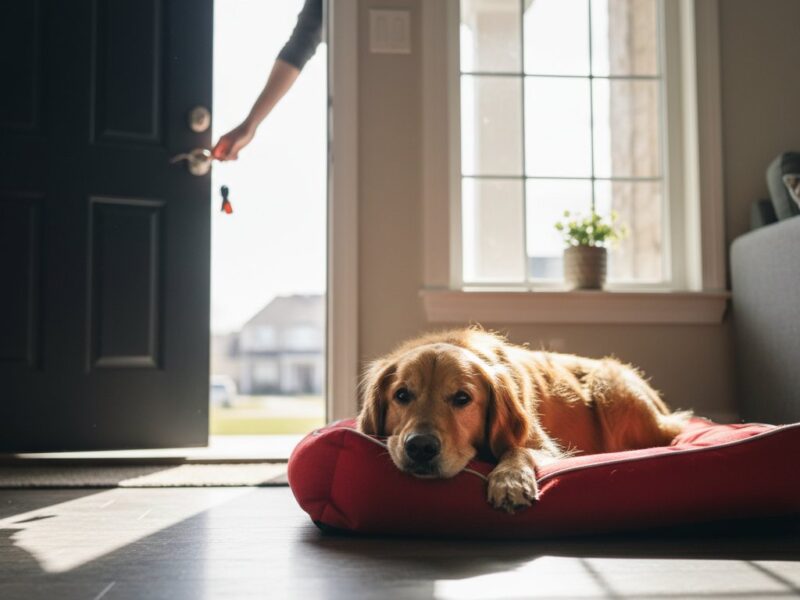
What if the solution to your dog’s frantic pacing and destructive chewing isn’t found in a pill bottle, but in the clarity of your leadership? You feel the crushing weight of guilt every time you lock the front door, knowing you might return to shredded drywall or another noise complaint. It’s a cycle of isolation that leaves both you and your dog exhausted. A 2025 re-analysis of U.S. data found that nearly 10% of dogs suffer from moderate-to-severe separation anxiety, so you aren’t alone in this struggle. You want a way out that doesn’t involve the potential side effects of long-term sedatives.
We understand that frustration, and we’re here to tell you that total transformation is within reach. You can achieve the goal of solving separation anxiety without medication by replacing chaos with a reliable behavioral structure. This guide will show you how to turn your dog’s panic into peaceful independence through clear communication and consistent practice. We’ll break down the essential shifts in your home environment and the specific training steps that build true canine confidence. Get ready to trade your worry for a dog that relaxes the moment you leave, creating a bond built on trust rather than dependency.
Key Takeaways
- Identify the root of the panic response by understanding your dog’s reliance on you as a security anchor.
- Learn why solving separation anxiety without medication addresses the behavioral core rather than just masking the symptoms.
- Implement immediate structural changes like the “Place” command to build your dog’s independent relaxation skills.
- Contrast the risks of long-term sedation with the lasting transformation and pride found in professional behavioral mastery.
- Discover how an immersive professional environment can effectively break the cycle of stress and restore peace to your home.
Understanding Separation Anxiety: Why Your Dog Panics When You Leave
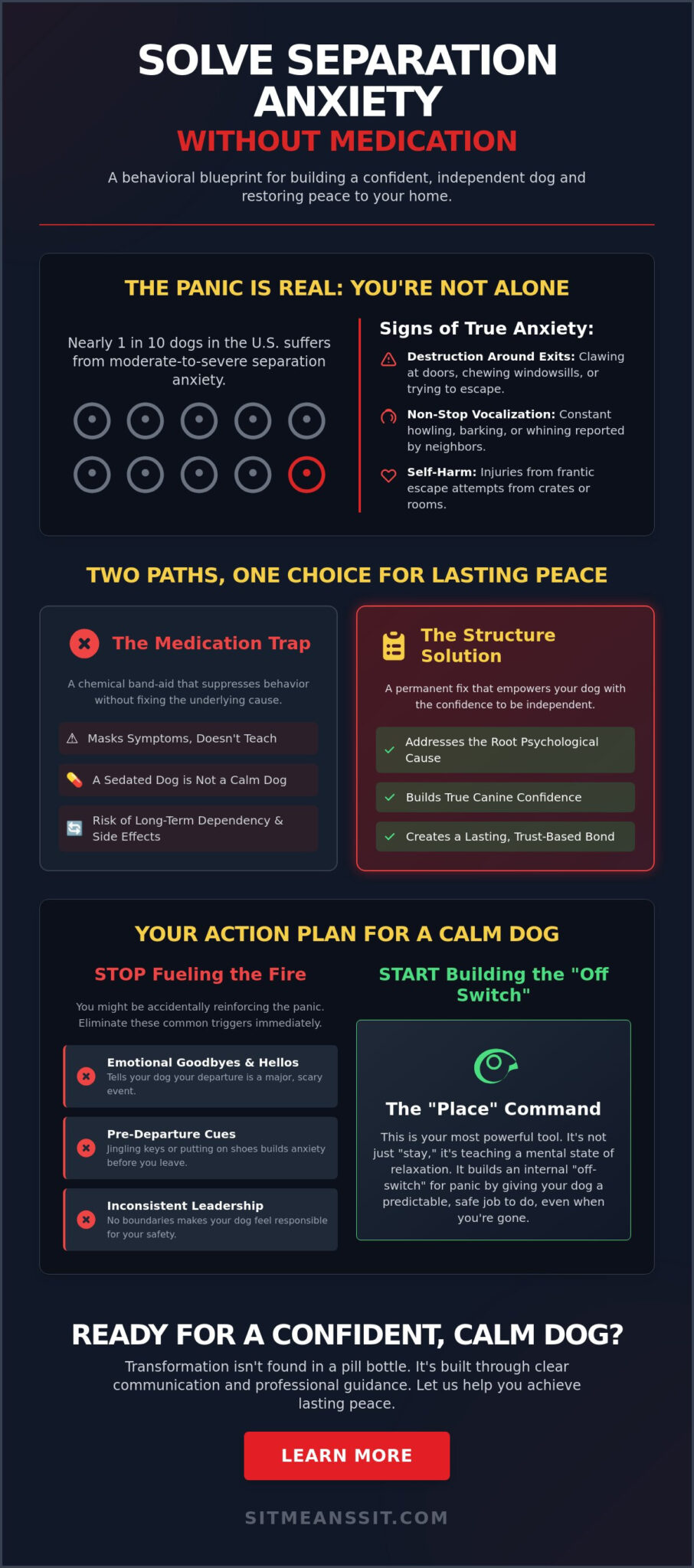
Your dog isn’t just being “naughty” when they tear up the carpet by the front door. They are experiencing a genuine panic response because they’ve lost their security anchor. For many owners, the first step toward solving separation anxiety without medication is realizing that this behavior is a physiological event, not a choice. When you leave, your dog’s brain is often flooded with cortisol, triggering a “fight or flight” response that they cannot control without your help. They aren’t trying to get revenge for you leaving; they are trying to survive a perceived crisis.
True clinical anxiety manifests in specific, heart-wrenching ways. You might see destructive behavior concentrated entirely around exits, hear reports of non-stop howling from neighbors, or find your pet with self-inflicted injuries from trying to escape a crate. According to a detailed overview of Understanding Separation Anxiety in Dogs, these signs often appear within the first 30 minutes of an owner’s departure. It’s vital to distinguish this from “boredom destruction.” A bored dog might chew a shoe because it’s fun; an anxious dog destroys a doorframe because they are desperate to find you. Separation anxiety is a behavioral state of distress that can be reconditioned.
The Difference Between Anxiety and Lack of Structure
If your dog has no boundaries at home, they often feel responsible for your safety. This creates “velcro dogs” who cannot function in a separate room, let alone a separate house. Inconsistent leadership makes your dog believe they must monitor your every move. We see a direct connection between off-leash control and emotional independence. When a dog learns to follow a command regardless of distractions, they gain the confidence to exist without hovering at your heels. Discipline isn’t a punishment; it’s the framework your dog needs to feel safe.
Common Triggers You Might Be Accidentally Reinforcing
You might be fueling the fire without knowing it. Emotional, high-energy goodbyes tell your dog that your departure is a major, scary event. Likewise, pre-departure cues like grabbing your keys or putting on specific shoes build a mountain of dread before you even touch the doorknob. Stop these rituals immediately. Even “free-feeding” plays a role in this instability. A lack of a predictable schedule contributes to an unstable mindset, making it harder for your dog to feel secure when the environment shifts. Predictability creates a calm mind.
The Science of Confidence: Why Structure Beats Medication
Pills don’t teach. Training does. While many owners look for a quick fix in a bottle, medication typically only masks the symptoms of distress without addressing the psychological root. A sedated dog isn’t a calm dog; they are simply a suppressed one. True transformation comes from solving separation anxiety without medication by rewiring how your pet perceives the world. By replacing a chemical band-aid with a solid behavioral foundation, you give your dog the tools to manage their own emotions. This shift from sedation to education is the only way to achieve lasting peace in your home.
We operate on the principle of liberation through structure. It sounds like a contradiction, but rules actually reduce a dog’s stress. When a dog has no boundaries, they are forced to make decisions they aren’t equipped to handle. This burden leads to the frantic pacing and destruction documented in ASPCA’s guide to separation anxiety. By implementing high-level dog obedience training, you create a predictable environment. Predictability is the enemy of panic. When your dog knows exactly what to expect from you and what you expect from them, their “fight or flight” response begins to fade.
Building the “Off Switch” Through Command
The “Place” command is your most powerful weapon against separation-related panic. It isn’t just about staying on a bed; it’s about a mental state of relaxation. We teach dogs to stay in a relaxed “down” even when you move into another room. This builds an internal off-switch. We often use the Remote Training Collar as a gentle communication tool to redirect a dog’s rising panic back into focus. It’s a physical “tap” that reminds them of their job, preventing the spiral into a full-blown anxiety attack. If you need hands-on help mastering these tools, our Private Lessons provide the one-on-one coaching necessary for success.
The Role of Clear Communication
Vague commands increase anxiety. If your dog has to guess what you want, their stress levels skyrocket. We move away from “suggestions” and toward definitive “agreements.” When you give a directive, it is a binary outcome: the dog performs the task and earns a reward, or they are redirected until they succeed. This clarity provides immense comfort. A dog that understands their role in the family doesn’t feel the need to control the environment or panic when the leader departs. Mastery of these commands creates a confident, neutral emotional state that lasts a lifetime.
Behavioral Modification vs. Medication: Choosing the Right Path
Choosing between a pill and a program is the most critical decision you’ll make for your dog’s future. Sedation offers a short-term fix that masks the panic, but it never reaches the root of the problem. Training provides a long-term transformation that actually changes how your dog thinks. When you focus on solving separation anxiety without medication, you are investing in a permanent skill set rather than a recurring prescription. It’s about empowering your pet to handle the world, not just survive it.
Anti-anxiety medications often come with a heavy price tag beyond the pharmacy counter. You might notice your once-vibrant dog becoming lethargic or losing their unique personality. Some drugs even place significant stress on the liver over years of use. Why settle for a zombie-like state when you can have a confident, alert companion? A professional dog behaviorist can often resolve deep-seated issues that medication simply can’t touch. They identify the environmental triggers that pills ignore, giving you a roadmap to real change.
Consider the math of your decision. Lifetime medication costs add up month after month, year after year. A results-oriented training program is a one-time investment that pays dividends in freedom and peace of mind. You aren’t just buying lessons; you are buying back your ability to leave the house without worry. The pride you’ll feel when your dog remains calm during your departure is worth more than any chemical shortcut.
When Is Training the Better Option?
Training is the superior choice for high-energy dogs who need a job to do. Numbing their feelings with drugs doesn’t teach them how to cope. It just makes them too tired to react. By teaching your dog to manage their own stress, you improve their overall quality of life. This process strengthens the bond between you because it’s based on mutual trust and clear expectations, not a chemical haze. You’ll see a dog that is truly liberated by the structure you provide.
The Risks of Over-Medicating
Relying solely on drugs creates a dangerous dependency. Many owners face “rebound anxiety” when a dose wears off or the medication is discontinued. The panic returns even stronger because the underlying triggers were never addressed. If you use medication, it should only be a temporary bridge to help the dog reach a state where they can finally learn. It should never be the final destination. Focus on the behavior, and the need for the bridge will eventually disappear.
5 Steps to Solving Separation Anxiety Without Medication
Stop waiting for a miracle and start creating one through action. Solving separation anxiety without medication requires a systematic approach that replaces your dog’s panic with a sense of duty. You don’t need a pharmacy; you need a plan. By following these five steps, you can rebuild your dog’s confidence from the ground up and reclaim your freedom to leave the house without a second thought.
- Establish a strict daily routine: Environmental predictability is the foundation of a calm mind. Feed, walk, and train at the same times every day to lower your dog’s baseline stress.
- Master the “Place” command: This is your dog’s sanctuary. It teaches them to remain in a relaxed state of mind while physically separated from you.
- Desensitize departure cues: Break the association between your keys or shoes and the act of leaving. Perform these actions dozens of times a day without actually walking out the door.
- Use clear communication tools: Utilize professional tools to provide instant, clear feedback when your dog begins to spiral into anxious behaviors.
- Gradually increase duration: Start with absences of mere seconds. Only increase the time once your dog remains completely neutral during the shorter intervals.
Consistency is the only way to win this battle. If you skip a step or allow “velcro” behavior on the weekends, you undermine the work you did all week. Stay disciplined, and your dog will follow your lead. If you find yourself struggling to stay consistent, our Day Training programs can provide the professional structure your dog needs to jumpstart their progress.
Mastering the “Place” Command
The “Place” command is far more than a simple “Stay.” It is a mental agreement where the dog commits to a state of rest on a specific boundary. When you tell your dog to go to their place, you are giving them a job: stay calm. We use the Remote Training Collar to reinforce this boundary with a gentle, tactile “tap.” This allows you to correct a break in position from another room without needing to rush back and physically intervene. Over time, you increase distance and distractions, proofing their confidence until they can relax even when they can’t see you.
Desensitizing Departure Triggers
Identify your dog’s “panic points” immediately. Does the sound of the garage door trigger a howl? Does grabbing your purse start the pacing? You must neutralize these triggers. Adopt a “No Big Deal” approach to every departure and homecoming. No long goodbyes. No high-pitched greetings. You want your dog to view your departure as a non-event. Create a new “Departure Ritual” that signals safety, such as putting them on “Place” five minutes before you leave. This routine tells the dog that while you are going, their world remains stable and secure.
Professional Training: The Ultimate Solution for a Confident Dog
Don’t let your progress stall at the DIY stage. While home routines and consistent commands are vital, solving separation anxiety without medication often requires a more intensive approach to break through years of ingrained panic. You’ve tried the basics. You’ve adjusted your schedule. Now it’s time to bring in the experts who handle these challenges every single day. Professional intervention isn’t just about fixing a problem; it’s about replacing your daily frustration with a profound sense of pride in your dog’s transformation.
An immersive board and train program is the gold standard for severe cases. Unlike clinical therapy that often focuses on management or sedatives, this is a total environmental reset. Your dog leaves behind the house where every corner is a trigger for anxiety and enters a world of absolute structure. This change of scenery is often the “circuit breaker” a stressed dog needs to finally start learning again. They aren’t just staying at a facility; they are undergoing a cognitive shift toward independence.
Why Board and Train Works for Anxiety
A professional training environment provides 24/7 structure that home life simply cannot match. Professional trainers are experts at reading subtle body language. We see the slight tensing of a shoulder or a change in breathing long before a dog starts barking or chewing. By intervening at the very first sign of stress, we redirect that energy into a calm, focused state. This constant reinforcement builds a new foundation of confidence. The “Reset” effect is real. Breaking the cycle of panic in a neutral environment allows the dog to realize they are safe even when they aren’t at your side.
The work doesn’t stop when your dog comes home. Our Private Lessons empower you to maintain the results we’ve achieved. We give you the tools and the confidence to lead your dog effectively. You’ll move from feeling like a prisoner in your own home to being a capable leader who can leave without a second thought. This mastery is the key to a more adventurous and joyful life for both of you.
Taking the First Step Toward Liberation
Identify the moment your dog’s needs exceed your current skill set. If you’re still coming home to property destruction or facing noise complaints from neighbors, it’s time for a professional reset. You don’t have to do this alone. Finding a dog trainer near me is the fastest way to reclaim your freedom. Stop managing the panic and start solving it. Your dog deserves a life free from fear, and you deserve the peace of mind that comes with a truly confident companion. Take action today and watch your dog thrive.
Reclaim Your Freedom and Your Dog’s Peace of Mind
You don’t have to live with the constant worry of property destruction or the guilt of leaving your dog behind. True liberation comes from replacing a chemical band-aid with a foundation of behavioral structure. By mastering commands like “Place” and using clear communication, you give your dog the confidence to be independent. Solving separation anxiety without medication isn’t just a possibility; it’s a proven reality for owners who prioritize discipline and leadership over temporary fixes.
With over 25 years of results-oriented training experience, our national network of professional trainers has encountered every challenge imaginable. We utilize our specialized Remote Training Collar methodology to bridge the gap between panic and focus, ensuring your dog feels safe even when you aren’t in the room. Don’t settle for a life of isolation or side-effect-heavy sedatives. Transform your dog’s anxiety into confidence; schedule your free consultation today! We are ready to help you build a stronger, more adventurous bond with your pet. Your journey to a calm and happy home starts right now.
Frequently Asked Questions
Can separation anxiety really be cured without medication?
Yes, you can achieve lasting success in solving separation anxiety without medication by focusing on behavioral reconditioning and clear leadership. While pills only mask the symptoms of distress, a structured environment addresses the psychological root of the panic. Most cases stem from a lack of environmental predictability and a misunderstanding of boundaries. By establishing a firm routine and teaching your dog to look to you for guidance, you replace their fear with a sense of security.
How long does it typically take to see results from behavioral training?
You can often see a significant shift in your dog’s mindset within the first few days of an intensive program like a Board and Train. Total transformation typically takes several weeks of consistent practice to fully solidify the new habits. Your dog needs time to unlearn old panic responses and replace them with calm, independent behaviors. The speed of your progress depends entirely on your commitment to maintaining the structure we establish during professional training sessions.
Is crating my dog helpful or harmful for separation anxiety?
Crating is an incredibly helpful tool when it is introduced as a safe sanctuary rather than a place of confinement. It provides a physical boundary that helps an anxious dog feel secure in a smaller, manageable space. However, you must combine crating with “Place” training to ensure your dog remains relaxed while inside. Proper crate conditioning prevents self-injury and property destruction, giving you the freedom to leave the house without worrying about your dog’s safety.
Does getting a second dog help with separation anxiety?
Adding a second dog rarely solves the problem because separation anxiety is about the dog’s relationship with you, not a lack of company. In many cases, the new dog actually picks up the anxious behaviors of the first one; this leaves you with two stressed pets to manage. Focus on building the individual confidence of your current dog first. True independence comes from your leadership and the dog’s internal confidence, not from the presence of another animal.
What is the best command to teach a dog with anxiety?
The “Place” command is the single most effective tool for building emotional independence and solving separation anxiety without medication. It requires your dog to stay on a designated boundary until released, which forces them to practice a “settle” mindset. This command teaches them that they can be physically separate from you while remaining mentally calm. Mastering this during Private Lessons ensures that your dog has a specific job to do whenever they feel the urge to hover or pace.
Will my dog hate me if I use a remote training collar for their anxiety?
Your dog will not hate you; they will actually feel more secure because of the clear communication you are providing. We use the Remote Training Collar as a gentle “tap” to redirect their focus away from a rising panic state. It is a sophisticated communication tool, not a punishment. When used correctly, it removes the confusion that causes anxiety in the first place, leading to a much more adventurous and joyful life for both of you.
How do I know if my dog has boredom or true separation anxiety?
True separation anxiety typically manifests within the first 30 minutes of your departure and is often focused on exits like doors or windows. Boredom destruction is usually more random and can happen at any point during the day. If your dog is destroying items they normally enjoy when you are home, it might be boredom. If they are panting, drooling, or hurting themselves to get to you, you are dealing with a genuine panic response.
Is my dog too old to learn how to be alone?
No dog is too old to benefit from a new behavioral structure and gain confidence. While older dogs may have more ingrained habits, they are still entirely capable of learning that being alone is a safe, non-event. The process of building independence works for seniors just as well as it does for puppies. It simply requires a steady hand and consistent practice to show them that your departure is no longer a reason for alarm.
Comments are closed.