
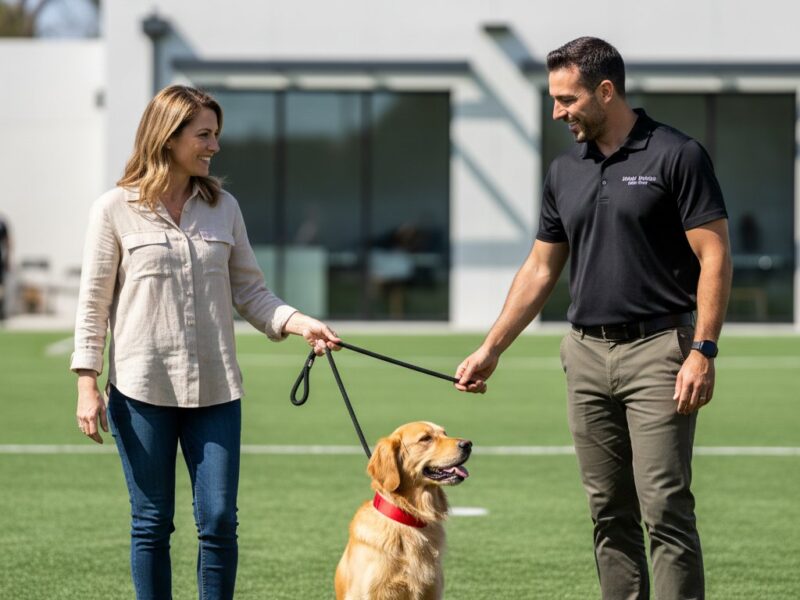
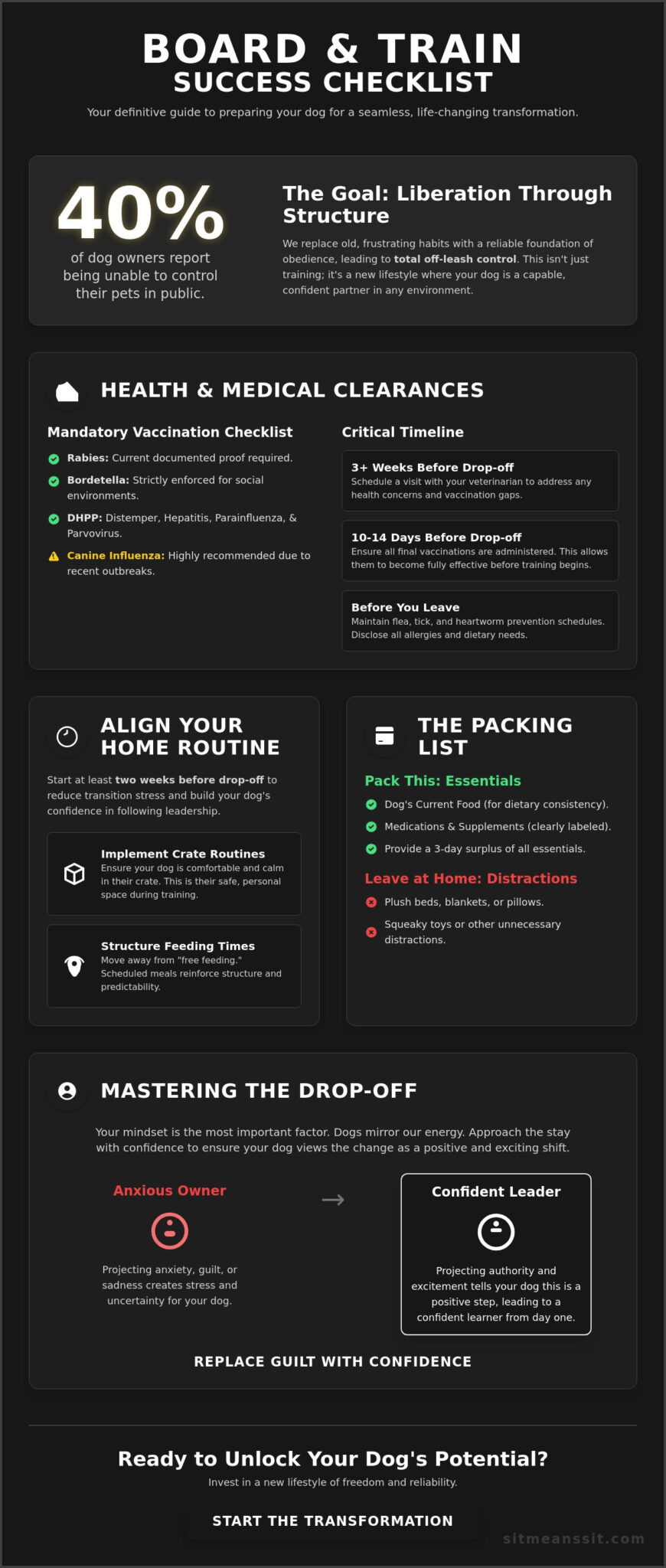
Nearly 40% of dog owners in 2026 report they cannot control their pets in public spaces. That is a staggering number. It doesn’t have to be your reality. Preparing your dog for a board and train stay is the definitive first step toward reclaiming your freedom. You want a dog that listens the first time, every time, regardless of the environment. We are here to make that happen.
We know the lead-up to drop-off day can feel overwhelming. You might be battling separation anxiety or wondering if you have the right gear ready for the transition. It’s natural to feel a bit of pressure when you’re investing in such a significant transformation for your family. You want results, and you want them to last.
This guide provides the ultimate success checklist to ensure your dog transitions seamlessly into professional training for life-changing results. We will cover everything from essential health protocols to the specific equipment needed for mastery. Let’s replace your frustration with empowerment and get your dog ready for a more adventurous and joyful life.
Key Takeaways
- Accelerate your results by mastering the behavioral reset and minimizing the adjustment period through intentional preparation.
- Ensure a safe and uninterrupted transition by completing all mandatory medical clearances and vaccinations well before your drop-off date.
- Streamline the training process when preparing your dog for a board and train stay by implementing structured feeding and crate routines at home.
- Pack with purpose by prioritizing dietary consistency and removing unnecessary distractions like plush beds or squeaky toys.
- Master the professional drop-off protocol to replace owner guilt with absolute confidence in your dog’s upcoming transformation.
Why Proper Preparation is the Foundation of Board and Train Success
Think of a Board and Train stay as a professional behavioral reset. It is a dedicated period where we strip away old, frustrating habits and replace them with a reliable foundation of obedience. Successful results don’t start at our facility door. They start in your living room. By preparing your dog for a board and train stay, you ensure that the transition is seamless and effective. We want to maximize every hour of professional instruction. We don’t want to spend the first few days helping your dog find their bearings because they weren’t ready for the change.
Our philosophy is simple: liberation through structure. Clear boundaries don’t restrict your dog; they provide the safety and clarity needed for a more adventurous life. While you can find a comprehensive guide to dog training that lists various historical methodologies, our focus is on real-world results. We provide the tools for your dog to navigate high-stimulation environments with total confidence. This process is about transformation, and that transformation is most potent when the dog arrives ready to work.
The Goal of Immersive Training
Casual boarding is just a place for your dog to sleep while you are away. Immersive training is a complete behavioral conditioning program. We are not just teaching tricks; we are building a communication system. The ultimate goal is total off-leash control. Imagine walking through a crowded park or a busy outdoor mall with your dog focused entirely on you. You shouldn’t have to worry about distractions or sudden movements. This level of reliability requires intensity. You are investing in a new lifestyle where your dog is a capable partner in every environment you visit.
Reducing Transition Stress for Your Dog
Dogs thrive on predictability. If your home life is loose and the training facility is highly structured, the contrast can cause temporary stress. You have the power to bridge this gap. Start implementing a consistent routine at least two weeks before drop-off. This prevents behavioral regression and builds your dog’s confidence in following leadership. Your mindset is the most important factor. If you project anxiety, your dog will mirror that energy. Project authority and excitement instead. When you approach the stay with confidence, your dog views the change as a positive shift. A well-prepared dog is a confident learner who begins making progress on day one.
Essential Health and Medical Clearances for a Safe Stay
Safety is our absolute priority. A healthy dog is a focused dog, and we want your pet to arrive ready for a total transformation. Preparing your dog for a board and train stay requires a proactive approach to medical clearances. Think of this as a professional standard. We maintain a clean, high-performance environment to protect your pet and every other animal in our care. A dog dealing with physical discomfort or a preventable illness cannot give their best effort. Schedule a visit with your veterinarian at least three weeks before your scheduled start date. This window provides ample time to address any gaps in protection or health concerns.
Mandatory Vaccination Checklist
As of June 2026, standard industry safety protocols require documented proof of Rabies, Bordetella, and DHPP (Distemper, Hepatitis, Parainfluenza, and Parvovirus). We follow these requirements strictly. You should also prioritize the Canine Influenza vaccine. Recent outbreaks have made this a critical layer of defense in social training environments. Ensure all vaccinations are administered at least 10 to 14 days before your drop-off day. This timeframe allows the vaccines to become fully effective and ensures your dog is not experiencing a post-shot reaction during their first day of instruction. Most owners find it easiest to email digital records directly to us, but physical copies are also accepted.
Managing Medications and Supplements
If your dog requires daily medication or specific supplements, clarity is your best tool. Label every container with the exact dosage and the specific timing required. We recommend providing a three-day surplus of all essential meds. This buffer accounts for any potential travel delays or changes to your pickup schedule. Do not forget to maintain your dog’s flea, tick, and heartworm prevention schedule. Parasites are a distraction we won’t tolerate. Disclose all allergies or dietary sensitivities to our staff during the intake process. Understanding the veterinary perspective on dog behavior reminds us that physical health and mental performance are linked. We want to eliminate every physical hurdle before training begins.
A recent vet check-up also rules out underlying issues like joint pain or respiratory concerns that could be aggravated by increased activity. Once your dog is cleared for action, they are ready to dive into the results-oriented training we provide. Clear the medical hurdles now so we can focus entirely on your dog’s obedience and confidence later.
Mental Conditioning: Aligning Your Home Routine with Professional Structure
Professional training isn’t a vacation for your dog. It is an immersive educational experience. Preparing your dog for a board and train stay involves more than just packing a bag. You must prepare their mind. At Sit Means Sit Dog Training, we operate under a specific philosophy: a directive is a definitive agreement. It is not a suggestion. When you start aligning your home routine with this level of structure, you set your dog up for immediate success. We replace confusion with clarity. This mental shift is the difference between a dog that merely survives the program and one that thrives within it.
Stop free-feeding today. If food is always available, it loses its value as a motivational tool. Transition to a structured feeding schedule where meals are provided at specific times. This simple shift establishes you as the provider and leader. It prepares your dog for the high-engagement environment of our facility. We want your dog to arrive with a “ready to work” mindset. When they understand that resources come from following a routine, they become more receptive to professional instruction. You are teaching them the value of focus before they even leave your house.
Crate Familiarization and Comfort
Crates are essential tools for safety, rest, and mealtime during professional instruction. If your dog only sees a crate when you leave the house, they may associate it with isolation. Change that narrative now. Feed your dog in their crate and provide high-value treats inside to build a positive association. Crate training is a tool for canine relaxation that provides a secure “bedroom” for your pet to decompress between training sessions. When a dog is comfortable in their crate, they can focus entirely on learning rather than worrying about their environment. This comfort prevents unnecessary stress and ensures they are well-rested for their daily sessions.
Establishing Clear Communication Channels
We use the Remote Training Collar to achieve total off-leash control. This tool acts as a clear communication channel, allowing us to provide precise feedback in any environment. Preparing for this involves focusing on engagement and eye contact during your daily interactions. Current canine behavior research highlights how a dog’s ability to focus on their handler directly impacts their learning speed. Stop reinforcing “nuisance” behaviors like jumping or begging for attention. By setting firm boundaries at home, you help your dog understand that focus leads to rewards. This mental alignment ensures that when they begin their stay, they are already primed to listen and respond to every command.
The Ultimate Board and Train Packing List: Essentials vs. Distractions
Packing for a professional program is a tactical exercise. You aren’t just sending your dog away; you’re equipping them for a mission. When preparing your dog for a board and train stay, efficiency is your primary objective. Every item you bring should serve a specific purpose in their daily routine. Start with the basics: a well-fitted flat collar, a sturdy six-foot leash, and clear identification tags. Avoid bringing harnesses or retractable leashes unless specifically requested. These can interfere with the initial assessment process. Use a permanent marker to label every single item with your dog’s name. This simple step ensures facility logistics run smoothly and your gear remains organized throughout the stay. We want to spend our time training your dog, not searching for unlabeled equipment.
Food and Nutrition Protocol
Consistency is the bedrock of physical health. Changing a dog’s diet abruptly can lead to digestive upset, which distracts from their training progress. We require you to provide the food your dog eats at home to keep their system stable. Pre-portion every meal into individual, sealed plastic bags. This eliminates guesswork for the staff and ensures your dog receives the exact caloric intake they need for high-energy training days. Always pack enough food for the entire stay plus a three-day surplus. This buffer is essential for any unexpected schedule changes. If you use specific high-value treats for specialized reinforcement, include those in a separate, labeled container. High-quality fuel leads to high-quality performance.
What to Leave at Home
It is tempting to pack your dog’s favorite squeaky toy or an expensive plush bed. Don’t do it. In a professional facility, personal toys can lead to resource guarding or become major distractions during rest periods. We maintain a focused environment where the goal is mastery, not play-time chaos. Plush beds are also a liability. They are easily damaged during high-stimulation days and are difficult to sanitize compared to the professional-grade elevated cots we use. Simple is always better. We provide the structure and the environment. You provide the fuel and the basic tools. By leaving the “fluff” at home, you help your dog stay in a working mindset.
Once you have your gear ready, you are one step closer to the obedient dog you’ve always wanted. Reserve your dog’s spot in our Board and Train program today and start the countdown to a better life. We are ready to turn your preparation into permanent results.
Mastering the Drop-Off: A Professional Protocol for Owners
Drop-off day is the final step in your preparation process. You have cleared the medical hurdles, aligned your home routine, and packed the essentials. Now, the focus shifts to your mindset. Preparing your dog for a board and train stay is about more than just logistics; it is about your mental state during the final hand-off. This moment marks the beginning of a total Board and Train transformation. Replace any lingering guilt with the excitement of what is to come. You are not sending them away. You are investing in their safety, their confidence, and your shared future freedom.
Follow our lead during the hand-off procedure. We operate with absolute confidence because we have encountered every possible behavioral challenge. Trust the professional trainer’s lead from the moment you arrive at the facility. We will establish clear communication expectations for updates during the stay so you can remain informed without interrupting the immersive learning process. This structure allows us to maintain the momentum required for rapid behavioral changes. Your job during this visit is to remain the calm, assertive leader your dog needs.
The Psychology of the Goodbye
Dogs are highly intuitive animals that mirror their owner’s emotional state. If you project anxiety or sadness, your dog will interpret the situation as a threat. Avoid long, emotional farewells that trigger stress and confusion. These drawn-out goodbyes suggest to the dog that you are worried about the transition, which can lead to unnecessary separation anxiety. Your confidence becomes your dog’s security. Keep the goodbye quick and matter-of-fact. A decisive “see you soon” tells your dog that you are in control and that they are safe in our hands. This sets a positive tone for their very first training session.
Preparing for the Homecoming
The end of the professional stay is just the beginning of your new journey together. You must plan your schedule to attend the required “Go-Home” lesson. This session is non-negotiable. It is where we transfer the mastery from our trainers back to you. We will teach you how to maintain the new boundaries and use the communication tools effectively. Ensure all family members are ready to follow the new rules before the dog returns.
- Review the new command list with everyone in the household.
- Maintain the structured feeding and crate routines you started before the stay.
- Commit to the “Directive is a Definitive Agreement” philosophy to prevent old habits from returning.
Consistency at home is what turns a successful stay into a lifetime of reliable obedience. Prepare your home for the return of a transformed, capable partner.
Claim Your Future of Reliable Obedience
Your dog is capable of incredible things. By preparing your dog for a board and train stay with the diligence we have discussed, you have already built the bridge to a better life. You aren’t just dropping off a pet; you’re launching a partnership. You are moving from a place of daily frustration to a future defined by empowerment and pride. Our expert trainers have handled thousands of unique behavioral cases, and we are ready to apply that mastery to your pet’s transformation.
We deliver results using the Sit Means Sit Dog Training Remote Training Collar to ensure your dog remains perfectly behaved even in high-stimulation environments. Our national reputation for reliable obedience is built on the bond between pet and owner, strengthened by clear boundaries. It is time to stop managing bad behavior and start enjoying an adventurous life together. Ready to transform your dog’s behavior? Schedule your free evaluation today!
The hard part is over. You have the checklist, the plan, and the professional support to make it happen. We can’t wait to see the confident, obedient partner your dog is about to become.
Frequently Asked Questions
Should I bathe my dog right before drop-off for board and train?
Yes, arriving clean is a professional courtesy that ensures your dog starts their stay feeling fresh and ready to work. It prevents skin irritants or dirt from becoming a distraction during intensive training sessions. We maintain high standards for sanitation. A clean dog integrates into the daily routine more comfortably and reflects the pride you take in their well-being.
Can I bring my dog’s favorite bed or blanket to the training facility?
No, please leave personal bedding at home to maintain a focused environment. Personal items like plush beds or blankets can trigger resource guarding or become major distractions during rest periods. We provide professional-grade elevated cots that are hygienic and safe. This keeps the training area professional and ensures your dog stays in a working mindset throughout their stay.
How much food should I pack for a two-week board and train stay?
Pack enough food for 17 days to cover the two-week program plus a three-day surplus. This extra buffer is essential for any unexpected travel delays or schedule shifts. Pre-portioning these meals into individual bags is a critical part of preparing your dog for a board and train stay. It ensures your dog maintains their exact nutritional routine and caloric intake for peak performance.
Will my dog forget me while they are away at training camp?
Your dog will absolutely not forget you during their time away. Dogs have incredible associative memory and will be thrilled to show off their new skills at the “Go-Home” lesson. The training actually strengthens your bond by replacing old frustrations with a clear communication system. You’ll return to a dog that respects your leadership more than ever before.
What happens if my dog gets sick or injured during their stay?
We contact you immediately if any health concerns arise during the program. We prioritize the well-being of every animal and follow strict safety protocols to prevent illness or injury. While regulations vary by state, such as the standards in Missouri or the upcoming standards in Massachusetts, our commitment to care remains universal. We ensure your dog receives prompt attention if they appear under the weather.
Is it okay to visit my dog while they are in the board and train program?
Visits are typically discouraged because they interrupt the immersive learning process and can cause behavioral regression. Seeing you can trigger a spike in excitement or anxiety that sets back the progress we have made. Trust the process and wait for the final transformation. We provide regular updates so you can stay connected to their journey without breaking their focus.
What kind of collar and leash should my dog be wearing at drop-off?
Your dog should arrive in a standard flat collar with a sturdy six-foot leash. Avoid using retractable leashes or harnesses as they can interfere with the initial assessment and communication. Simple gear allows our trainers to establish a clear connection from the very first moment. Ensure the collar is fitted properly and includes an identification tag with your current contact information.
Do I need to disclose my dog’s behavioral history in full before the stay?
Yes, total honesty regarding your dog’s behavioral history is mandatory for a successful outcome. We need to know about past aggression, bite history, or specific triggers to ensure the safety of our staff and other animals. This transparency is vital when preparing your dog for a board and train stay. It allows us to tailor the instruction to your dog’s specific challenges for the best results.
Comments are closed.