
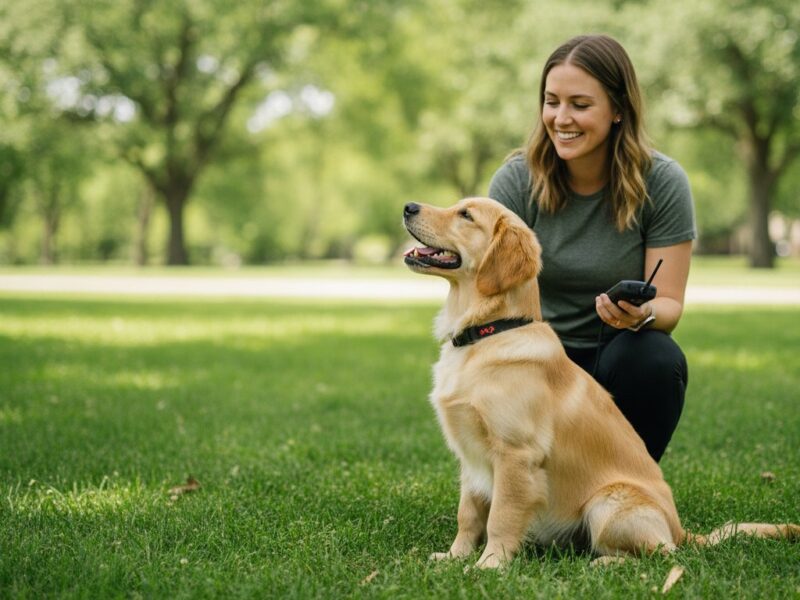
What if the very tool you’ve been told to fear is actually the secret to your puppy’s ultimate safety and freedom? You want the best for your new companion, but you’re likely exhausted by conflicting advice and “positive-only” methods that fail the moment a squirrel darts across the street. It’s natural to ask: are remote dog collars safe for puppies? You worry about causing pain or breaking that precious bond, yet you need a reliable way to keep them safe in a world full of high-stakes distractions.
We’re here to replace that frustration with absolute confidence and pride. Discover the science-backed truth about remote collar safety and learn how to use modern communication tools to build a lifetime of off-leash freedom with your puppy. This isn’t about punishment; it’s about mastery and liberation through clear structure. We’ll break down the latest 2026 safety standards, the critical age for starting, and how to use low-level “taps” to ensure your dog listens every single time. Get ready to transform your walks into adventures and your puppy into a well-behaved companion who truly understands your lead.
Key Takeaways
- Understand the science behind why are remote dog collars safe for puppies when used as a precise communication tool rather than a punishment device.
- Discover how modern TENS technology replaces old-school shock methods to get your puppy’s attention with total safety and zero fear.
- Stop waiting for the “right age” and learn how to leverage your puppy’s critical socialization window for faster, more reliable results.
- Identify why professional guidance is the only way to find your dog’s perfect “working level” and avoid common DIY training pitfalls.
- Unlock the secret to a lifetime of off-leash freedom by choosing the right structured training environment for your young companion.
Understanding Remote Dog Collars: Safety, Science, and Modern Technology
Stop thinking about training as a series of punishments. Modern remote collars are sophisticated communication tools designed to bridge the gap between you and your puppy. When owners ask, are remote dog collars safe for puppies, they are often picturing outdated technology from decades ago. Today, we use these tools to provide a gentle, consistent signal that cuts through the noise of a busy park or a tempting squirrel. It is the ultimate insurance policy for your dog’s safety. This mastery over communication transforms your relationship from one of frustration to one of absolute freedom.
Think of the stimulation as a “tap on the shoulder.” It is a neutral signal that tells your puppy to pay attention to your command. In a world full of high-stakes distractions, a verbal “sit” can easily be ignored. A remote collar ensures your directive is a definitive agreement, not a suggestion. This clarity creates a sense of security for your pet. They no longer have to guess what you want. When you combine professional instruction with proper calibration, the result is a confident, happy dog that enjoys an adventurous lifestyle.
The Science of TENS Technology
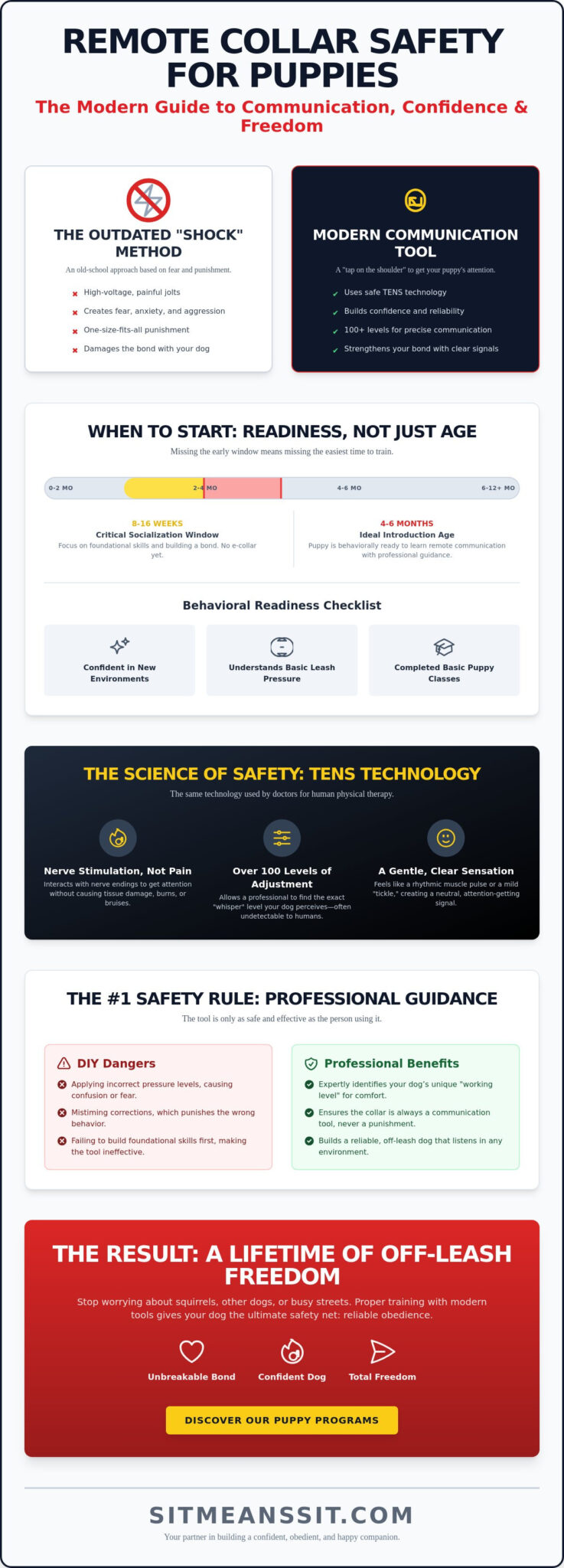
We utilize Transcutaneous Electrical Nerve Stimulation (TENS) technology. This is the same technology doctors use in human physical therapy to stimulate muscles and promote healing. On a physiological level, it interacts with the nerve endings without causing tissue damage. You can compare the sensation to a rhythmic muscle pulse or a mild “tickle” rather than a sharp pain. It doesn’t burn or bruise. Modern professional collars offer over 100 levels of fine-tuned adjustment, allowing us to find the exact “whisper” your dog needs to respond to your lead.
Why “Shock” Is an Outdated Term
The word “shock” belongs in the past. While you can find historical data on Wikipedia on shock collars regarding high-voltage devices, those are not the tools used in modern professional training. We prioritize variable levels that respect your dog’s specific sensitivity and emotional state. Think of the collar as a digital leash. It provides a reliable connection even when your dog is yards away and focused on another animal. Are remote dog collars safe for puppies? Yes, because we move away from fear-based correction and toward reliable, steady practice. Safety is a product of expert guidance that ensures the tool remains a source of guidance, never a source of trauma.
Determining Puppy Readiness: When Is Your Dog Old Enough?
Many owners believe they must wait until their dog is a year old to start serious training. This is a mistake. Waiting that long means missing the most critical developmental phase of your dog’s life. The socialization window between 8 and 16 weeks is when puppies are like sponges. They are learning how to learn. While you shouldn’t introduce a collar to an 8-week-old, you must build the foundational skills that make the tool effective later. We focus on creating a language of success long before the technology is ever turned on.
So, are remote dog collars safe for puppies? The answer depends on behavioral readiness, not just a date on the calendar. Most professionals recommend waiting until a puppy is at least 4 to 6 months old before introducing electronic communication. However, the preparation starts on day one. You need a dog that understands basic boundaries and looks to you for guidance. This preparation ensures that when the collar is introduced, it is a familiar extension of your existing bond.
Behavioral Markers for Remote Collar Introduction
Before moving to remote tools, your puppy should hit specific milestones. It is about competence, not just age. Use this checklist to gauge your puppy’s progress:
- Does the puppy understand basic leash pressure? They should follow the lead comfortably without fighting the collar.
- Is the puppy confident in new environments? A fearful dog needs more socialization work before adding new tools.
- Has the puppy completed basic puppy training classes? Foundational work is non-negotiable for safety.
The Role of Temperament in Safety
Every dog is an individual. Some puppies are “driven” and naturally push boundaries, while others are “soft” and highly sensitive. A scientific study on dog training collars highlights that the impact on a dog’s welfare depends heavily on the trainer’s skill and the dog’s disposition. Sensitive puppies often benefit the most from the clarity of a remote collar. It removes the “gray area” of human emotion and provides a consistent, neutral signal they can trust. This consistency replaces their anxiety with a clear path to success.
If your puppy shows signs of extreme shut-down or fear, it is a signal to slow down and return to basics. We never rush the process. If you are unsure if your dog is ready for this step, our Private Lessons offer the expert evaluation you need to proceed with total confidence. We help you read your dog’s signals so you can lead with authority and love. Remember, a well-prepared puppy is a safe puppy.
Communication vs. Correction: Protecting Your Puppy’s Bond
True love for your puppy isn’t just about treats and belly rubs. It’s about providing the clarity they need to navigate a world they don’t understand. Many owners worry that using a remote tool will damage their bond. The truth is quite the opposite. When you ask, are remote dog collars safe for puppies, you must look at the emotional cost of confusion. A dog that constantly guesses what its owner wants lives in a state of low-level anxiety. Our methodology focuses on “Attention-Based Training.” This means we use the collar to ask for the dog’s focus, not to punish a mistake. By securing their attention, we replace their confusion with a sense of empowerment and pride.
Think of the remote collar as a way of “whispering” at a distance. When your puppy is playing 50 yards away, you can’t whisper to them. You usually end up shouting. Shouting creates stress and tension. A low-level pulse from a collar is a neutral, quiet signal. It says, “Hey, look at me,” without the emotional baggage of a frustrated human voice. This steady practice builds a relationship based on mutual respect rather than reactive discipline. It is the key to a more adventurous and joyful life for both of you.
Building Trust Through Structure
Consistent rules are the foundation of a joyful life. Puppies crave boundaries because boundaries mean safety. While food-based lures are great for the first few weeks, they often fail in high-stimulation environments. You can’t out-compete a squirrel with a piece of kibble. Moving from lures to reliable remote communication allows your dog to experience true liberation. A dog that knows exactly what “come” means in every situation is a dog that gets to go on more hikes, visit more parks, and live a more adventurous lifestyle. Structure isn’t a restriction; it’s the gateway to freedom.
The Danger of Inconsistency
Nothing causes more frustration for a puppy than an owner who is inconsistent. If you sometimes allow a behavior and sometimes punish it, your puppy becomes fearful of the unknown. The Australian Veterinary Association policy rightly warns against using tools to inflict pain or fear. We agree. Our goal is to provide a clear “yes/no” framework that removes the guesswork. When the rules are black and white, your puppy feels secure. This clarity is the core of successful dog obedience training. It turns a chaotic household into a harmonious team where everyone knows their role and their value.
The Risks of DIY: Why Professional Instruction Is the Only Safe Way
Stop guessing and start leading. The biggest risk in puppy training isn’t the tool; it’s the lack of professional instruction. We hear it every day: “I don’t want to mess up my dog.” This is a valid concern for anyone attempting to use advanced tools without a roadmap. When you ask, are remote dog collars safe for puppies, the answer is a definitive “yes,” but only when you have an expert by your side. DIY training often leads to timing errors that leave your puppy confused and anxious. A professional ensures that every signal is fair, consistent, and perfectly timed.
Finding the “working level” is the most critical part of the process. This is the lowest possible setting your dog can perceive. It should feel like a whisper, not a shout. Without expert guidance, most owners set the level either too high, causing unnecessary stress, or too low, leading the dog to ignore the command. Working with a dog trainer near me provides the safety net you need. We help you calibrate the tool to your puppy’s unique sensitivity, ensuring they remain confident and happy throughout their transformation.
Proper Collar Fit and Maintenance
Consistency requires a perfect fit. Follow the “two-finger rule” to ensure the contact points are snug against the skin without being restrictive. You should be able to slide two fingers between the collar strap and your puppy’s neck. Proper rotation is also vital. Move the collar every few hours to prevent skin irritation and maintain a healthy coat. Never settle for cheap, big-box store hardware. Professional-grade collars offer the reliability and waterproof durability required for an adventurous, outdoor lifestyle with your companion.
The Conditioning Phase
We never just put a collar on a dog and start pressing buttons. That is the fastest way to create fear and damage your bond. The conditioning phase is about teaching your puppy exactly what the new sensation means. It is a new language, not a punishment. Professional conditioning involves several days of “pairing” the low-level pulse with known commands and positive rewards before the remote is ever used for correction. This careful introduction ensures that your puppy views the collar as a helpful guide rather than a source of stress.
Don’t leave your puppy’s safety to chance. Schedule a consultation with our expert team and take the first step toward a lifetime of off-leash freedom and pride.
Achieving Real-World Results with Sit Means Sit Puppy Programs
Imagine a life where your dog can run through an open field or walk past a busy intersection with total focus. This is the liberation we promise. When owners ask, are remote dog collars safe for puppies, they often forget the most dangerous alternative: a dog that doesn’t listen in a high-stakes environment. A puppy that bolts toward traffic or ignores a recall in a public park is in immediate peril. Our programs ensure that your training isn’t just a hobby; it’s a life-saving skill set. We provide the tools that allow your dog to explore the world safely at your side.
Our Puppy Preschool serves as the safe, structured entry point for your young companion. We focus on building engagement and confidence during those early months. For owners who want a deeper foundation, our board and train programs provide an immersive experience. We handle the heavy lifting of initial conditioning, ensuring your puppy returns home with a clear understanding of our methodology. This immersive approach is the foundation for long-term remote collar success and total off-leash control.
The Sit Means Sit Methodology
We believe in a high-energy, results-oriented approach that remains family-friendly and warm. We aren’t here to just fix behaviors; we’re here to replace your frustration with empowerment and pride. Our “Happy Dog, Happy Human” philosophy means that your pet’s well-being is always the priority. By creating clear boundaries, we give your dog the confidence to explore the world. We transform the way you communicate, turning every walk into a joyful experience rather than a stressful chore.
Next Steps for Your Puppy
Your journey toward mastery starts with a professional evaluation. We’ll help you determine the best path forward, whether that’s Puppy Preschool or moving into advanced obedience training. Remember, in our world, a directive is an agreement, not a suggestion. This clarity is what allows your dog to graduate to a lifestyle of true off-leash freedom. We invite you to a free consultation to see the Sit Means Sit difference in action. Give your puppy the key to the world and start your transformation today.
Start Your Journey Toward Total Off-Leash Freedom
You now understand that the highest form of love is providing your puppy with the clarity they need to stay safe in a chaotic world. We’ve moved past the myths to show you that are remote dog collars safe for puppies when paired with expert instruction and modern TENS technology. By focusing on attention rather than punishment, you replace confusion with confidence. This transformation isn’t just about obedience; it’s about giving your dog the key to the world through a reliable digital leash.
Founded in 1998, Sit Means Sit brings over 25 years of professional experience to your home. Our nationwide network of trainers uses proprietary remote training technology focused on low-level communication to ensure your pet’s well-being. We don’t just teach commands; we build a lifestyle of liberation through structure. It’s time to replace your frustration with empowerment and pride.
Schedule your FREE consultation and see the Sit Means Sit difference today! We are ready to help you and your puppy achieve life-changing results. Your adventurous future together starts now. Let’s build that bond of a lifetime.
Frequently Asked Questions
At what age can I start using a remote collar on my puppy?
Most puppies are developmentally ready for remote collar introduction between 4 and 6 months of age. Your dog must have a basic understanding of commands and leash pressure before you add electronic communication. We focus on building this foundation in our Puppy Preschool so the transition to a remote tool is seamless and stress-free.
Will a remote collar burn my dog’s skin?
Modern professional collars do not use heat and cannot burn your dog’s skin. What some owners mistake for burns are actually pressure sores caused by leaving the collar in one position for too long. Prevent this by rotating the collar every few hours and keeping the contact points clean. This simple maintenance ensures your puppy stays comfortable and safe.
How do I know if the level is too high for my puppy?
Your puppy will show clear physical signs if the stimulation level exceeds their comfort zone. Vocalization, jumping, or frantic head shaking indicate the setting is too high. We teach you to find the “working level,” which is the lowest setting where your dog shows a subtle sign of recognition, such as an ear twitch or a focused blink.
Can I use a remote collar for potty training or crate training?
We do not recommend using remote collars for potty training or crate training. These specific behaviors are best handled through positive reinforcement, consistent scheduling, and proper environmental management. Save the remote collar for obedience and off-leash safety where clear, distant communication is required to keep your puppy out of harm’s way.
Is a remote collar the same as a “shock collar”?
No, modern professional tools are fundamentally different from the high-voltage “shock” devices of the past. When owners ask, are remote dog collars safe for puppies, they are often relieved to learn we use TENS technology. This is the same muscle-pulse technology used in human physical therapy to provide a gentle, non-harmful signal.
What happens if my puppy ignores the collar stimulation?
If your puppy ignores the signal, it typically means the stimulation level is too low to compete with a high-value distraction. A squirrel or another dog requires a slightly higher “working level” to regain your puppy’s attention. We train you to adjust the remote dynamically so your command remains a definitive agreement rather than a suggestion.
Will my puppy always have to wear the collar?
The ultimate goal of our programs is to achieve total off-leash reliability without the constant need for tools. As your dog reaches mastery and understands their boundaries, the collar transitions into a safety net for high-risk or unfamiliar environments. You’ll eventually enjoy a liberated lifestyle where your dog listens because they understand the structure you’ve built together.
Are remote collars safe for small breed puppies?
Yes, remote collars are safe for small breed puppies as long as they weigh at least 8 pounds. Professional-grade hardware is highly adjustable, offering micro-levels of stimulation that respect the sensitivity of smaller dogs. Are remote dog collars safe for puppies of all sizes? Absolutely, provided you use correctly sized contact points and follow professional calibration steps.
Comments are closed.