
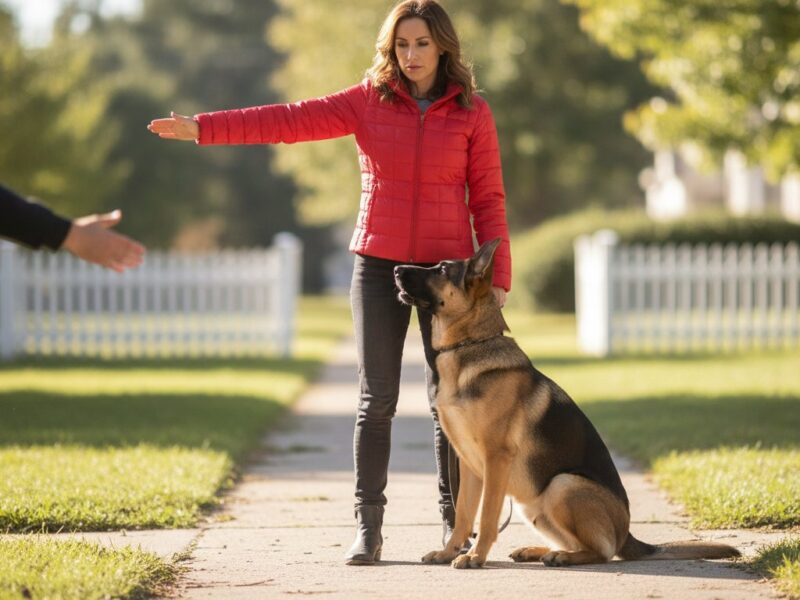
The most compassionate thing you can do for your dog isn’t giving them a treat. It’s telling a stranger “no.” Many owners feel a sharp wave of social anxiety when a random passerby reaches out to pet their dog without asking. You don’t want to be rude, but you also don’t want your dog to lose focus or feel cornered. It’s a common struggle to balance being polite with the necessity of keeping your pet safe. Learning how to advocate for your dog in public is the missing link between basic obedience and real-world mastery. You shouldn’t have to apologize for protecting your dog’s space or their peace of mind.
This guide will transform your public outings from stressful chores into confident adventures. We’ll show you how to set firm boundaries with intrusive strangers and master high-stimulation environments so your dog remains calm and looks to you for direction. You’re going to learn specific strategies for handling unwanted interactions and see how structure creates a more joyful life for both of you. We will cover everything from body language cues to using tools like the Remote Training Collar as a clear communication bridge in a crowded world.
Key Takeaways
- Shift your mindset from being a polite neighbor to becoming your dog’s personal bodyguard in high-stress situations.
- Spot subtle “Staircase of Aggression” signals like yawning or freezing to intervene before a behavioral outburst occurs.
- Master the “Body Block” and authoritative scripts to learn exactly how to advocate for your dog in public when strangers ignore your boundaries.
- Use professional obedience and the Remote Training Collar to build a reliable shared language for real-world management.
- Build your own confidence by practicing advocacy skills in controlled, supervised settings like Puppy Preschool or Group Classes.
What Is Dog Advocacy? Why Your Dog Needs a Bodyguard, Not a Politician
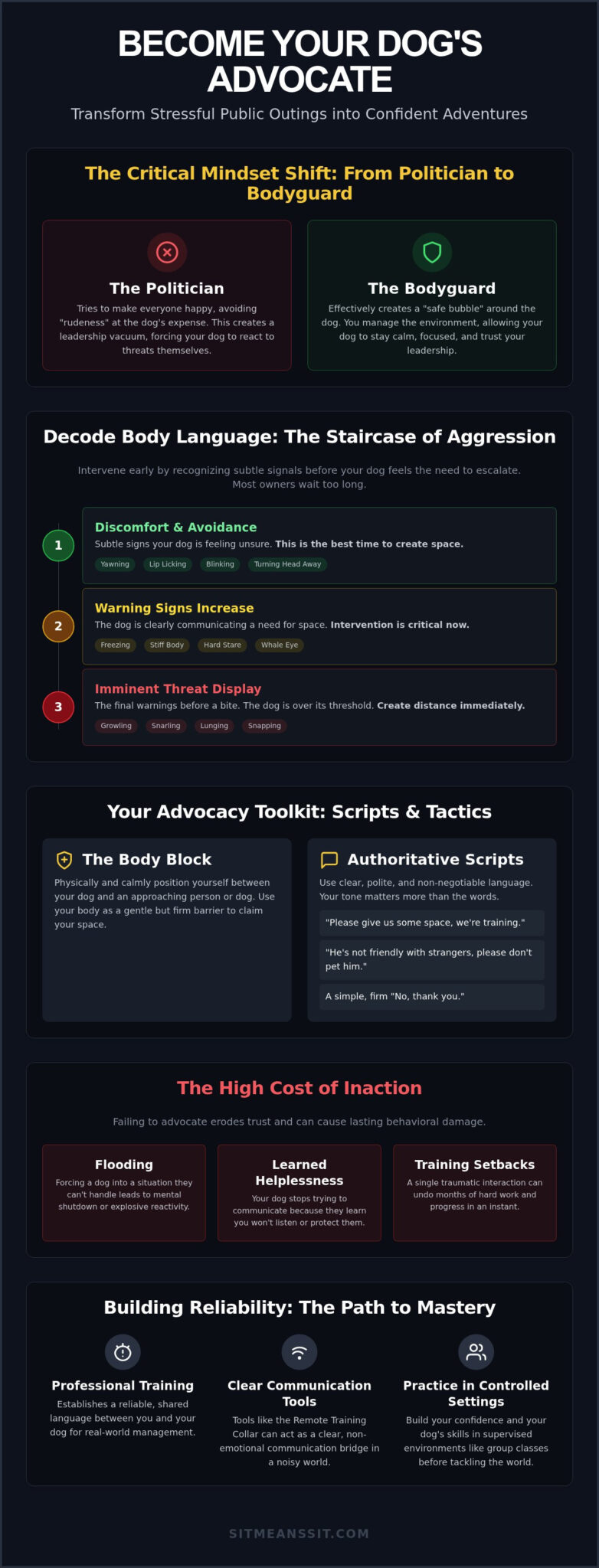
Advocacy isn’t about being mean. It’s about being effective. When you learn how to advocate for your dog in public, you’re building a protective wall around their focus. Most owners act like politicians; they try to make everyone happy. They let strangers crowd their dog because they don’t want to seem rude. This is a massive mistake. Your dog doesn’t care about your social standing. They care about their safety. A bodyguard doesn’t ask for permission to secure a perimeter. They just do it. That’s your new job.
When you fail to manage the environment, you create a leadership vacuum. Dogs are hardwired to look for a guide. If you aren’t handling the intrusive stranger or the off-leash dog charging toward you, your dog will feel forced to handle it themselves. This usually results in barking, lunging, or biting. True advocacy creates a “safe bubble.” Inside that bubble, your dog knows you have everything under control. This allows them to stop scanning for threats and start focusing on your commands.
The Consequences of Failing to Advocate
Neglecting this responsibility has real, lasting costs for your pet’s mental state. It’s not just about one bad walk; it’s about the long-term trust between you and your animal.
- Flooding: Forcing a dog into a high-stress situation they can’t handle leads to a total mental shut-down or explosive reactivity.
- Learned Helplessness: Your dog stops trying to communicate because they believe you won’t listen or protect them.
- Training Setbacks: One traumatic interaction with an “unfiltered” stranger can undo months of progress in a single minute.
If a dog feels they must defend their own space, they’ll eventually stop looking to you for direction. You lose the bond of trust that makes off-leash reliability possible. You can’t expect a dog to stay in a “place” command if they think they’re about to be jumped on by a toddler or another pet.
Advocacy vs. Making Excuses
Don’t confuse advocacy with coddling. Advocacy is not an excuse for lunging or ignoring commands. It’s the structure that makes success possible. Mastering how to advocate for your dog in public ensures that your pet remains a neutral, focused partner in any setting. You aren’t “protecting” them from training; you’re protecting the environment so training can actually happen.
Every time you say “No” to a stranger who wants to pet your working dog, you’re saying “Yes” to your dog’s progress. You’re proving that you’re a reliable leader who understands dog communication and respects their boundaries. Mastery in public requires this level of commitment. It turns a chaotic walk into a disciplined, joyful adventure where your dog feels completely secure in your leadership.
Decoding Body Language: Recognizing the Threshold Before It’s Crossed
To protect your dog, you must first read them. Most owners wait for a growl or a snap before they step in. By then, the battle is already half-lost. Mastering how to advocate for your dog in public starts with seeing the subtle signals that precede an explosion. Your dog is constantly talking to you. They use their eyes, ears, and posture to tell you when the world feels too small. If you miss these cues, you leave your dog with no choice but to escalate their communication to be heard.
Pay attention to the “Staircase of Aggression.” It begins with tiny flickers of discomfort like yawning, lip licking, or sudden scent marking. Then comes “the freeze,” where the dog becomes rigid and stares. This is the moment to intervene. If you wait until they are lunging, you have missed multiple opportunities to lead. You must also watch your own body language. Tension travels down the leash. If you white-knuckle the handle when you see another dog, you are telegraphing danger directly to your pet. Keep your hands relaxed and your movements decisive.
The threshold is the point where a dog can no longer process commands due to emotional overwhelm.
The Science of the Threshold
When a dog crosses their threshold, their brain shifts from the “thinking” prefrontal cortex to the “reacting” amygdala. Adrenaline and cortisol flood the system. This is why even the best sit-stay fails once the threshold is crossed; the dog literally cannot hear you over the internal alarm bells. Using humane training techniques involves recognizing this limit and using distance as a tool. If your dog is over-aroused, increase the space between them and the trigger. Distance lowers the volume of the distraction, allowing the brain to return to a state where it can learn and follow commands again.
Visual Cues Every Owner Must Master
Look for “Whale Eye,” which is when the whites of the eyes are visible as the dog tries to track a threat without moving their head. Ear positioning is equally telling; ears pinned back or pitched forward with intense rigidity signal high stress. Don’t be fooled by a tail wag. A happy wag is loose and involves the whole rear end, while a “tense wag” is high, stiff, and vibrates with agitation. You should also watch for displacement behaviors like sudden, frantic sniffing or scratching that seems out of context. These are signs that your dog is trying to diffuse their own anxiety. If you see these signs, it’s time to step in and reset. If you want to see these concepts in action, our dog obedience training programs help you master environmental management in real-time.
Essential Scripts and Tactics for Public Boundaries
Knowledge is useless without action. Once you recognize your dog’s threshold, you must use your physical presence to maintain it. The “Body Block” is your most effective tool. Step between your dog and the approaching distraction. Use your torso and legs to create a literal wall. This sends a clear message to both the stranger and your dog: I am handling this. By taking charge of the environment, you are actively preventing dog bites and ensuring your pet feels secure under your lead. Visual markers like yellow ribbons or “Do Not Pet” vests can help, but they are secondary. People often miss or ignore signs. Your voice and your body are your primary instruments of advocacy.
The “Don’t worry, he’s friendly!” owner is the most common challenge you’ll face. These owners assume their dog’s social nature gives them a pass to invade your space. Don’t fall for it. Respond with immediate authority before they get within reach. In narrow spaces like store aisles or busy sidewalks, use tactical maneuvers. A quick U-turn is a smart retreat, not a failure. You can also use the “Find it” game, dropping treats on the floor to keep your dog’s focus downward and away from the passing trigger. Learning how to advocate for your dog in public means having these tools ready before you need them.
Power Phrases for Every Scenario
Stop asking for permission to set boundaries. Use short, declarative scripts that leave no room for debate. If a stranger continues to approach, use the “Broken Record” technique. Repeat your phrase with the same tone and volume until they stop. Mastery requires consistency, not politeness.
- “We’re in training; please give us space.”
- “He’s not a fan of other dogs. Keep yours back, please.”
- “No thank you, we’re working right now.”
- “Stop. Do not approach my dog.”
Handling Social Backlash
People will take your boundaries personally. They might roll their eyes or make a comment about your “unfriendly” dog. Let them. You don’t owe a stranger an explanation of your dog’s history or your training methodology. Your priority is your dog’s trust, not a passerby’s feelings. Every time you successfully deflect an intrusive interaction, your dog’s confidence in your leadership grows. You’re proving that you are a reliable protector. This bond is the foundation of a joyful, adventurous life together. Don’t trade your dog’s peace of mind for a stranger’s approval.
Building Reliability: How Training Simplifies Advocacy
Advocacy is not just a feeling. It is a tactical operation. Many owners think they are advocating by simply being present, but presence without a plan is useless. Real advocacy requires a reliable shared language. This is where dog obedience training changes the game. It transforms your dog from a reactive animal into a focused partner. When you know exactly how to give a command and your dog knows exactly how to respond, the chaos of a busy park or a crowded patio fades away. You stop being a victim of your environment and start becoming the master of it.
Clear communication is the backbone of this partnership. The Remote Training Collar serves as a vital bridge in high-stimulation settings. It provides a tactile signal that cuts through the noise of barking dogs or shouting children. This tool allows you to maintain a conversation with your pet without having to shout or yank on a leash. Learning how to advocate for your dog in public becomes significantly easier when you have a reliable way to get their attention instantly. You aren’t just managing their stress; you are giving them a clear path to success. Engagement is your ultimate defense. A dog that is locked onto you doesn’t have the mental bandwidth to worry about public stressors.
The Power of the Place Command
A “Place” or “Settle” command is more than just a trick. It is an anchor. When you tell your dog to stay on a specific boundary, you are giving them a job to do. This mission reduces their need to scan the environment for potential threats. They don’t have to worry about the approaching stranger because they are focused on maintaining their position. We build this duration and distance in our controlled group settings, ensuring your dog can handle the pressure of the real world. This structure replaces a dog’s anxiety with a sense of purpose and pride.
Off-Leash Control as the Ultimate Advocacy
Reliable off-leash communication is the ultimate goal of our programs. Many dogs experience leash reactivity because they feel trapped and unable to move naturally. Total recall provides a level of freedom and safety that a leash simply cannot match. When your dog knows they can return to you instantly regardless of distractions, their baseline anxiety drops. This foundation is best built through immersive board and train programs that focus on real-world results. Stop settling for a dog that only listens when conditions are perfect. Master the environment and give your dog the liberation they deserve.
Mastering Public Environments with Sit Means Sit Dog Training
Advocacy is the bridge between a well-behaved dog at home and a reliable partner in the real world. At Sit Means Sit Dog Training, we don’t just teach commands; we build the confidence required to use them. Mastery isn’t about avoiding the world. It’s about owning your place in it. When you understand how to advocate for your dog in public, you replace frustration with pride. Public outings should be a source of liberation, not a cause for social anxiety. We provide the structure that allows both you and your pet to thrive in any environment.
Our philosophy is centered on the promise of liberation through structure. We believe that a dog who trusts their owner to advocate is more receptive to commands. By setting firm boundaries with the world, you create a narrative where discipline is the key to a more adventurous and joyful life. You stop being a spectator of your dog’s behavior and start being the decisive leader they need. This transformation replaces embarrassment with empowerment, allowing you to walk into any setting with absolute confidence.
Real-World Results in High-Stimulus Areas
We train for reality, not just the living room. Our Puppy Preschool and Group Classes provide a safe, supervised space to practice advocacy. These sessions simulate the distractions of a busy park or a crowded patio while giving you a professional safety net. You’ll learn to manage environmental factors while your dog remains focused on your lead. This controlled exposure builds your confidence as much as your dog’s. You’ll leave our programs knowing you can handle any intrusive stranger or off-leash distraction with total authority.
Your Journey to a Reliable Dog Starts Here
Every dog is unique. While many thrive in our standard programs, complex cases involving deep-seated reactivity might require the specialized insight of a dog behaviorist to bridge the gap. Regardless of the challenge, the goal remains reliable communication. We use the Remote Training Collar to ensure your directives are heard even in high-pressure moments. This tool facilitates the communication part of advocacy, giving you a clear, calm way to steer your dog back to focus when the world gets loud.
Stop feeling like a “bad owner” for setting boundaries. Start your transformation today. Schedule a free evaluation to see how a personalized training plan at Sit Means Sit Dog Training can change your life. Join a community where discipline leads to adventure and structure leads to joy. Take the first step toward the reliable, confident dog you’ve always wanted. Your journey to mastery begins with a single decision to take the lead.
Take Command of Your Dog’s Future
Advocacy is not a suggestion; it’s a requirement for a happy, balanced dog. You’ve gained the tools to read subtle stress signals and use assertive scripts to deflect intrusive strangers. By mastering how to advocate for your dog in public, you provide the protective structure your pet needs to remain calm in any setting. This is the bridge between basic obedience and a lifetime of freedom.
At Sit Means Sit Dog Training, our expert instructors handle all breeds and behaviors with a results-oriented approach. We utilize the Remote Training Collar to establish clear communication that leads to total off-leash control, even in high-stimulation areas. You don’t have to settle for stressful walks or social embarrassment. It is time to reclaim your confidence and empower your pet through a proven methodology.
Replace your frustration with confidence; schedule your free evaluation with Sit Means Sit Dog Training today! You deserve a life of adventure, and your dog deserves a leader they can trust. Let’s build that bond together and unlock the joyful life you both deserve.
Frequently Asked Questions
Is it rude to tell someone they can’t pet my dog?
No, it is responsible leadership. You aren’t being mean; you’re being a protector. Your dog’s mental health and safety are more important than a stranger’s fleeting desire to touch an animal. When you set a firm boundary, you prevent potential stress or reactive outbursts. Owners who prioritize their dog’s comfort over social politeness build a deeper bond of trust. Never apologize for keeping your pet safe and focused.
How do I stop a retractable-leash dog from running up to mine?
Take immediate action with your voice and body. Don’t wait for the other owner to realize they’ve lost control. Step forward, put your hand up in a “stop” gesture, and shout “Stop!” or “Keep back!” firmly. Using a loud, authoritative tone often shocks the other dog into pausing and alerts the owner to reel them in. Your physical presence acts as a shield that keeps your dog’s space secure.
What should I do if my dog crosses their threshold in public?
Exit the situation immediately. Once a dog has crossed their threshold, they are no longer in a state where they can learn or follow commands. Stop trying to “fix” the behavior in the heat of the moment. Increase the distance between your dog and the trigger until their heart rate drops and they look to you for direction. Resetting in a quiet area is the best way to handle a temporary meltdown.
Can a “Do Not Pet” vest actually help with advocacy?
Vests serve as a helpful visual aid, but they are secondary to your verbal advocacy. A “Do Not Pet” or “In Training” patch can deter some people from approaching without asking. However, many people are distracted or simply ignore signs. You must still be prepared to use your voice and body blocks. Think of the vest as a warning light and your voice as the definitive gatekeeper of your dog’s personal space.
How does a Remote Training Collar help with public focus?
The Remote Training Collar acts as a clear, tactile communication bridge. In high-stimulation environments, vocal commands can get lost in the noise of traffic or barking dogs. This tool provides a consistent signal that your dog can feel, cutting through the mental fog of distraction. It helps you learn how to advocate for your dog in public by ensuring your pet stays engaged with you rather than the surrounding chaos.
What if my dog is the “friendly” one who won’t leave others alone?
Unwanted friendliness is still a lack of control. Advocacy works both ways; you must respect the boundaries of other owners and their pets. If your dog is lunging to say hello, they are being the stressor in someone else’s day. You need to master a reliable “leave it” and recall. Training your dog to be neutral around others is the ultimate sign of a responsible and respectful owner.
How can I stay calm when I’m advocating for my dog?
Focus entirely on your dog instead of the people around you. When you have a structured plan and a set of scripts ready, your brain doesn’t have to scramble for a response. Knowing how to advocate for your dog in public with confidence comes from practice. Take a deep breath and remember that you are the expert on your dog’s needs. Your calm energy will travel down the leash and help your dog stay settled.
Does advocacy mean my dog will never be able to meet other dogs?
Not at all. It simply means that meetings happen on your terms and only when it’s safe. Advocacy ensures that every interaction is a positive experience rather than a stressful surprise. Programs like our Group Classes or Puppy Preschool are perfect for this. They provide a controlled environment where your dog can socialize under professional supervision. You are choosing quality interactions over random, high-risk encounters that could lead to trauma.
Comments are closed.