
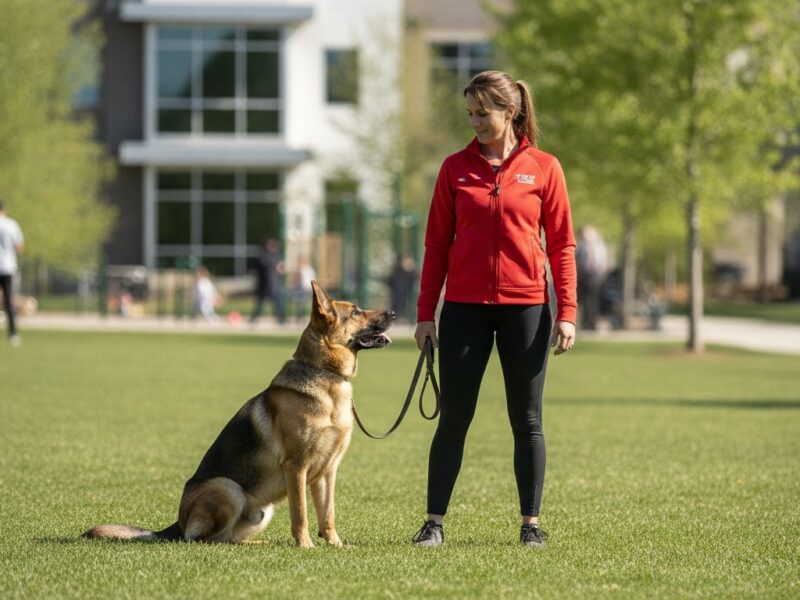
Your dog isn’t broken; they are simply waiting for a leader who speaks their language. It is incredibly frustrating to feel like you’re walking on eggshells in your own home or dreading your next trip to the park because of unpredictable outbursts. You deserve the freedom of a peaceful household and the pride of reliable off-leash control, but the constant debate of dog trainer vs behaviorist often makes it feel impossible to even start. With over 60 percent of owners now seeking professional help, you aren’t alone in your search for clarity and mastery.
We understand that you want to replace embarrassment with empowerment. This guide will reveal the critical differences between trainers and behaviorists so you can stop guessing and start seeing a real transformation. We will break down exactly which expert handles deep-seated aggression versus foundational obedience, ensuring you choose the most effective path for your money and your dog’s well-being in 2026. Get ready to turn your struggle into a success story and discover how structured leadership creates a more adventurous, joyful life for you both.
Key Takeaways
- Master the fundamental differences between teaching specific cues and addressing deep-seated emotional responses.
- Navigate the dog trainer vs behaviorist choice with total confidence by identifying which expert matches your dog’s unique situation.
- Learn why a lack of clear structure is often the root cause of behavioral stress and how to resolve it quickly.
- Discover the specific “red flag” signs that indicate your dog may require clinical intervention for biological issues.
- Transform your lifestyle by focusing on environmental conditioning to achieve reliable, real-world control in any situation.
Understanding the Roles: Dog Trainer vs. Behaviorist Explained
Stop getting caught up in titles and start focusing on results. The choice between a dog trainer vs behaviorist is often framed as a battle between teaching tricks and fixing deep psychological trauma. This is a massive oversimplification that leaves many owners feeling stuck. While the industry is moving toward more structure, such as the 2026 Dog Training Licensure Act introduced in New Jersey, there is currently no mandatory national license. This means you must look past the fancy labels and understand exactly what each expert brings to your living room.
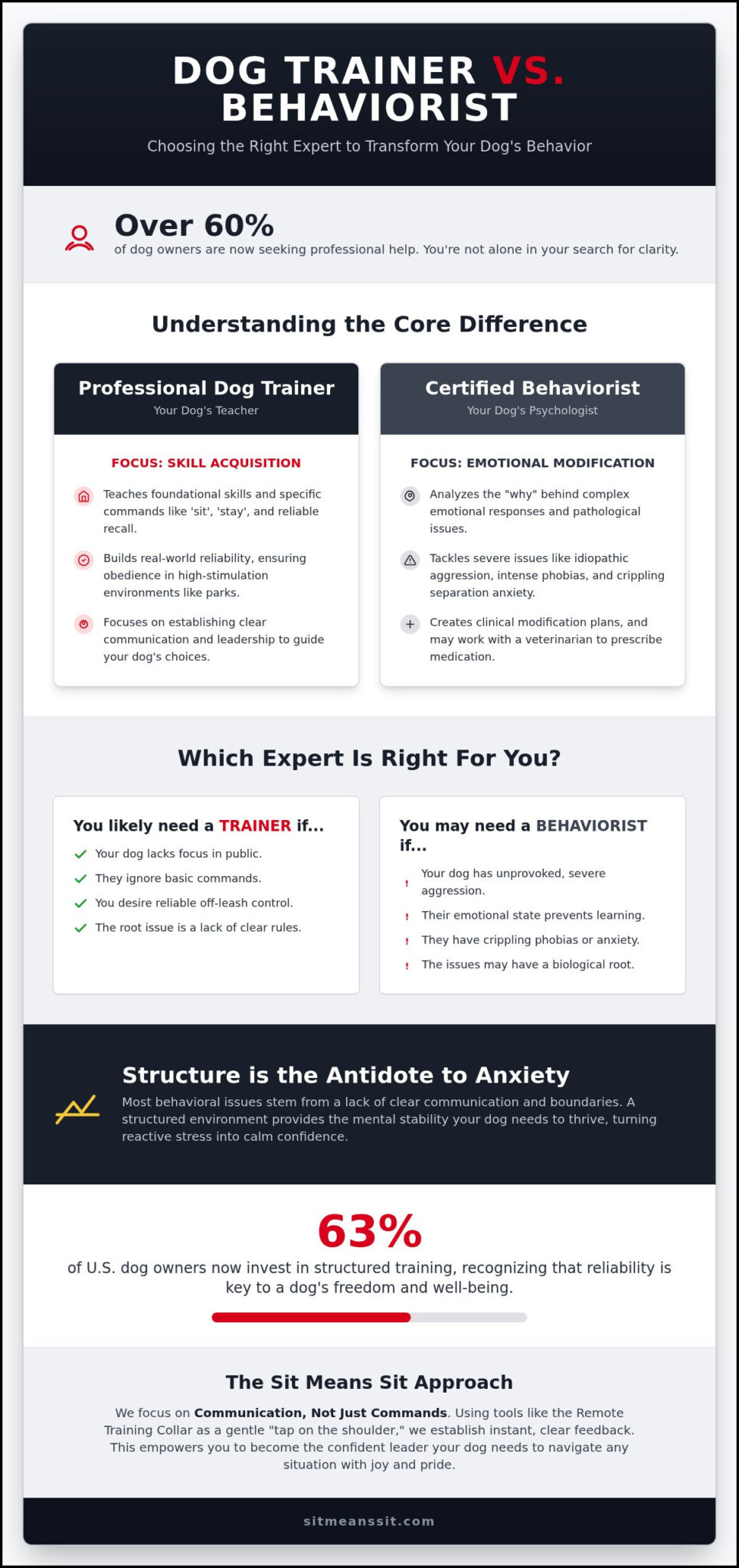
The core difference is simple: skill acquisition versus emotional modification. A trainer is your dog’s teacher. They focus on communication, reliability, and mastery of commands. A Dog behaviourist is more like a psychologist. They analyze the “why” behind complex emotional responses. Both roles are valuable, but choosing the wrong one for your specific struggle can lead to wasted time and mounting frustration. You need to identify if your dog lacks the skills to behave or the emotional capacity to learn.
What Does a Professional Dog Trainer Do?
A professional trainer builds a bridge of communication between you and your pet. They specialize in teaching cues like sit, stay, and come, ensuring these responses are reflexive even in high-stimulation environments. Most owners find that their “behavioral” issues are actually just a lack of clear boundaries. Trainers use tools like the Remote Training Collar to provide instant, clear feedback. They transform your dog from an unpredictable liability into a confident, off-leash companion. It’s about mastery, practice, and establishing you as the assertive leader your dog craves.
What Does a Certified Behaviorist Do?
Certified behaviorists or behavior consultants step in when a dog’s issues are pathological rather than just “naughty.” They tackle severe separation anxiety, idiopathic aggression, or intense phobias that prevent a dog from functioning. They create detailed behavior modification plans that often involve clinical observation. In some cases, a veterinary behaviorist may even prescribe medication to help a dog reach a state where they are calm enough to actually begin learning. They are the specialists you call when your dog’s emotional state is so volatile that standard instruction cannot break through the noise. These principles of behavior modification are also used to help children with developmental challenges; to learn about specialized home-based services, visit Kind Nest Academy LLC.
Don’t let your dog’s potential go to waste because of a confusing title. Whether you need a trainer to instill discipline or a behaviorist to manage a crisis, the goal remains the same. You want a dog that can navigate the world with joy and confidence. Understanding these roles is your first step toward that liberation.
The Power of Professional Training: Building Real-World Reliability
Structure is the antidote to anxiety. Many owners believe “obedience” is just about teaching a dog to sit on command. This is a dangerous myth. In reality, clear boundaries provide the mental stability your dog needs to thrive. When you weigh the options of a dog trainer vs behaviorist, remember that most behavioral issues stem from a lack of clear communication. If your dog doesn’t know what is expected of them, they naturally feel stressed and reactive. Establishing a “yes/no” framework isn’t restrictive; it is liberating.
Reliability must extend beyond your living room. A dog that listens perfectly in a quiet kitchen but bolts at the park is not truly trained. Environmental conditioning is the key to real-world success. We focus on high-stimulation environments because that is where life happens. Our Board and Train programs offer an immersive reset that builds this reliability from the ground up. By placing your dog in a structured, professional setting, we can accelerate their learning and ensure they remain focused even when the world is chaotic. It is about creating a dog that can enjoy the freedom of off-leash communication safely. With 63 percent of U.S. dog owners now investing in structured training, the shift toward professional reliability is clear.
The Sit Means Sit Methodology: Communication, Not Just Commands
We use the Remote Training Collar as a bridge for clear, consistent feedback. Think of it as a tap on the shoulder that says, “pay attention to me.” This tool allows for instant communication across any distance, which is a level of clarity that many clinical behaviorists often lack. Our goal is to empower you to become an assertive, confident leader. When you master the art of attention, you gain the ability to navigate any environment with pride. If you want to see this transformation in action, consider starting with Private Lessons to build your own handling skills and confidence.
When Training Is the Primary Solution
Training is the definitive answer for the vast majority of “unfixable” dogs. Most owners are dealing with nuisance behaviors that are easily corrected with the right approach. These include:
- Bolting out open doors or ignoring recall.
- Aggressive leash pulling and lunging at other pets.
- Embarrassing jumping on guests or countertops.
Even shy or fearful puppies benefit from early intervention. Our Puppy Preschool helps build confidence through positive socialization and foundational rules. Organizations like the Association of Pet Dog Trainers highlight the importance of choosing experts who understand both the science and the practical application of these methods. Don’t wait for a small habit to become a lifelong struggle. Take command today and reclaim your home.
The Clinical Perspective: When a Behaviorist Is Necessary
Sometimes, a dog is truly struggling with a biological hurdle that training alone cannot clear. This is where the dog trainer vs behaviorist debate shifts into the clinical arena. While we pride ourselves on transforming “unfixable” dogs through leadership and structure, we also recognize when a dog’s internal chemistry is working against them. You aren’t failing if your dog needs a clinical eye. You are being a responsible advocate for their mental health. Your dog isn’t “bad.” Their brain might just be too loud for them to hear your commands.
Identifying a pathological issue is the first step toward a resolution. Clinical red flags differ significantly from standard nuisance behaviors. You should look for specific signs that indicate a biological struggle rather than a lack of discipline. These include:
- Unprovoked aggression directed at family members without a clear trigger.
- Self-mutilation, such as obsessive licking or tail-biting until bleeding occurs.
- Extreme neurological shutdown where the dog cannot eat, play, or process any environmental stimulus.
- Obsessive-compulsive behaviors like constant shadow-chasing or light-fixation.
When a dog is “over threshold,” their brain is flooded with stress hormones. They are in a state of fight-or-flight that makes learning impossible. A behaviorist may use medication to lower this baseline. This creates a critical window of opportunity where our structured training can finally take hold. Experts provide essential guidance on differentiating between trainers and behaviorists when these clinical red flags appear. We often work in tandem with these specialists to ensure the dog has both the chemical balance and the behavioral boundaries they need to succeed.
Severe Aggression and Phobias
Reactivity is usually a communication breakdown that we solve through clear boundaries. True unprovoked aggression is a different beast entirely. It is often sudden and lacks a logical environmental cause. Similarly, a clinical phobia isn’t just being “scared” of a loud noise. It is a total neurological collapse. A behaviorist uses a clinical consultation to map these responses and find the biological root of the fear. This is about safety and stabilization before the real work of training begins.
The Veterinary Behaviorist Difference
A Veterinary Behaviorist is a Doctor of Veterinary Medicine (DVM). This distinction is vital because they can diagnose medical causes that mimic behavioral problems. Pain, thyroid imbalances, or neurological decline can all cause a dog to act out. These specialists are the only ones who can legally prescribe behavioral medications. This process is often a long-term commitment rather than a quick fix. Once the medical side is managed, the dog is finally ready to return to a structured environment where they can learn to thrive again.
Training vs. Behavior: Why Structure Often Solves Both
Most owners believe they must choose between a dog trainer vs behaviorist as if the two never meet. This is a mistake. There is a massive “grey area” where behavioral struggles are actually just symptoms of a communication breakdown. When a dog lacks a clear leader, they naturally become anxious, reactive, or protective. They aren’t trying to be “bad.” They are simply trying to navigate a world that doesn’t make sense. Adopting a high-level dog behaviorist vs. trainer approach allows you to address the emotional state through the lens of structured mastery.
Anxiety often disappears when you introduce clear rules. Think of it this way: if you started a new job and no one told you the rules, you would be stressed. Dogs feel the same way. By establishing a “yes/no” framework, you remove the burden of decision-making from your dog’s shoulders. This shift in leadership is the fastest way to reduce behavioral stress. We have seen countless “aggressive” dogs transform into calm companions once they realize they no longer have to manage the environment themselves. It isn’t magic; it is the power of consistent, assertive leadership.
The secret to this transformation is the “Attention” factor. If your dog isn’t looking at you, they cannot listen to you. We focus on gaining and keeping that focus amidst total chaos. Once you have your dog’s attention, the behavioral “outbursts” stop because the dog is waiting for your next command instead of reacting to a passing squirrel or another pet. This level of reliability is what separates a pet from a true partner. If you are ready to see this change in your own home, contact us for a professional consultation and start your journey toward total control.
The Myth of the “Broken” Dog
We encounter owners every day who fear their dog is “broken” or untrainable. This is rarely the case. Most behavioral labels are just descriptions of a dog that has never been given a job to do. Over-diagnosing a dog with complex psychological issues often ignores the simpler truth: they need boundaries. Clear structure is the key that unlocks a dog’s ability to relax and enjoy a more adventurous life. Discipline is not a restriction; it is the foundation of their freedom.
Choosing the Right Path for Your Lifestyle
You must evaluate the urgency of your situation. If your dog has dangerous habits like bolting or lunging, you don’t have months to wait for clinical therapy to show results. A Board and Train program offers a rapid reset that addresses both skills and behavior simultaneously. While a behaviorist might focus on the “why” for years, a results-oriented trainer focuses on the “how” right now. It is a cost-effective way to achieve the lifestyle change you deserve without the constant stress of an unpredictable pet.
Achieving Total Control: The Sit Means Sit Solution
Don’t settle for clinical theories when you need a reliable companion. While the dog trainer vs behaviorist debate often circles around complex labels, your goal remains simple: a well-behaved dog that respects your leadership. We focus on results that you can see, feel, and trust. Our approach replaces your daily frustration with a sense of empowerment. We don’t just teach your dog; we transform your entire lifestyle. By focusing on dog obedience training that works in the real world, we bridge the gap between basic cues and total off-leash mastery.
Confidence is a guarantee when you have the right tools and the right team. You deserve the pride of walking your dog through a crowded park without a single outburst. We provide the structure that allows your dog to relax and enjoy their life. Our methodology ensures that your dog’s emotional well-being is always linked to their reliability. When a dog understands their boundaries, they gain the liberation to go on more adventures with you. This is the Sit Means Sit standard of excellence.
The Immersive Board and Train Experience
Success requires consistency that a one-hour weekly session simply cannot provide. Our Board and Train program offers 24/7 professional conditioning that creates a total behavioral reset. We immerse your dog in a structured environment where they learn to prioritize your commands over environmental distractions. This isn’t just about the time we spend with your pet; it’s about the transition. We spend dedicated time teaching you how to maintain these results at home. You become the assertive leader your dog needs to remain confident and calm in any situation.
Your Next Steps to a Better Life
Stop waiting for a “broken” dog to fix itself. Finding a dog trainer near me who understands both the technical and behavioral sides of the equation is the first step toward your new life. We offer a professional evaluation that allows you to see the untapped potential in your dog firsthand. This is your opportunity to witness the power of clear communication before you even sign up. You will leave with a definitive plan and the confidence that a peaceful household is within reach.
Take command of your future today. Whether you are struggling with nuisance barking or complex reactivity, we have the expertise to help you succeed. Reclaim your relationship with your dog and start living the adventurous life you’ve always imagined. Contact us now to schedule your evaluation and discover why thousands of owners trust us to deliver real-world reliability.
Take Command of Your Dog’s Future Today
Your dog’s potential is limitless once you provide the right structure. Deciding between a dog trainer vs behaviorist doesn’t have to be a source of stress. You’ve learned that while behaviorists handle clinical, biological hurdles, a results-oriented trainer builds the real-world reliability you need for daily life. Mastery of attention and clear communication are the keys to replacing your frustration with absolute pride. We believe that every dog deserves the freedom that comes with discipline.
We are here to help you navigate this choice with total confidence. Sit Means Sit brings over 25 years of industry-leading experience to your doorstep. With our nationwide network of expert trainers and specialized off-leash communication methodology, we turn “unfixable” struggles into success stories. You don’t have to live with the embarrassment of an out-of-control pet any longer. Action is the only thing standing between you and the peaceful household you deserve.
Schedule Your Free Evaluation with Sit Means Sit Today!
It’s time to reclaim your relationship and start your next adventure together. We can’t wait to show you what your dog is truly capable of achieving. Your journey to mastery starts right now.
Common Questions About Professional Canine Experts
Is a dog behaviorist more expensive than a trainer?
Yes, specialized behaviorists typically charge higher rates because they handle complex psychological issues and clinical cases. Their sessions often involve long diagnostic consultations and detailed behavior modification plans. While professional training focuses on rapid skill mastery, a behaviorist’s work is a long-term investment in a dog’s neurological health. You are paying for clinical expertise that goes beyond standard obedience cues.
Can a dog trainer help with a dog that bites?
Yes, a skilled trainer can resolve biting issues if the behavior is rooted in reactivity or a lack of boundaries. Most biting occurs because a dog feels they must manage their own environment. When you establish yourself as a confident leader through structured programs, the dog no longer feels the need to use their teeth to communicate. If the biting is unprovoked or biological, a dog trainer vs behaviorist consultation will help determine if clinical intervention is required first.
Do behaviorists use e-collars or other training tools?
It depends entirely on their specific methodology and philosophy. Many clinical behaviorists prioritize positive reinforcement or medication to manage emotional thresholds. In contrast, results-oriented trainers utilize tools like the Remote Training Collar to provide clear, instant feedback. This tool acts as a bridge for communication that allows for off-leash reliability even in high-stimulation environments. Always ask about an expert’s preferred tools during your initial evaluation.
How do I know if my dog has anxiety or is just being stubborn?
Stubbornness is usually just a dog that hasn’t been given a clear reason to listen. If your dog ignores cues but otherwise seems physically relaxed, they likely need better structure and leadership. True anxiety presents as physiological distress, such as excessive panting, pacing, or self-mutilation. If your dog is “shutting down” and cannot take treats or play, they are likely over their emotional threshold and need a behavioral specialist.
What certifications should I look for in a dog trainer?
Look for voluntary certifications from reputable organizations like the Certification Council for Professional Dog Trainers (CCPDT) or the International Association of Animal Behavior Consultants (IAABC). While there is currently no mandatory national license, the 2026 Dog Training Licensure Act in New Jersey signals a shift toward state-level regulation. Choosing a certified professional ensures they adhere to high ethical standards and stay updated on the latest behavioral science.
Will a behaviorist just tell me to put my dog on Prozac?
Not necessarily, but medication is a common tool used by veterinary behaviorists to stabilize a dog’s internal chemistry. The goal is to lower the dog’s stress levels so they can finally reach a state where they are capable of learning. Think of medication as a temporary bridge. Once the dog is calm enough to process instruction, a dog trainer vs behaviorist collaborative approach ensures they develop the skills needed to eventually thrive without pharmaceutical support.
How long does it take to see results with a behavioral trainer?
You can often see a shift in your dog’s focus during the very first session, but true mastery takes time and steady practice. Immersive options like a Board and Train program offer the fastest path to a total behavioral reset. While basic cues can be learned in days, achieving real-world reliability in chaotic environments requires several weeks of consistent reinforcement. Your commitment to maintaining the structure at home is the most important factor for long-term success.
Can an older dog benefit from a behavioral training program?
Absolutely, because dogs of any age crave the mental stimulation and security that comes with clear boundaries. Older dogs often have deeply ingrained nuisance behaviors, but they are just as capable of learning new communication patterns as puppies. Training provides a senior dog with a sense of purpose and can significantly reduce age-related anxiety. Similarly, for those who provide care for elderly loved ones, specialized resources from Caregiver Knowledge can help manage the unique challenges of senior support with confidence and skill. It is never too late to replace your frustration with pride and strengthen the bond with your lifelong companion.
Comments are closed.