
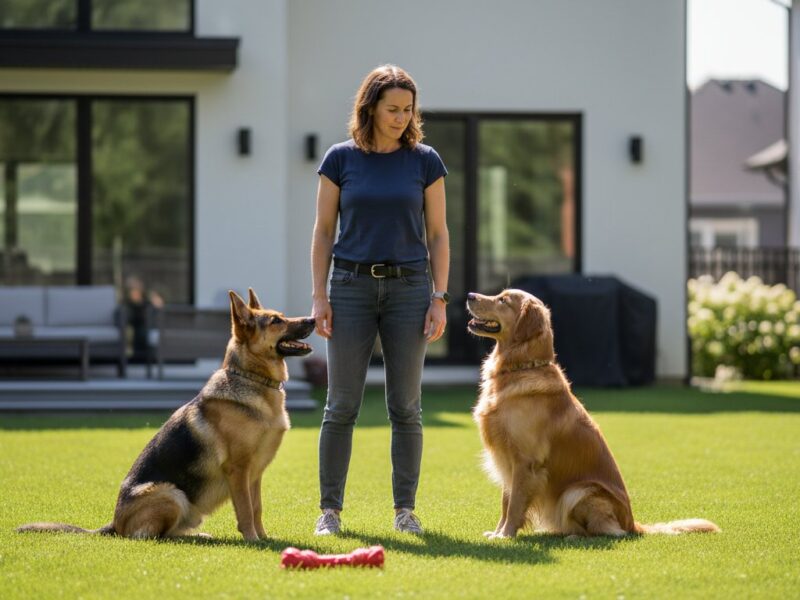
Resource guarding isn’t a sharing problem; it’s a boundary problem that requires absolute leadership. You’re likely tired of living on edge, worried that a stray kibble or a favorite toy will trigger a fight. It’s frustrating to feel like you’ve lost control of your own living room. If you’re searching for how to stop resource guarding from other dogs, you aren’t just looking for a quick fix. You want a lifestyle change that ensures safety for your family and your pets.
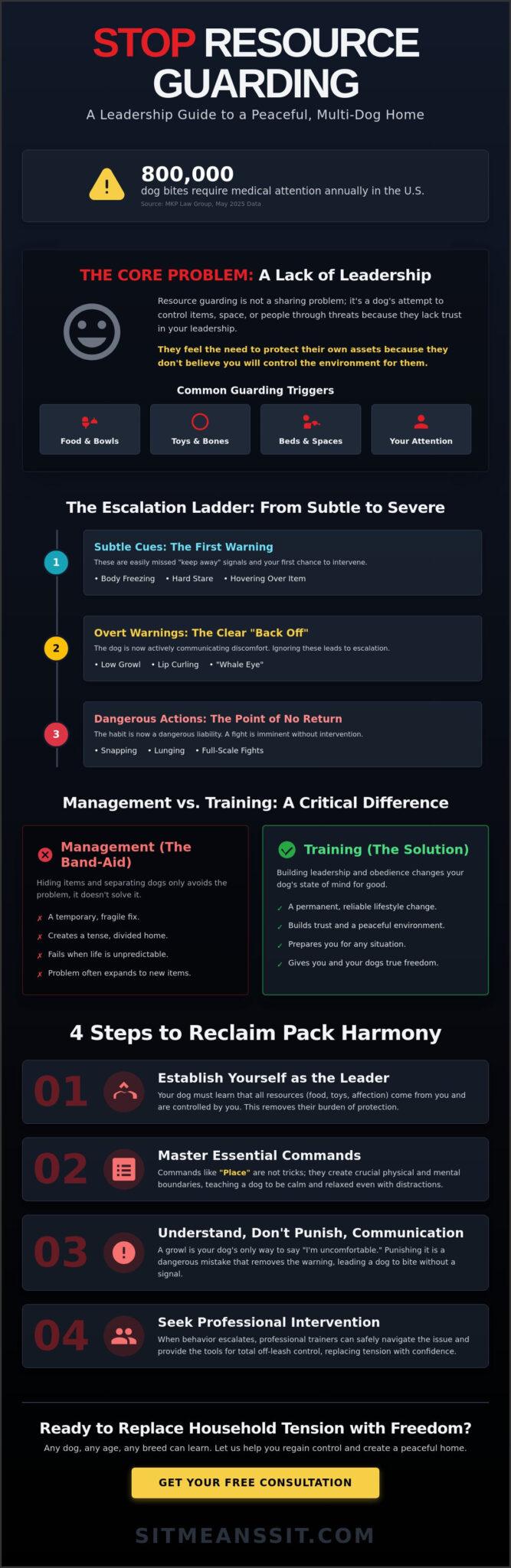
We understand that fear. With 800,000 dog bites requiring medical attention annually in the U.S. according to May 2025 data from MKP Law Group, the stakes are high. But here’s the good news: any dog, any age, and any breed can learn to respect boundaries. This guide will show you how to transform a tense household into a peaceful environment through proven obedience and off-leash control. We’ll walk through the specific leadership steps you need to regain your confidence and create a home where your dogs focus on you, not on each other’s bowls.
Key Takeaways
- Stop just managing the symptoms and learn how to stop resource guarding from other dogs through a permanent shift in your training approach.
- Identify specific triggers beyond just food and toys so you can address guarding behavior before it escalates into a conflict.
- Master essential commands like “Place” to establish the physical and mental boundaries your dogs need to feel secure and relaxed.
- Understand why punishing a growl is a dangerous mistake that removes a dog’s only way to communicate their discomfort.
- Discover how professional intervention can replace household tension with the confidence and freedom of total off-leash control.
What is Resource Guarding and Why Does It Happen?
Resource guarding is a reactive behavior where a dog uses threats to maintain “ownership” of an item or space. It is a natural survival instinct, but in a modern home, it becomes a dangerous liability. When you are looking for how to stop resource guarding from other dogs, you must first understand that this isn’t just about a favorite toy. It’s about a lack of clear leadership. Your dog feels the need to protect their assets because they don’t yet trust you to control the environment. This behavior can include food, toys, sleeping spots, or even your own attention. If left uncorrected, a simple stare can quickly turn into a trip to the emergency vet.
At Sit Means Sit, we view guarding as a symptom rather than the core problem. It’s a sign that your dog hasn’t accepted you as the definitive leader of the pack. When a dog knows that you are in control of all resources, they no longer feel the burden of protecting them. This shift in perspective is what allows us to transform a tense household into a peaceful one. We don’t just manage the dogs; we change their emotional state through reliable obedience.
Common Signs of Guarding Between Dogs
Recognizing the early warning signs is the first step toward total control. Guarding often starts with subtle cues that many owners miss. You might see a dog freeze their body, give a hard stare, or hover over an item. These are clear “keep away” signals. If these are ignored, the dog moves to overt warnings like low growling, lip curling, or showing the whites of their eyes, known as “whale eye.” Without consistency and boundaries, these signals escalate into dangerous actions. Snapping, lunging, and full-scale fights are the final stage of an unmanaged guarding habit. We want to stop the cycle before the first growl even happens.
The Instinct vs. Habit Loop
Dogs aren’t born knowing how to share. In the wild, giving up a meal could mean death. Without human-provided structure, your dog relies on this ancient instinct. Every time your dog successfully guards an item, the behavior is reinforced. If they growl and the other dog backs away, they “won.” This creates a habit loop that gets harder to break every day. Anxiety plays a massive role here. A dog who feels insecure in their position in the pack will feel a greater need to protect what they have. Our goal is to replace that anxiety with the confidence of obedience. By establishing yourself as the leader, you remove the burden of protection from your dog. This is how you create a happy, relaxed household for any dog, any age, and any breed.
Management vs. Training: Why Hiding the Toys Isn’t Enough
Many owners think that simply removing high-value items from the house is the ultimate solution. This is a mistake. Management is a temporary band-aid, while training is a permanent lifestyle change. If you only hide the toys, you haven’t actually learned how to stop resource guarding from other dogs. You’ve just delayed the next conflict. Life is unpredictable. You might drop a piece of steak in the kitchen, or a dog might find a long-lost tennis ball under the couch. These accidental resources are where management fails and training saves the day. You need a dog that listens because they respect your leadership, not because there’s nothing left to fight over.
Relying on baby gates and crates doesn’t build long-term trust or reliability. It creates a divided home where everyone lives on edge. At Sit Means Sit, we don’t just avoid the problem. We train through it. We want you to have the confidence to drop a treat on the floor and know your dogs will wait for your command before moving. Our goal is to replace your frustration with a sense of mastery and pride in your pack.
The Limits of Passive Management
Walking on eggshells in your own home increases the overall tension in your pack. When you’re constantly worried about a fight, your dogs feel that stress. This often leads to redirection. If a dog can’t get to a bone because of a gate, they might snap at the other dog nearby out of pure frustration. Passive management also causes the problem to expand. If you take away the toys, the dog might start guarding the water bowl, the doorway, or even your favorite spot on the sofa. It’s vital to recognize these shifts and know When to Ask for Help with Resource Guarding before the behavior escalates further.
The Power of Active Training
True freedom comes from a foundation where “Sit Means Sit” regardless of what is on the floor. We teach your dogs that all resources, from food to affection, come directly from you, the leader. This removes the “survival” need for them to compete. By investing in dog obedience training, you gain the ability to stop a fight before it even starts. You aren’t just managing a crisis; you’re building a lifestyle of respect and boundaries. If you’re ready to stop the stress, our private lessons can help you reclaim your home and enjoy a happy, harmonious pack.
4 Steps to Reclaim Pack Harmony and Stop the Guarding
Establishing leadership isn’t a suggestion. It’s a requirement for a safe home. If you want to know how to stop resource guarding from other dogs, you need a clear, actionable plan that shifts the power dynamic back to you. We’ve developed a four-step process to help you reclaim your space and your peace of mind. This isn’t about “fixing” a dog; it’s about transforming the entire household environment through structure.
Step 1 starts with establishing absolute focus and engagement with you. You must be the center of your dog’s world before you can ask them to give up a bone. Step 2 involves mastering the “Place” command to create physical and mental boundaries. Step 3 requires introducing “Out” or “Drop” commands so you can claim any item instantly. Finally, Step 4 is the gradual reintroduction of resources in a highly controlled, supervised environment. This progression ensures that your dogs respect your authority before they are ever put in a position to compete again.
Mastering the ‘Place’ Command
A designated “Place” is the ultimate tool for multi-dog households. It provides each dog with a safe, neutral zone where they know they won’t be bothered. Use “Place” during meal times to prevent hovering or during toy play to keep everyone in their own lane. The “Place” command builds a dog’s impulse control and mental calm by requiring them to stay relaxed in a specific spot despite nearby distractions. This simple boundary eliminates the friction that leads to fights. It turns a chaotic living room into an organized, respectful space where every dog knows exactly where they belong.
Claiming the Resource as the Leader
True leaders don’t use force; they use presence. Stand tall and use your body to claim the space around a resource. You must catch the behavior early. Correct the hard stare long before it turns into a growl. This proactive approach stops the tension before it boils over. We often use the Remote Training Collar to communicate clearly at a distance. This technology allows you to maintain off-leash control even if you aren’t standing right next to the dog. It turns a potentially dangerous moment into a clear training opportunity. Consistency is the foundation of this process. Every interaction is a chance to prove that you are the one in charge of the resources. When you lead effectively, your dogs can finally relax and be happy.
Common Mistakes That Make Resource Guarding Worse
Good intentions often lead to dangerous mistakes when owners try to handle pack tension on their own. If you’re struggling with how to stop resource guarding from other dogs, you must avoid the trap of “quick fixes” that actually escalate the conflict. Many people inadvertently teach their dogs that guarding is necessary by being inconsistent or overly confrontational. Real transformation requires a shift from reactive discipline to proactive leadership. When you make a mistake in your training approach, you aren’t just failing to solve the problem; you might be making your dogs more dangerous to each other and your family.
One of the most frequent errors is attempting to force dogs to share. Sharing is a human concept, not a canine one. Dogs don’t need to share their toys; they need to respect your boundaries and your right to claim any item at any time. Another common pitfall is inconsistency. If you allow a dog to guard a “low value” item like an old sock but try to stop them from guarding a steak, you’re sending mixed signals. Reliability is built on a foundation where the rules never change, regardless of what’s on the floor. Without total off-leash control in these high-stress moments, you’re merely hoping for the best rather than ensuring safety.
The Danger of Suppressing Communication
Punishing a growl is like taking the batteries out of a smoke detector. You still have a fire; you just won’t hear the alarm. A growl is a dog’s way of saying they are uncomfortable or stressed. If you punish the noise, the dog learns to skip the warning and go straight to the bite. You must address the underlying emotion of anxiety and lack of trust rather than just the sound. This is why a professional dog behaviorist approach is much safer than DIY corrections. We focus on changing the dog’s mindset so they no longer feel the need to communicate through threats.
Lack of Structure in the ‘In-Between’ Moments
Guarding doesn’t happen in a vacuum. It’s often the result of a lifestyle that lacks clear rules. Free-feeding and “free-roaming” without boundaries contribute to a dog’s belief that they own the house. We recommend “nothing in life is free” (NILIF) protocols. This means your dogs must earn every resource, from their dinner to your affection, by performing a command first. This structure creates a happy and more relaxed pet because the burden of making decisions is removed from their shoulders. When you establish yourself as the provider of all good things, the competitive tension between dogs disappears. If you’re ready to stop the guesswork and see real results, contact us today to learn about our personalized training programs.
Professional Intervention: When to Seek Expert Help
Sometimes, a household reaches a tipping point where DIY methods are no longer safe or effective. If you are living in constant fear of physical injury to your pets or family, it’s time to call in the experts. Learning how to stop resource guarding from other dogs is a process that requires absolute confidence. If you feel like a failure as a pack leader, remember that even the most dedicated owners need professional guidance for deep-seated behavioral issues. We specialize in taking that frustration and replacing it with empowerment and pride. Our mission is to provide freedom through obedience for any dog, any age, and any breed.
Professional intervention removes the dangerous guesswork that leads to accidents. You shouldn’t have to rely on trial and error when the stakes involve the safety of your home. We operate from a place of absolute certainty; we’ve seen every possible guarding scenario and we know how to fix it. By establishing a definitive contract of obedience, we transform your dogs from reactive competitors into respectful companions. This isn’t just about stopping a fight; it’s about giving you and your dogs a better quality of life.
Why Immersion Training Works for Guarding
For many guarding cases, a board and train program is the most effective solution. This approach removes the dog from the “conflict zone” of your home to reset their mindset in a neutral environment. In a professional setting, our trainers can safely push boundaries and build reliability much faster than an owner can during busy daily life. We focus on creating a foundation of consistency that makes the transition back to your home environment seamless and successful. It allows your dog to learn new habits without the distractions and triggers of their old routine.
Your Path to a Stress-Free Home
Imagine a future where you can drop a high-value bone on the kitchen floor and both dogs remain in a perfect “Down-Stay” until you give them further direction. This level of off-leash control is not a dream; it is the standard we achieve every day. Our methodology ensures that your dogs look to you for permission rather than looking at each other with suspicion. We provide the tools and the structure necessary to maintain a happy, harmonious pack for years to come. Stop living in tension and start enjoying the adventure of dog ownership again. Contact a Sit Means Sit trainer near me for a free evaluation and take the first step toward reclaiming your home.
Reclaim Your Peace and Pack Harmony Today
Living in a house full of tension is exhausting. You’ve learned that management is just a temporary fix and that true safety comes from establishing absolute leadership. By mastering commands like “Place” and “Out,” you create the mental boundaries your dogs need to feel secure. Learning how to stop resource guarding from other dogs isn’t just about preventing fights; it’s about giving your pets the structure they crave so they can finally relax and be happy. You don’t have to walk on eggshells in your own living room anymore.
Sit Means Sit has a proven track record of transforming thousands of families through our philosophy of “freedom through obedience.” We use industry-leading remote training technology to give you reliable, off-leash control in any situation. Whether you have a young puppy or an older rescue, our experts deliver results for any dog, any age, and any breed. Don’t wait for another growl to take action. You deserve a home where everyone feels safe and empowered. Schedule Your Free Evaluation with Sit Means Sit Today! and start your journey toward a stress-free life with your best friends.
Frequently Asked Questions
Can resource guarding between dogs be cured completely?
Resource guarding can be successfully neutralized through consistent training and clear leadership. While the instinct to protect assets is natural, you can transform your dog’s mindset so they no longer feel the need to react. Our methodology focuses on building trust and obedience so your dogs look to you as the provider of all resources. This shift in the pack dynamic creates a permanent, peaceful environment for everyone involved.
Is my dog aggressive if they growl at my other dog over a bone?
Growling is a form of communication, not a permanent label of aggression. It’s a signal that your dog feels insecure or pressured in that moment. However, it is a warning that can escalate into a physical fight if you don’t step in as the leader. Instead of labeling the dog, focus on how to stop resource guarding from other dogs by establishing firm boundaries and providing the structure they need to feel safe.
How do I feed multiple dogs if one is a resource guarder?
Start by using physical boundaries like separate rooms or crates to ensure immediate safety during meal times. As your training progresses, use the “Place” command to keep each dog in a designated zone while you control the food. This teaches them that you are the one in charge of the resources. Eventually, you will achieve a home where dogs can eat in the same room without tension because they respect your authority.
Should I punish my dog for growling at the other dog?
Never punish a growl because you’ll remove the dog’s only way to warn you before they bite. If you suppress the growl, the dog may skip straight to lunging or snapping next time they feel threatened. Instead, address the underlying anxiety and lack of leadership. Use clear commands to redirect the dog’s focus back to you, ensuring they understand that you are the one who claims the space and the item.
Can a new puppy learn resource guarding from an older dog?
Puppies are highly observant and can certainly model their behavior after an older dog in the household. If a puppy sees an older dog successfully guarding a toy through threats, they may adopt the same tactic. This is why early intervention and Puppy Preschool are vital. Establishing clear rules for both dogs from the start prevents these habits from taking root and ensures a harmonious multi-dog household for years.
What is the best command to stop resource guarding instantly?
The “Out” command is the most effective way to have a dog immediately release an item and move away. It should be followed by the “Place” command to send the dog to a neutral zone. This combination stops the conflict and physically separates the dogs while reinforcing your control. These commands act as a definitive contract between you and your pet, ensuring they listen even in high-distraction environments.
Is it safe to use a remote collar for resource guarding issues?
Yes, the Remote Training Collar is an industry-leading tool for providing clear communication at a distance. It allows you to catch the subtle stare or freeze before it escalates into a fight, even if you aren’t standing right next to the dog. When used as part of a professional Sit Means Sit program, it builds reliability and off-leash control, giving you the confidence to handle any guarding situation safely and effectively.
How long does it take to see results in a multi-dog household?
You will often see a significant shift in household tension within the first few days of implementing a structured training plan. However, permanent habit transformation typically takes 3 to 4 weeks of consistent reinforcement. Our results-oriented approach focuses on long-term reliability rather than just a quick fix. By sticking to the program, you’ll replace your frustration with a sense of pride as your dogs learn to coexist peacefully.
Comments are closed.