
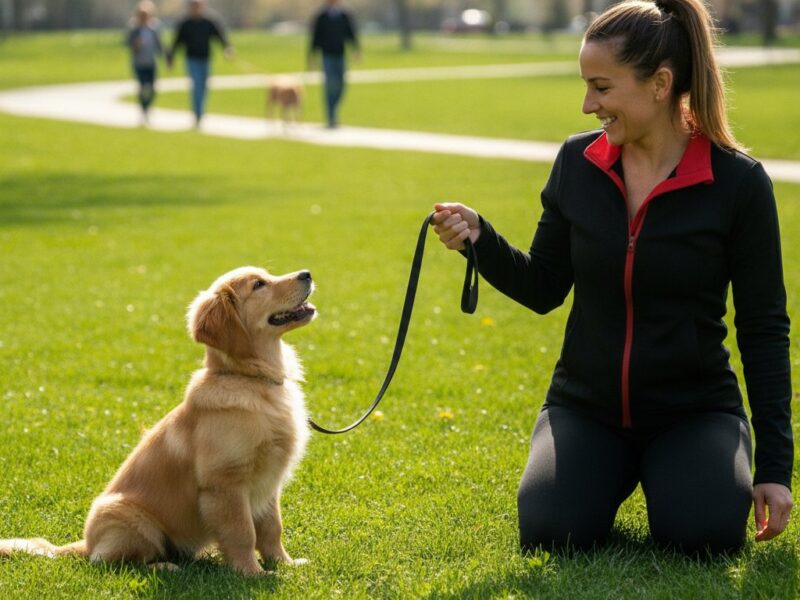
The biggest mistake most owners make is thinking that socialization is just one big playdate. Real socialization is the strategic development of neutrality, not a frantic search for new friends. If you’re struggling with how to socialize a puppy so they actually listen in public, you aren’t alone. You want a dog that can walk through a bustling park without lunging at every distraction. Right now, you might feel invisible when your puppy spots another dog, but that frustration ends today.
We’re going to replace your uncertainty with a proven roadmap for total confidence. Mastering this process isn’t just about good manners; it’s the foundation for a lifetime of off-leash freedom. This guide reveals how to master environmental focus, utilize the critical socialization window before 16 weeks, and build a deep bond that ensures your dog chooses you over any distraction. Get ready to turn your puppy’s potential into a lifetime of joyful adventure through clear structure and expert technique.
Key Takeaways
- Seize the critical 8-to-16-week “Golden Window” to build a foundation of confidence that lasts a lifetime.
- Master the professional approach of how to socialize a puppy by prioritizing environmental neutrality over chaotic playdates.
- Implement surface and audio conditioning to transform potentially scary sights and sounds into non-events for your dog.
- Upgrade your communication using the Remote Training Collar as a gentle “tap on the shoulder” for total focus.
- Secure your dog’s future with structured paths like Puppy Preschool to ensure reliable behavior in any high-stimulation environment.
The Socialization Window: Why Your Puppy’s First 16 Weeks Define Their Future
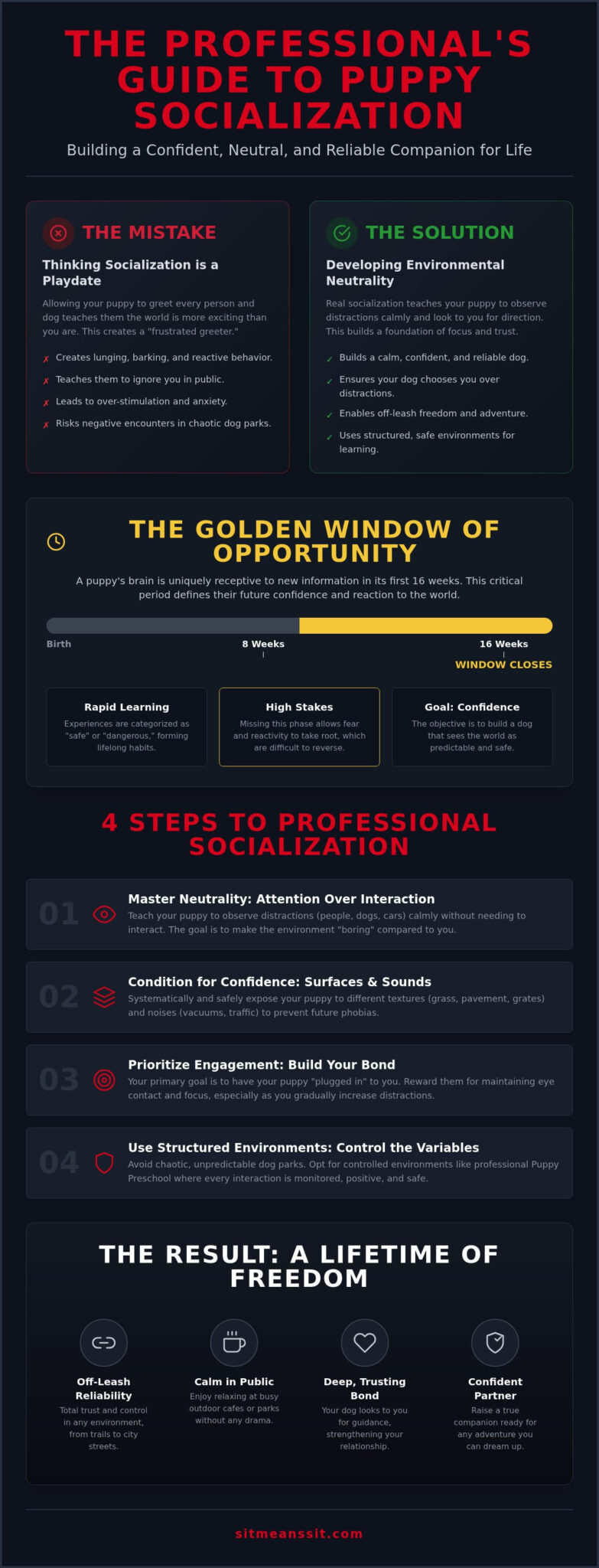
The clock starts ticking the moment you bring your puppy home. Most owners believe they have years to shape their dog’s personality, but the reality is much more urgent. The first 16 weeks of a dog’s life represent a “Golden Window” where the brain is uniquely receptive to new information. Learning how to socialize a puppy isn’t just a weekend project; it’s a high-stakes race to build a foundation of neutrality before the window closes. If you miss this phase, you aren’t just losing time. You’re allowing reactive behaviors and fear-based habits to take root.
Real socialization is the process of safely exposing your young dog to the world to build absolute confidence. It’s about teaching them that the environment is predictable and safe. Early structure prevents the bolting and lunging that plague untrained adult dogs. We don’t view discipline as a restriction. Instead, structure is the only way to provide your dog with a safe, adventurous life where they can actually accompany you everywhere.
Neurological Development and Fear Periods
Puppies process information through intense developmental surges. During this critical socialization period, their brains categorize every experience as either “safe” or “dangerous.” You must be intentional. A single negative encounter during a “fear period” can create a lifelong phobia that takes years to reverse. Our methodology removes the guesswork. Professional guidance ensures every new sound, surface, and stranger is a positive confidence-builder. We replace potential anxiety with a sense of mastery, ensuring your puppy remains unfazed by the unexpected.
The True Goal: Attention Over Interaction
Stop letting your puppy greet every person and dog on the sidewalk. You’re accidentally teaching them that the world is more exciting than you are. When you focus on how to socialize a puppy, your primary goal is engagement, not playdates. We want a dog that can observe a distraction and immediately look back to you for direction. This ability to choose the owner over the environment is the bedrock of all dog obedience training.
This transition from a passive observer to an active listener is what creates a reliable companion. Engagement means your dog is “plugged in” to your commands even in high-stimulation environments. By prioritizing focus over interaction, you build a trust-based bond that allows for total off-leash control. You aren’t just raising a pet; you’re developing a confident partner ready for any adventure.
Socialization vs. Exposure: Why ‘Meeting Everyone’ Is a Training Mistake
Traditional advice often tells you to let your puppy meet every person and dog they see. This is a massive mistake. When you allow a puppy to greet every stranger on the sidewalk, you’re teaching them that the world is a giant buffet of excitement. You quickly become the boring person at the end of the leash. This approach creates a “frustrated greeter” who barks and lunges because they’ve been conditioned to expect an interaction with every living thing they pass.
Learning how to socialize a puppy correctly means prioritizing quality over quantity. Real mastery involves teaching neutrality. Neutrality is the superpower of a well-trained dog. It’s the ability to see a distraction and remain completely calm. By setting clear, consistent boundaries now, you replace future frustration with a sense of pride. You want a dog that can sit quietly at a busy outdoor cafe, not one that demands attention from every passerby. This discipline isn’t about restriction. It’s the key to a more adventurous life where your dog can actually go everywhere with you.
The Myth of the Dog Park
Dog parks are often the worst possible environment for a developing puppy. These spaces are chaotic, unpredictable, and full of untrained dogs. A single bad experience with a “bully” dog can create a lifelong fear response that takes years to reverse. Instead of building confidence, unstructured play in public spaces often reinforces over-stimulation. You need a controlled environment where every interaction is monitored and positive. Our Puppy Preschool offers the perfect structured alternative to ensure your puppy builds social savvy without the risk of trauma.
Building Neutrality in High-Stimulus Environments
Shift your focus from interaction to engagement. Your puppy’s ability to ignore the world and focus on you is far more valuable than their ability to play with a stranger’s pet. Start in low-distraction areas and reward your puppy for maintaining eye contact. Gradually move to busier environments like hardware stores or parks, but keep the focus on you. A calm dog earns more freedom than an excited one because they’ve proven they are reliable. Controlled exposure is the strategic antidote to public reactivity. By rewarding focus over interaction, you ensure your dog remains a reliable companion in any high-stimulation setting.
A Step-by-Step Guide to Professional Puppy Socialization
Confidence isn’t accidental. It’s built through intentional, repeated successes in the real world. Now that you understand the “why” behind neutrality, it’s time to master the “how.” Learning how to socialize a puppy requires a systematic approach that moves from your living room to the busiest streets in town. Don’t just hope your dog turns out okay. Follow a professional roadmap that guarantees results.
Start with these four pillars of environmental mastery:
- Surface Socialization: Expose those paws to everything. Walk on grass, gravel, cold metal, slick wood, and uneven mulch. Tactile confidence prevents the “freezing” behavior seen in dogs afraid of new flooring.
- Audio Conditioning: Use technology to your advantage. Play recordings of sirens, thunder, and vacuums at a low volume while your puppy eats or plays. Gradually increase the decibels as they remain calm.
- Neutral Observation: Take your puppy to a park and just sit. Don’t interact. Don’t greet. Let them watch the world go by from a distance until the environment becomes “white noise.”
- Impulse Control: Teach your puppy that nothing is free. They must wait for a clear release command before eating their dinner or rushing through a doorway. Permission-based living is the secret to a reliable companion.
Phase 1: The Home Environment
Discipline begins at home. Mastering crate training and housebreaking isn’t just about clean floors; it’s about teaching your puppy to find peace in a restricted space. This is where you establish yourself as the clear leader and the source of all good things. Practice handling exercises daily. Mimic a vet exam by touching their ears, paws, and tail. Brush their teeth and check their mouth. When your puppy accepts this handling with a soft mouth and a relaxed body, you’ve won half the battle of future vet visits.
Phase 2: Taking it Public
Once the foundation is set, it’s time for real-world distractions. Many owners find that puppy training classes are the most effective way to practice focus around other dogs in a controlled setting. Beyond the classroom, take your puppy to “dog-friendly” hardware stores or outdoor malls. These locations provide a variety of smells and sounds without the chaos of a dog park.
You will inevitably face “unwanted” attention from strangers. Be your puppy’s advocate. If a stranger rushes in to pet your dog while you’re working on focus, politely decline. Say, “We’re in training right now.” Protecting your puppy’s focus is more important than being polite to a stranger. Every time you prioritize your dog’s training over a random interaction, you’re reinforcing the bond of trust that leads to total off-leash reliability.
Mastering Distractions: Achieving Total Off-Leash Reliability
Socializing your dog is the first step, but true freedom requires more than just exposure. It requires a transition from commands being a suggestion to becoming a definitive agreement. Many owners rely on treat-based bribery, which inevitably fails when a squirrel or another dog appears. Real reliability comes from clear expectations and a deep bond built on trust. When you understand how to socialize a puppy for the real world, you realize that off-leash communication is the ultimate safety net for your pet. It allows them to enjoy a bigger, more adventurous life while you maintain absolute peace of mind.
We achieve this level of focus using our exclusive Remote Training Collar methodology. Think of this tool as a digital tap on the shoulder. It provides a clear, consistent signal that cuts through environmental noise without the need for shouting or physical force. This isn’t about punishment. It’s about maintaining a constant line of communication that keeps your dog safe and engaged, no matter where you go. Learning how to socialize a puppy with this level of clarity ensures they are prepared for any high-stimulation environment.
The Science of Remote Communication
Our approach facilitates clear feedback from a distance, allowing you to guide your dog’s choices in real time. Professional instruction is vital to ensure you’re using the collar as a communication tool. We teach you how to achieve a whisper level of contact that your dog understands even in chaotic environments. This clarity replaces your puppy’s confusion with confidence. They learn exactly what is expected of them, which removes the stress of uncertainty for both of you. It’s a transformative process that turns frustration into empowerment.
Reliable Recall Under Pressure
The Come command must be non-negotiable every single time. Whether your puppy is chasing a leaf or spotting a deer, their response to your call must be immediate. We train through the chase instinct to ensure your pet stays safe near busy roads and high-distraction areas. Many of the same focus-drills used in service dog training provide massive benefits for the everyday pet owner. These techniques transform a reactive puppy into a reliable partner who chooses you over any distraction.
Ready to experience the liberation of a perfectly behaved dog? Explore our Board and Train programs to jumpstart your journey toward total off-leash control.
From Preschool to Mastery: Choosing the Right Training Path
You now have the professional blueprint for building a confident, neutral dog. However, knowing how to socialize a puppy is only the first step. The real challenge lies in the thousands of repetitions required to turn a command into a definitive agreement. Consistency is the bridge between a puppy that “sometimes” listens and a reliable companion that follows through every time. We offer several structured pathways to ensure your dog reaches their full potential, regardless of your starting point or schedule.
Choose the path that best fits your lifestyle and goals:
- Puppy Preschool: Designed specifically for the 8 to 16 week window, this program establishes the essential foundation for socialization and basic manners.
- Private Lessons: One-on-one coaching sessions that allow us to address specific household challenges and tailor the training to your unique environment.
- Day Training: We provide professional reinforcement while you work, ensuring your puppy remains consistent even on your busiest days.
- Board and Train: The most immersive option for owners who want the fastest route to a finished, reliable adult dog.
The Immersive Advantage of Board and Train
If you want a total behavioral transformation, a board and train program is the gold standard. Mastering how to socialize a puppy in high-stimulation environments takes time and expert timing. By letting professionals handle the heavy lifting, your dog receives thousands of correct repetitions in a fraction of the time it would take at home. We don’t just train the dog and send them back. The “Owner Transfer” is the most vital part of the process. We teach you exactly how to maintain those results, ensuring the discipline we build remains permanent in your daily life.
Joining the Sit Means Sit Dog Training Community
Training doesn’t end when the first program is over. It’s a lifestyle. Once you’ve completed your initial training, you can transition into our group classes to maintain your dog’s focus throughout their life. These sessions provide a safe, controlled environment to proof your dog’s skills around other high-level graduates. When you search for a dog trainer near me, look for a partner who prioritizes real-world freedom over simple backyard tricks. We promise a life without leashes, limits, or frustration. Join a community that celebrates adventure and the deep bond that only comes through clear structure and absolute confidence.
Unlock a Lifetime of Off-Leash Freedom
You now have the professional roadmap to transform your young dog into a focused, reliable adult companion. The early developmental window is your prime opportunity to build a foundation of absolute neutrality. By choosing structure over chaos and engagement over interaction, you’re securing a future of total environmental confidence. Mastering how to socialize a puppy is the single most important investment you can make in your pet’s long-term well-being and safety.
Sit Means Sit Dog Training brings over 25 years of industry-leading expertise to help you achieve your goals. Our exclusive Remote Training Collar methodology and customized programs are designed to fit your unique lifestyle. We replace your frustration with a sense of pride and empowerment. You deserve a dog that remains calm in any situation and listens in every environment. Ready for a perfectly behaved puppy? Schedule your free Sit Means Sit Dog Training consultation today! We can’t wait to help you unlock a more adventurous and joyful life with your pet.
A well-trained dog also makes it much easier to expand your pet family in the future; if you’re considering adding a feline friend to your home, check out Meowoff to find verified purebred kitten breeders.
Frequently Asked Questions
When should I start puppy socialization classes?
Start as early as 7 to 8 weeks of age. Expert consensus from the AVSAB suggests beginning once your puppy has received at least one set of vaccines and their first deworming. Waiting until four or five months is a massive mistake that misses the critical development window. You must capture this time to build confidence and neutrality before fear periods set in permanently.
Is my puppy too young for a board and train program?
Puppies are ready for immersive learning after they complete the initial developmental phase. While our Puppy Preschool is the perfect foundation for those aged 8 to 16 weeks, our Board and Train programs are designed for slightly older pups ready for advanced reliability. We evaluate every dog to ensure they are at the right stage to handle the fast-track to mastery without feeling overwhelmed.
Can I socialize my puppy before they are fully vaccinated?
You absolutely should socialize your puppy before they are fully vaccinated. Veterinary behaviorists state that behavioral issues are a greater threat to a dog’s life than disease in controlled environments. Focus on how to socialize a puppy in clean, safe spaces rather than high-traffic public parks. This early exposure is the number one way to prevent future aggression and deep-seated fear.
What is the difference between puppy preschool and regular obedience?
Puppy Preschool is the essential foundation for early development and basic manners. It focuses on neutrality and environmental confidence specifically for dogs under 16 weeks. Regular obedience training shifts the focus to total off-leash control and non-negotiable commands in high-stimulation areas. Think of Preschool as the elementary school that prepares your pet for the high-energy university level of mastery we provide; just as you might discover AINautics University to master the technical field of drone operations, your dog needs a dedicated educational path to master their environment.
How do I stop my puppy from biting and jumping on people?
Replace these behaviors with clear, structured boundaries immediately. Puppies jump and bite because they lack a job or a clear directive from their leader. Use consistent redirection and reward the “four on the floor” rule to show them what you actually want. By establishing yourself as the authority through steady practice, you teach your puppy that calm behavior is the only way to earn affection.
Will professional training change my puppy’s personality?
Professional training doesn’t change who your dog is; it reveals their best self. By removing the stress of confusion and fear, your puppy’s true personality can finally shine through without the interference of bad habits. Structure provides the security they need to be adventurous and joyful companions. You’ll see more of the traits you love once they understand the definitive rules of the home.
How long does it take to see results with a puppy socialization plan?
You will see a shift in your puppy’s focus within the very first session. However, total reliability in high-stimulation environments requires consistent practice and thousands of repetitions to become a definitive agreement. A well-executed plan on how to socialize a puppy yields immediate improvements in engagement, while true mastery develops over several weeks of training. Consistency is the only path to total transformation.
Can I train my puppy myself using online videos?
Online videos provide information but lack the real-time feedback required for behavioral transformation. Every dog is an individual with unique nuances that a screen cannot address. Professional instruction ensures you are using tools like the Remote Training Collar correctly as a gentle tap on the shoulder. Don’t gamble with your dog’s future. The experts at Sit Means Sit Dog Training provide the hands-on coaching that guarantees results.
Comments are closed.