
What if your dog’s obedience was a guarantee instead of a gamble? You’ve likely felt the sting of embarrassment when your dog ignores a command at a crowded park, despite the money you spent on previous classes. It’s a common struggle. A 2024 industry survey found that 67% of pet owners feel their dogs only listen when there are no distractions present. To stop the cycle of frustration, you must recognize the key signs of a good dog trainer who prioritizes results over excuses.
You deserve the freedom that comes with total off-leash control. This guide will show you how to identify a professional who can transform your dog’s behavior in any environment. We’re going to look at the mastery and reliability you should expect from a pro in 2026. You’ll gain the empowerment to handle your dog with pride, ensuring a happy, confident pet that respects your boundaries every single time. Let’s find the leader who can turn your “maybe” into a definitive command that works for any dog, any age, and any breed.
Key Takeaways
- Navigate the unregulated world of dog training by learning to spot the difference between a simple dog lover and a true behavioral expert.
- Identify the critical signs of a good dog trainer who can demonstrate proven, high-level results with any dog, regardless of age or breed.
- Discover how the “Freedom through Obedience” philosophy transforms clear boundaries into total off-leash control and a more adventurous life.
- Master the vetting process with a specific interview checklist designed to reveal if a trainer can handle high-stress behavioral issues like aggression or bolting.
- Uncover the essential “owner-training” component that ensures your dog’s transformation lasts and empowers you to lead with confidence.
Beyond the Basics: Why Finding a Quality Dog Trainer is a Game-Changer
The dog training industry is currently a “Wild West.” As we move into 2026, the pet services market has ballooned into a multibillion-dollar powerhouse, yet there are still no federal licensing requirements for trainers. This lack of regulation means anyone with a treat pouch and a social media account can claim expertise. Because of this, identifying the signs of a good dog trainer isn’t just a preference; it’s a necessity for your dog’s safety and your peace of mind.
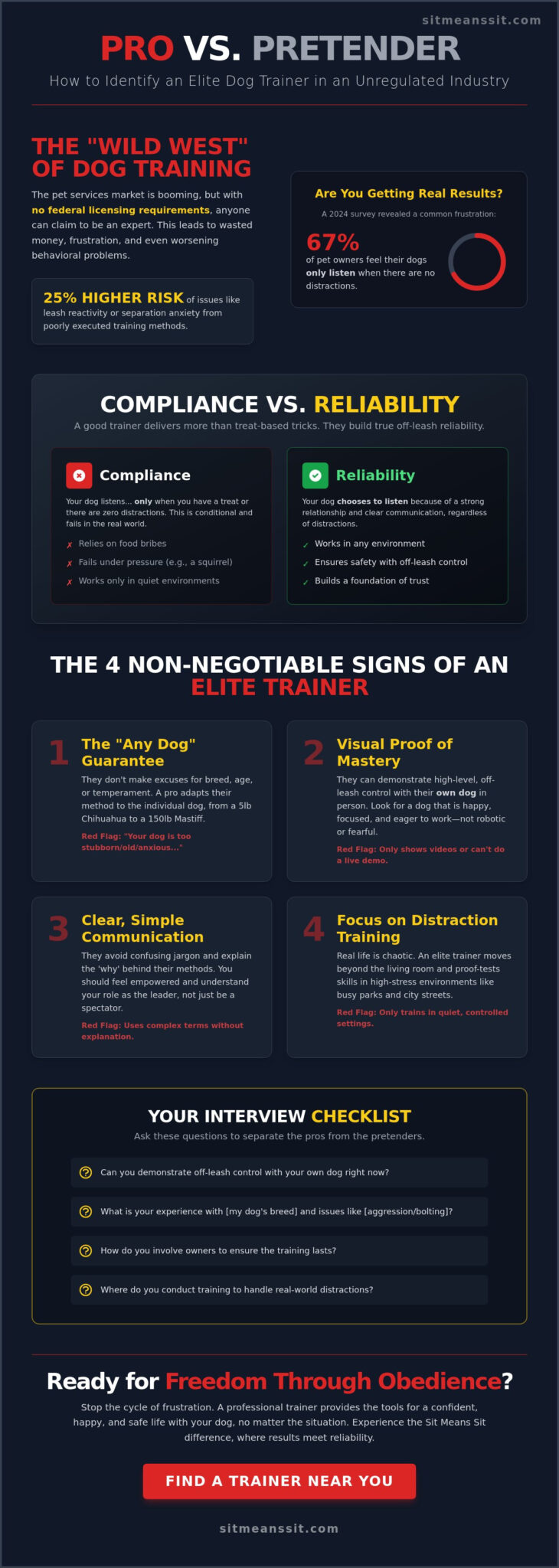
Many owners fall into the trap of hiring someone because they are “nice” or “good with dogs.” Being a dog lover is a hobby, but being a trainer is a science. A professional must possess a deep, technical understanding of how dogs learn to produce consistent results. Without this expertise, you risk the high cost of bad training. This isn’t just about wasted money. Poorly executed methods can lead to increased behavioral frustration, creating a 25% higher risk of leash reactivity or separation anxiety according to recent industry surveys. You need a trainer who replaces “suggestions” with a reliable contract of communication.
The Problem with “Part-Time” Trainers
Experience matters. A hobbyist might successfully train a food-motivated Golden Retriever but fail completely when faced with a high-drive Malinois or a fearful rescue. Professionalism requires exposure to a wide variety of breeds and temperaments. One-size-fits-all methods crumble in high-stress environments like a crowded park or a busy downtown street. You need a specialist who adapts their approach to the individual dog’s personality. A professional trainer is a behavioral architect for the family.
Reliability vs. Compliance
Does your dog only listen when you have a piece of chicken in your hand? That’s compliance, not reliability. If a squirrel runs by and your dog ignores your “come” command, your training has failed the real-world test. True mastery means your dog chooses to listen because the boundaries are clear and the relationship is strong. Achieving this level of dog obedience training ensures your pet remains happy and safe even amidst intense distractions. This reliability is the foundation of off-leash control, giving your dog the freedom they deserve. When looking for the signs of a good dog trainer, always look for someone who prioritizes results that stick when the treats are gone.
The 4 Non-Negotiable Signs of an Elite Professional Dog Trainer
Finding the right person to lead your dog’s transformation isn’t about finding someone who simply likes animals. It’s about finding a results-oriented leader who replaces your frustration with confidence. One of the most obvious signs of a good dog trainer is their ability to handle chaos with absolute calm. You want a professional who sees a problem and immediately provides a definitive solution.
The “Any Dog” Guarantee
If a trainer tells you your Husky is too stubborn or your German Shepherd is too old to learn, walk away. Elite professionals don’t make excuses for genetics or age. They rely on a proven track record that covers every breed in the AKC registry. Whether it’s a 5-pound Chihuahua or a 150-pound Mastiff, the principles of clear boundaries remain the same. A master trainer adapts their energy to fit your dog’s unique personality, ensuring the training is effective and fair.
Visual Proof of Mastery
Don’t just take a trainer’s word for it; ask for a live demonstration. A pro should be able to bring out their own dog and show you exactly what off-leash control looks like in person. Look for a “happy, working” dog. This means the dog is focused, wagging its tail, and eager to perform, not cowering or acting like a robot. If they can’t manage their own pet under pressure, they certainly won’t be able to help you manage yours.
Elite trainers also prioritize two other critical factors:
- Clear Communication: They explain the “why” behind the “how.” You won’t hear confusing academic jargon. Instead, you get practical, punchy instructions that empower you to lead.
- Focus on Distractions: Real life doesn’t happen in a quiet living room. A top-tier pro takes the training to the park or the busy street.
A 2023 survey of pet owners found that 84 percent of dogs listen at home but fail to obey when they see a squirrel or another dog. Your trainer must bridge that gap. They should intentionally introduce distractions like bicycles, tennis balls, and barking dogs during your sessions. This ensures obedience is a definitive contract, not just a suggestion. If you’re ready to stop making excuses for your dog’s behavior, it’s time to talk to a professional who can turn your dog into a focused, happy companion.
Methodology Matters: Why “Suggestions” Don’t Work in the Real World
A command is a definitive contract. It isn’t a suggestion. One of the most telling signs of a good dog trainer is their commitment to results over theories. If your dog only listens when you’re holding a piece of chicken, you don’t have control; you have a business transaction. Real-world safety requires a methodology that works when the stakes are high and the distractions are even higher.
We operate on the philosophy of freedom through obedience. Boundaries don’t restrict your dog’s life. They expand it. A dog that understands clear rules is a dog that can safely enjoy off-leash hikes, trips to crowded patios, and family camping trips. Discipline is the key to a more adventurous, joyful lifestyle for both the human and the animal.
Ignoring bad behavior doesn’t make it disappear. It allows it to root. The “positive-only” myth often fails because it lacks a plan for when a dog decides a squirrel is more interesting than a treat. Balanced communication provides the clarity your dog craves. By using tools like the Remote Training Collar, you provide instant, long-distance feedback that cuts through the noise of the environment. This system ensures consistency that every family member can master, from parents to children.
The Science of Attention
Distractions are everywhere in 2026. A car backfiring or a neighbor’s cat can easily break a pet’s focus. Clear, consistent feedback reduces canine anxiety by removing the guesswork from their daily lives. When a dog knows exactly what’s expected, their stress levels drop significantly. This psychological clarity creates a confident pet that looks to you for leadership rather than reacting in fear or confusion to the world around them.
Tools of the Trade
Professional-grade hardware is about communication, not punishment. Think of a remote collar as a digital leash or a tap on the shoulder from 100 yards away. You want a trainer who provides comprehensive, hands-on instruction on how to use these tools with precision. This technical mastery is what allows everyday pets to reach service dog training levels of reliability. When you have the right tools and the right teacher, you gain the confidence to handle any dog, any age, and any breed in any environment.
Your Interview Checklist: How to Vet a Trainer Before You Commit
Choosing a professional isn’t just about finding someone who likes animals. It’s about finding a coach for your lifestyle. One of the clearest signs of a good dog trainer is their willingness to answer tough questions without hesitation. You are hiring a partner to help you achieve freedom through obedience, so the vetting process must be rigorous and results-oriented.
- Specific Experience: Ask about their history with high-stakes behaviors. If your dog bolts toward a four-lane highway or shows aggression toward guests, you need a trainer who has handled those exact scenarios hundreds of times.
- Program Variety: Look for flexibility. A top-tier facility offers Board and Train programs for rapid transformations and Private Lessons for hands-on skill building.
- Proven Reputation: Verify their status. A trainer backed by a brand with 140+ locations nationwide and thousands of five-star testimonials offers a level of reliability that a solo hobbyist cannot match.
- The Energy Check: Schedule a free consultation. This is your chance to see their confidence firsthand. If they aren’t unfazed by your dog’s worst behaviors, they aren’t the leader you need.
The Owner Education Component
A trainer who “fixes” your dog in isolation is only doing half the job. The results will vanish the moment you get home if you haven’t learned to lead. When you look into puppy training classes, prioritize programs that demand owner involvement. You are the one living with the dog 24 hours a day. A great trainer is a master communicator who teaches you how to maintain consistency and control. If they can’t explain the “why” behind a command in simple terms, they aren’t the right teacher for you.
Red Flags to Avoid
Avoid trainers who rely on “one-size-fits-all” cookie-cutter approaches. Every dog is an individual. If they use the same rigid steps for a timid rescue and a high-drive working dog, the system is flawed. Beware of “trainers” who give vague, rambling answers to your questions. You need punchy, definitive explanations. Another major warning sign is a lack of a clear path to off-leash control. If they cannot guarantee a way to get your dog to listen without a leash in a busy park, they are selling you a suggestion, not a command. Real training is a contract that your dog keeps, regardless of distractions.
The signs of a good dog trainer always point toward mastery and empowerment. They should make you feel like you can take your dog anywhere with total confidence.
Experience the Sit Means Sit Difference: Where Results Meet Reliability
One of the primary signs of a good dog trainer is their refusal to back down from a challenge. At Sit Means Sit, we live by our “Any Dog, Any Age, Any Breed” commitment. Whether you have a tiny Chihuahua or a massive Great Dane, we provide a total transformation. We turn your daily frustrations into lasting freedom. Our immersive programs deliver fast results that stick. You won’t just see a temporary improvement; you’ll see a fundamental change that lasts for years to come.
Our industry-leading Remote Training Collar system is the secret to our success. It provides a clear, consistent signal that cuts through the noise of a busy park or a crowded street. This tool creates a bridge of communication that traditional leashes simply cannot match. We teach you how to use this technology to build a happy, confident pet. You’ll join a family of owners who have reclaimed their homes and their sanity by establishing clear boundaries.
We empower you to become the leader your dog needs. Training isn’t just about the dog; it’s about giving you the tools to maintain control in any situation. When you have the confidence to handle your dog off-leash, the world opens up. You can enjoy hikes, patio dinners, and walks through the neighborhood without the stress of reactive behavior or constant pulling.
Board and Train: The Ultimate Immersion
An immersive environment is the fastest way to break bad habits like jumping, bolting, or leash pulling. Your dog stays with us, receiving 24/7 structure and multiple professional sessions every day. This creates a rock-solid foundation of mastery that simply isn’t possible with once-a-week classes. We handle the heavy lifting of repetitive drills and high-distraction training so you don’t have to.
We build a foundation that you can easily maintain at home. The transition process from our professional facility to your front door is the most important part of the journey. We spend dedicated time with you to ensure the new rules stick in your specific environment. You’ll learn exactly how to reinforce boundaries so your dog remains the well-behaved companion you’ve always wanted.
Start Your Journey Today
Don’t let another day go by feeling stressed by your dog’s behavior. Waiting usually means the problems get more difficult to correct as habits become more ingrained over time. You deserve the confidence of working with a dog behaviorist level of expertise. Our team has seen thousands of cases and knows how to solve yours with precision and care.
Stop managing the chaos and start living the life you imagined with your pet. We are ready to show you what is possible when discipline meets a happy, wagging tail. Schedule your free consultation and see the results for yourself!
Unlock a Lifetime of Adventure with Professional Training
Choosing the right partner for your dog’s education is the most important decision you’ll make as a pet owner. Recognizing the signs of a good dog trainer means looking for a professional who delivers real world results through a proven methodology. You need a coach who prioritizes off-leash control and clear communication over vague suggestions. Since our founding in 1998, Sit Means Sit has provided decades of proven results for families across the country. Our national network of high-energy trainers specializes in any dog, any age, and any breed. We don’t just teach tricks. We build a foundation of mastery that allows your dog to enjoy more freedom safely. It’s time to stop feeling frustrated by jumping or bolting and start feeling proud of your companion’s behavior. You deserve the confidence that comes from a perfectly trained dog. Your journey toward a happier, more disciplined lifestyle starts right now.
Transform your dog’s behavior. Schedule your FREE consultation today!
We’re ready to help you and your dog reach your full potential together.
Frequently Asked Questions
What is the most important sign of a good dog trainer?
The most important sign of a good dog trainer is their ability to demonstrate immediate, off-leash control with their own dog or a client’s dog. You want a professional who shows you results rather than just talking about theories. One of the top signs of a good dog trainer is a commitment to clear, consistent communication that works in any environment. This ensures your pet remains happy and safe even when faced with high-level distractions.
Can any dog really be trained regardless of breed?
Yes, every dog is capable of learning regardless of its breed, age, or past history. Our “any dog, any age, any breed” philosophy has helped over 100,000 families transform their pets into reliable companions. Whether you have a stubborn 2-year-old Bulldog or a high-energy 6-month-old Border Collie, professional structure creates a happy, confident pet. We replace your frustration with mastery and pride by focusing on individual potential instead of breed stereotypes.
What is the difference between a dog trainer and a dog behaviorist?
A dog trainer focuses on teaching obedience and reliable commands, while a behaviorist often addresses clinical issues like severe separation anxiety or aggression through psychological analysis. Most owners need a trainer who delivers practical, real-world results. We focus on “freedom through obedience,” ensuring your dog listens the first time you call. This approach solves 90% of common household problems like jumping, barking, or bolting out the door without needing clinical intervention.
How long should it take to see results from professional training?
You should see a transformation in your dog’s behavior during the very first hour of training. While full mastery takes consistency and practice, a professional program provides immediate clarity for your pet. Most owners report a 70% improvement in focus after just three sessions. We don’t believe in waiting months for progress. Our goal is to jumpstart your lifestyle change so you can enjoy your dog in public spaces right away.
Is it better to do private lessons or a board and train program?
Board and train programs are ideal for rapid results, while private lessons work best for owners who want to be involved in every step of the process. A 15-day board and train program provides 24/7 immersion that builds a solid foundation of discipline. Private lessons allow you to master the techniques alongside your dog. Both paths lead to off-leash control, but your schedule and goals determine which route is most effective for your family.
Should a good dog trainer use treats or tools like remote collars?
A professional trainer uses the right tool for the specific task, which often includes a combination of high-value treats and professional remote collars. These tools aren’t for punishment; they’re for clear, long-distance communication. Using our patented technology, we help your dog understand exactly what you want. This balanced approach ensures your dog stays happy and motivated while giving you the confidence to drop the leash in a crowded park or busy street.
How much does professional dog training usually cost?
According to 2024 industry reports from HomeGuide, professional dog training costs typically range from $150 to $600 for a multi-week group class. Private sessions often cost between $80 and $150 per hour depending on your location. These figures represent the national average for standard obedience programs. Investing in a proven system saves you money over time by preventing property damage and ensuring your dog’s safety in unpredictable, real-world situations.
What should I do if my dog only listens when there are no distractions?
If your dog only listens in a quiet house, you need to proof their commands by gradually adding distractions like bouncing balls or other barking dogs. This is one of the primary signs of a good dog trainer who understands that “Sit” must mean “Sit” everywhere. We train your dog to ignore external triggers and focus entirely on you. Mastering off-leash control means your dog remains reliable whether you’re at home or a busy festival.
Comments are closed.