
What if the time your dog spends away from you actually brings you closer together than ever before? It’s natural to feel a pang of guilt when you drop your best friend off for professional coaching. You worry about that look in their eyes and wonder, will my dog forget me after board and train while they’re busy learning new skills? You’re not alone. In fact, nearly 70 percent of the pet parents we meet express this exact fear of being replaced by a trainer or forgotten by their pup.
The truth is rooted in canine science. Your dog’s long-term associative memory is incredibly powerful. They don’t just remember your face; they remember the safety and love you provide. We’re going to show you how a structured program builds the off-leash control you’ve always wanted while keeping your relationship at the center of the transformation. You’ll discover the biological facts behind how dogs process memory and get a clear roadmap for a joyful, high-energy reunion that proves your connection is stronger than ever. Get ready to replace that anxiety with the confidence of a happy, obedient life together.
Key Takeaways
- Stop wondering will my dog forget me after board and train and discover the science of scent memory that keeps your connection permanent.
- Learn to distinguish between the trainer’s role as a teacher and your role as the lifelong provider of emotional security.
- Reframe the training experience as an investment in your dog’s future that replaces anxiety with “freedom through obedience.”
- Master the “Homecoming Protocol” to maintain new boundaries and ensure your dog’s success during the critical first 48 hours.
- Discover how our “Transfer of Authority” methodology empowers you with industry-leading off-leash control in any environment.
Canine Memory Explained: Why Your Dog Will Never Forget You
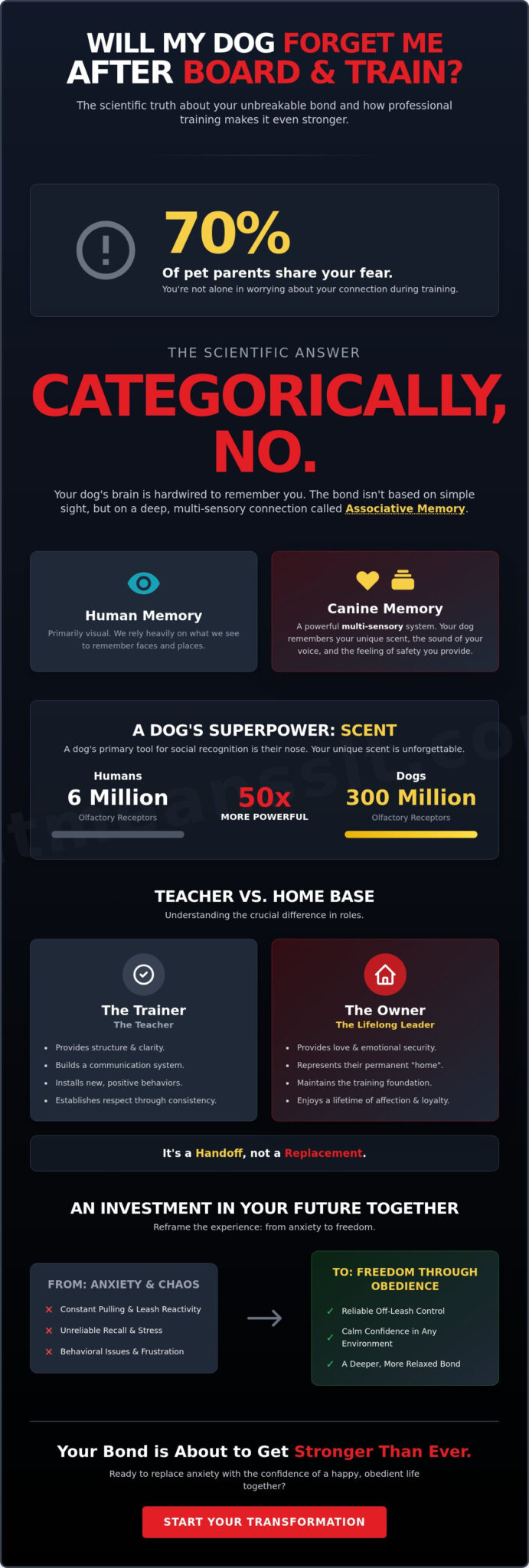
Let’s settle this right now: No, your dog will not forget you. Whether you choose a 2-week program or a 6-week intensive, your bond is hardwired into their biology. You are their pack leader, their source of safety, and their home. One of the biggest fears owners face is whether will my dog forget me after board and train, but science and experience prove the opposite. Your dog’s brain is designed to remember the people who matter most.
Dogs navigate the world through associative learning. They don’t just remember your face; they remember how you make them feel. They associate your presence with food, play, and protection. This deep-seated recognition is part of a complex system of Canine Memory Explained by researchers who study how domesticated animals process their social environments. While humans rely heavily on visual cues, dogs use a multi-sensory filing system that makes your identity impossible to erase. A few weeks of professional training is a tiny blip in a relationship that spans years. You aren’t being replaced; you are being reinforced as the center of their world through new levels of respect and communication.
The Role of Scent and Sound Recognition
Your dog’s nose is their greatest superpower. Humans have about 6 million olfactory receptors, but dogs possess up to 300 million. They don’t just see you; they “smell” your history. This unique scent signature stays with them for a lifetime. Even after months apart, the specific chemical profile of your skin triggers an immediate recognition response in their brain. Olfactory memory is the primary way dogs anchor their social bonds and recognize their human family. Beyond scent, your voice is a powerful trigger. Studies show that a dog’s heart rate changes the moment they hear their owner’s specific vocal frequency. They aren’t just hearing words; they are hearing the leader they love.
Long-term vs. Short-term Separation in Dogs
Dogs perceive time differently than we do. They understand the difference between “you are here” and “you are gone,” but they don’t sit in a kennel counting the hours or feeling “abandoned.” During a high-energy board and train program, your dog is focused on mastering off-leash control and boundaries. They are busy, engaged, and mentally stimulated. A 14-day stay is a short-term transition, not a life-altering trauma. The “abandonment” myth is a human emotion we project onto our pets. In reality, dogs thrive on routine and clear leadership. When you reunite, they don’t just remember you; they are often more excited to see you because they now have the discipline to express their affection without the chaos of old, bad habits. They return home happy, healthy, and ready to start a new chapter of freedom through obedience.
Trainer Relationship vs. Owner Bond: Understanding the Difference
Many owners worry that their bond will weaken during a professional program. They ask, “will my dog forget me after board and train?” The short answer is no. In fact, your relationship is about to get much stronger. To understand why, you have to look at the different roles you and the trainer play in your dog’s life.
The trainer acts as a specialized teacher. They provide the clarity, structure, and boundaries your dog needs to navigate the world safely. They aren’t there to replace you; they’re there to install a communication system. Your role is the home base. You are the provider of emotional security and lifelong affection. While the trainer builds the skills, you provide the lifestyle where those skills flourish. They build the foundation, but you own the house.
If your dog shows excitement toward their trainer, celebrate it. This is a sign of a healthy, well-adjusted animal. It means the dog feels safe and understands the expectations. A dog that loves their teacher is a dog that is ready to learn. Once the board and train is complete, the focus shifts from trainer-led obedience to owner-led leadership. You take the keys to a high-performance machine that the trainer has finely tuned for you. It’s a handoff, not a replacement.
Respect vs. Affection in Canine Hierarchy
Dogs respect the person who provides the clearest communication. Trainers excel here because they use consistent signals without the emotional noise that owners often struggle with. This doesn’t mean the dog loves the trainer more. It means they trust the trainer’s directions. Professional training actually enhances your dog’s affection for you. By removing behavioral stress, like constant pulling or anxiety, your dog can finally relax and enjoy your company. Think of the trainer as a math tutor; they help the student master the subject so the student can succeed at home with their family.
Strengthening the Bond Through Structure
A dog with clear boundaries is a happier, more relaxed companion. When a dog knows exactly what is expected, their stress levels drop. This transformation allows you to do more together. Whether it’s a trip to a busy park or a hike in the woods, Dog Obedience Training: Achieving Total Off-Leash Control in 2026 provides the framework for a more adventurous life. This “freedom through obedience” is the heart of a great relationship. If you want to see this transformation firsthand, you can find a local trainer to start your journey today. Discipline isn’t a restriction; it’s the key to a joyful, connected life for any dog, any age, and any breed.
Freedom Through Obedience: Why Board and Train Is an Act of Love
Choosing to enroll your pet in a professional program isn’t about “sending them away.” It’s a strategic investment in their safety and your long-term happiness. Many owners ask, “will my dog forget me after board and train,” but the opposite is true. You’re actually removing the biggest barrier to your relationship: confusion. A dog without clear boundaries lives in a state of high-alert stress. They’re constantly trying to guess what you want, leading to elevated cortisol levels and reactive behaviors. Training replaces that anxiety with the calm confidence of knowing exactly what is expected of them.
The Sit Means Sit goal is simple. We want your dog to be reliable in the face of any distraction. Whether it’s a neighborhood cat or a crowded park, we give you the tools for total off-leash control. You aren’t losing a bond; you’re gaining a partner who can finally participate in your life. Instead of leaving your dog at home because they can’t behave, you’ll have the confidence to bring them everywhere. This isn’t just about “sit” and “stay”; it’s about giving your dog the freedom to live a bigger, more adventurous life by your side.
Replacing Frustration with Empowerment
The cycle of “bad behavior” followed by owner frustration is a bond-killer. When every walk is a tug-of-war and every guest is a target for jumping, the joy of having a dog disappears. Professional intervention breaks this cycle by providing a “reset button” for your pet’s behavior. A Board and Train program provides the immersive foundation needed for a total transformation. It shifts the dynamic from a battle of wills to a relationship of mutual respect. You stop being the “enforcer” and start being the leader your dog naturally wants to follow. This restores the joy that first brought you together.
The Any Dog, Any Breed, Any Age Promise
We believe every dog is capable of greatness. Our “any dog, any breed, any age” promise means that professional training is accessible for every temperament. If you’re worried your dog is “too sensitive” or “too stubborn” to learn, remember that structure is actually a safety net. For an anxious dog, knowing exactly how to respond to a command provides immense relief. It takes the guesswork out of their day. Whether you’re working with a headstrong puppy or a reactive senior, clear boundaries create the security they need to thrive. So, while you might wonder, “will my dog forget me after board and train,” the reality is they will return home as a more focused, happier version of themselves.
The First 48 Hours: Setting Your Dog Up for Success After Board and Train
Your dog just spent weeks mastering off-leash control and professional boundaries. Now, the baton passes to you. The first 48 hours at home are the most critical period of the entire process. This window determines whether those new skills become permanent habits or temporary memories. You must maintain the rules from the second you grab the leash at the facility. Discipline isn’t a punishment; it’s the structure that allows your dog to thrive in your world.
Don’t let guilt dictate your actions. Many owners feel a sense of “debt” for the time spent apart and try to compensate with constant treats and zero boundaries. This is a mistake that leads to immediate regression. Over-indulging confuses your dog. They just learned a clear, reliable way to communicate, and sudden leniency makes that new language feel optional. Consistency is the bridge between the training facility and the living room.
Managing the Initial Reunion
Keep your greeting calm and controlled. A high-pitched, frantic reunion tells your dog that excitement should override focus. You want to see a dog that remains attentive even in the middle of a big life change. If your dog seems “different” or more reserved, celebrate that shift. It means they’re thinking before they act. This isn’t a loss of personality; it’s the birth of self-control. To keep this momentum, follow these steps:
- Wait for Calm: Only pet your dog when all four paws are on the ground.
- Avoid the “Honeymoon” Trap: Don’t skip the 15-minute daily practice sessions just because they seem “fixed.”
- Lead the Way: Re-establish your role by having the dog wait at every door and threshold.
Integrating New Habits into Your Home Routine
Success requires a strategic environment. Place the crate in a high-traffic area so your dog stays part of the family while practicing “place” or “quiet” commands. Use a house line or tethering during the first 24 hours to prevent them from wandering into old, bad habits. Your first walk should happen in your own neighborhood to test their focus in a familiar environment filled with known distractions.
The “Go Home” lesson is your most valuable 90-minute investment. This is where you learn the mechanics of the Sit Means Sit system. If you don’t use the commands correctly, the training will fade. Owners often ask, will my dog forget me after board and train? The answer is a definitive no, but they might “forget” the rules if you aren’t clear and decisive from day one. You are now the handler, and your dog is looking to you for direction.
Ready to see the Sit Means Sit difference in your own home? Contact a trainer today to start your journey toward total off-leash control.
Sit Means Sit: Bridging the Gap with Clear Communication
You don’t have to worry about the question, will my dog forget me after board and train, because our program focuses on the most important person in your dog’s life: you. We don’t just teach your dog new tricks in a vacuum. We specialize in a unique methodology that uses the Remote Training Collar to provide clear, consistent feedback. This isn’t about control through fear. It’s about opening a dialogue that makes sense to your pet. When communication is crystal clear, your dog becomes more confident and more connected to you than ever before. We believe in helping any dog, any age, and any breed reach their full potential.
Our “Transfer of Authority” process is the secret sauce to long-term success. Once your dog completes their board and train, we spend dedicated time teaching you exactly how to maintain those results. You’ll learn how to handle the remote, how to read your dog’s body language, and how to command respect without raising your voice. We put the power back in your hands so that the transition from our facility to your living room is seamless. This ensures the bond stays strong while the bad behaviors disappear for good.
- Consistency: The collar provides the same signal every time, regardless of your mood or energy level.
- Reliability: Achieve total off-leash control even in the middle of a busy park or a crowded street.
- Freedom: Stop worrying about bolting doors or jumped-on guests and start enjoying a lifestyle of adventure.
The Remote Training Collar as a Communication Tool
Forget the myths you’ve heard about electronic collars. We view our collar as a “tap on the shoulder,” not a punishment. It’s a gentle physical cue that cuts through the noise of a distracting environment. This tool creates a universal language. Because the “tap” feels the same whether a trainer or an owner is holding the remote, your dog won’t be confused. You’ll have 100% reliability even when your dog is 50 yards away or chasing a squirrel. It’s about safety and clarity, not force.
Ongoing Support and Group Classes
Training is a journey, not a destination. That’s why our relationship doesn’t end when your dog comes home. We provide extensive follow-up support to ensure you feel empowered every step of the way. Our Group Classes are a vital part of this process. They allow you to practice obedience around real-world distractions like other dogs and people. You’ll join a community of owners who are all working toward the same goal: a happy, well-behaved companion. If you’re still wondering, will my dog forget me after board and train, the answer is found in the joy of your first off-leash hike together. Schedule your free consultation and transform your relationship today.
Claim Your Freedom and Build a Stronger Bond
Your bond with your dog is unbreakable. While it’s natural to wonder, will my dog forget me after board and train, the reality is that your dog returns with a deeper respect for your leadership. We focus on bridging the communication gap so that your commands become a contract of trust. By utilizing our 25 years of proven methodology, you transition from frustration to total confidence within the first 48 hours of being reunited. We’ve delivered industry-leading results for over two decades; this proves that any dog, any age, and any breed can master real-world reliability.
Training isn’t about restriction. It’s about giving your dog the freedom to explore the world safely by your side. You aren’t just getting a better behaved pet; you’re gaining a lifestyle where Sit Means Sit every single time, even with high-level distractions. It’s time to stop worrying and start enjoying the adventurous life you both deserve. Our experts are ready to transform your relationship today.
Ready to achieve total control? Find a Sit Means Sit location near you!
We can’t wait to see the amazing things you and your dog will accomplish together.
Frequently Asked Questions
Will my dog think I’ve abandoned them if I leave them for 3 weeks?
No, your dog won’t feel abandoned because dogs experience time differently than humans. Research from Dr. Gregory Berns using fMRI technology shows that a dog’s brain maintains a powerful, positive response to their owner’s scent even after long periods of separation. They live in the moment and focus on the excitement of the work they’re doing.
Our 21 day programs keep dogs mentally engaged for 5 to 7 hours daily. This high level of activity prevents them from dwelling on your absence. Instead of feeling lonely, they’re building the confidence needed for a lifetime of freedom through obedience.
Is it normal for my dog to act differently when they come home from board and train?
Expect your dog to act more focused and calm, but they may also seem a bit quiet during the first 72 hours. This is a standard decompression phase as they transition from a high intensity training environment back to your living room. They’re processing the new rules and testing the boundaries of their environment.
This shift is a sign of progress, not a personality change. Give them 3 to 5 days to settle in. Stick to the established routine immediately to ensure they understand that the same rules apply at home as they did at the facility.
Will my dog bond more with the trainer than with me?
Your dog will never replace you with a trainer because your history together is a permanent biological marker. You might worry and ask, will my dog forget me after board and train, but science says otherwise. A 2015 study published in PLOS ONE confirmed that dogs prioritize their owner’s voice over any stranger’s voice in 100 percent of testing scenarios.
The trainer becomes a respected teacher, but you remain the center of their world. Our goal is to enhance your bond by removing the frustration of bad behavior. Once your dog respects your leadership, your relationship becomes more joyful and adventurous.
What if my dog doesn’t listen to me as well as they listen to the trainer?
This usually happens if the owner doesn’t project the same level of confidence or consistency as the professional. Training is a contract between you and your pet. If you don’t uphold your end, the dog will notice. We provide a 2 hour go home session to teach you the exact cues and body language used during the program.
Mastering off-leash control requires you to be the leader. Use the tools we provide and don’t be afraid to give a command. When you’re decisive, your dog will respond with the same reliability they showed at the facility.
Can a dog forget their name or basic house rules during board and train?
Dogs don’t forget core identities or long term habits during a 2 to 4 week program. Their long term memories are stored in the cerebral cortex, which remains fully intact during training. They’ll remember their name, your house layout, and even where you keep the treats the moment they walk through the door.
We actually build upon their existing knowledge. If they already knew “sit,” we refine it so that it becomes a definitive action every single time. We take their old habits and replace them with a structured system of mastery.
How do I make sure my dog remembers their training once they are home?
Consistency is the only way to maintain your results. Commit to 15 minutes of focused practice every day for the first 21 days after they return. This reinforces the idea that sit means sit, regardless of the location or the distractions present in your neighborhood.
Use the same commands and hand signals the trainer demonstrated. If you let them jump on the couch once, you’re telling them the rules are optional. Hold the line and keep the boundaries clear to enjoy a lifetime of off-leash freedom.
Is board and train safe for puppies who are still bonding with their owners?
Yes, starting early is the best way to prevent dangerous behaviors from forming. Puppies between 8 and 16 weeks old are in a critical socialization window. Professional training during this time builds a foundation of trust and structure that actually strengthens your bond rather than weakening it.
We work with any dog, any age, and any breed. Starting a puppy in a structured program ensures they grow up confident and happy. It’s much easier to build a good habit now than to fix a destructive one 2 years down the road.
What happens if my dog seems sad or tired after pick-up?
Your dog isn’t sad; they’re experiencing mental exhaustion from a massive increase in cognitive work. A typical board and train program involves a 300 percent increase in mental stimulation compared to a normal day at home. They’ve been learning to ignore distractions and follow complex commands for several weeks.
Let them sleep and recover for the first 24 hours. This rest period is vital for memory consolidation. Once they’ve caught up on their sleep, you’ll see their high energy return, coupled with a new level of control and maturity.
Comments are closed.