
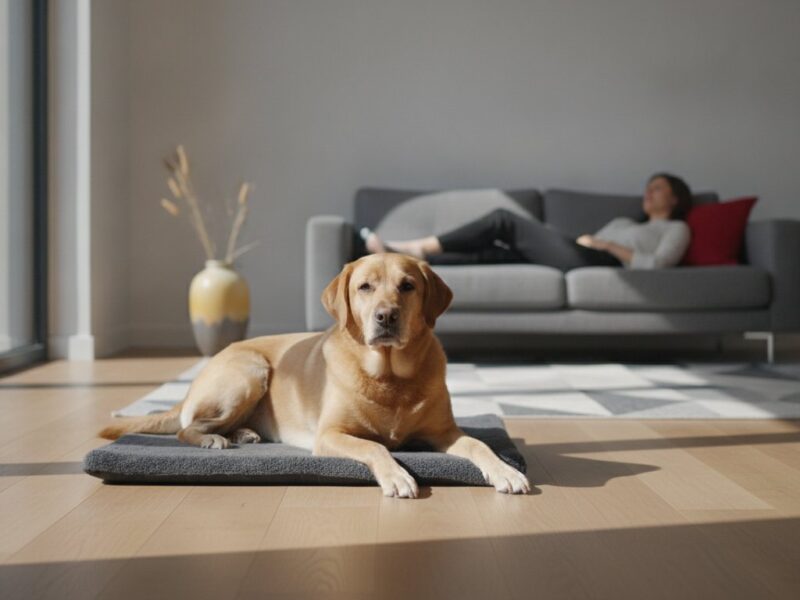
Your sofa isn’t a communal dog bed, and it’s time to stop treating it like one. Training a dog to not jump on furniture is the definitive way to reclaim your living room and your peace of mind. You likely feel the daily exhaustion of vacuuming upholstery or the embarrassment of guests being crowded out of their seats. It’s frustrating to deal with inconsistent behavior that seems to change the moment you walk out of the room. You deserve a home that feels like your own, not a playground for muddy paws.
Discover the professional methodology to establish unbreakable boundaries and teach your dog that the floor is just as rewarding as the sofa. We’re going to replace your current frustration with a sense of total empowerment and pride. This guide previews the “Place” hierarchy and the essential tools needed to ensure your commands are followed every single time. We’ll show you how to use clear communication and steady practice to create a harmonious household. Get ready to transform your living space into a sanctuary where structure leads to a more adventurous, joyful life for both you and your pet.
Key Takeaways
- Understand the psychology of height and scent to realize why your dog views the sofa as a position of authority.
- Master the “Place” command to transform training a dog to not jump on furniture into a positive destination rather than a negative dismissal.
- Leverage the Remote Training Collar as a digital leash to maintain clear, consistent communication even when you are across the room.
- Eliminate “ninja jumping” by establishing total boundaries and avoiding the confusion of inconsistent “invitation only” rules.
- Discover how immersive Board and Train programs can rapidly reset deep-seated habits and establish a new standard of behavior in your home.
Why Your Dog Thinks the Couch is Theirs (and Why ‘No’ Isn’t Working)
Your dog isn’t just looking for a soft place to nap. They are looking for status. In the canine world, height often equals authority. When your dog perches on the back of the sofa, they aren’t just being cute. They are claiming the high ground to monitor their kingdom. This instinctual drive makes training a dog to not jump on furniture feel like a constant battle if you don’t understand the psychology behind the behavior.
Beyond the view, your furniture is a scent magnet. It smells like you, the pack leader. By nestling into your favorite chair, your dog feels connected to your authority and safe within the pack’s core. This is a high-value reward that exists even when you aren’t home. If you only correct the behavior when you’re in the room, your dog learns that the rules are suggestions based on your presence. They start to gamble on your mood, waiting for the moment you’re too tired or too busy to enforce the boundary.
The Psychology of High Vantage Points
Dogs use elevated surfaces to scan for movement and perceived threats. This vantage point reinforces guarding behaviors, making them feel responsible for the entire room. If your couch sits near a window, this height allows them to obsessively track passersby, which often leads to reactive barking and increased anxiety. The couch serves as a permanent environmental reward that provides physical comfort and a strategic vantage point every hour of the day. This constant reinforcement makes the habit incredibly difficult to break without a structured intervention.
The Failure of the Verbal ‘No’
Most owners rely on a sharp “No,” but this word is usually too vague for a dog to process. Does “No” mean “don’t look at me,” “don’t wag your tail,” or “get your paws off the fabric”? Without a specific action attached, your dog simply gets confused. A vague “No” fails for several reasons:
- It lacks a directional command for the dog to follow.
- It is often delivered with inconsistent energy and timing.
- It doesn’t offer an alternative behavior for the dog to perform.
When you finally implement a real plan for training a dog to not jump on furniture, you might even see an “extinction burst.” This is a temporary increase in the bad behavior as the dog tries harder to get the reward they are used to having. You must replace that vague “No” with a definitive, working vocabulary that directs your dog to a better choice.
Boredom also plays a massive role in this struggle. When you leave the house, a dog without a clear job will seek out the most stimulating or comfortable spot available. Couch-surfing becomes a self-soothing mechanism for a dog lacking mental structure. To fix this, you need to stop treating your furniture as an optional luxury and start seeing it as a boundary that requires absolute respect. Consistency isn’t just a suggestion; it’s the only way your dog will learn that the floor is their designated space.
Mastering the ‘Place’ Command for Total Furniture Control
Most owners make the mistake of just telling their dog “No” or “Off.” This is a reactive dismissal. It tells the dog what not to do, but it leaves them with no instruction on what to do instead. Effective training a dog to not jump on furniture requires a proactive destination. You need the “Place” command. This command is the ultimate tool for establishing boundaries that stick, even when you aren’t standing right there to enforce them.
Think of “Place” as a mental on-switch for calm behavior. It isn’t just a physical spot; it’s a job. When your dog is on their designated bed, they are working. This structure replaces the impulse to jump on the sofa with the discipline of staying put. Integrating a Remote Training Collar provides the clear communication needed to bridge the gap between your voice and their actions. It acts like a digital leash, allowing you to guide them to their spot with a subtle “tap” that cuts through their excitement and refocuses their attention.
Defining the Boundaries of the ‘Place’
Start by choosing a tactile boundary. A raised cot or a specific rug works best because the dog can feel exactly where the “Place” starts and ends. Guide your dog to the spot using a leash or the Remote Training Collar on a low, attention-getting level. The moment all four paws are on the target, reward them. You are teaching them that this specific square foot of the house is the most rewarding place to be. If you need help getting started, our private lessons can give you the hands-on guidance to master these fundamentals quickly.
Adding Duration, Distance, and Distraction
Once your dog understands the target, you must proof the behavior using the 3 Ds. First is Duration. Increase the time they must stay before you give the release. Second is Distance. Practice moving away from the bed, eventually leaving the room entirely. Finally, add Distraction. Drop a treat or toss a toy near the couch. If they break the command to investigate, use the Remote Training Collar to redirect them back to “Place” instantly. This builds the reliability required for a truly furniture-free home.
Never let the dog decide when the session is over. The “Release” command is the most vital part of the process. Whether you use “Free,” “Break,” or “Okay,” your dog must wait for that specific word before moving. This ensures you maintain total control of the environment. By establishing this hierarchy, you turn a chaotic living room into a structured space where everyone knows their role. This is the key to reclaiming your home and enjoying a more adventurous life with a well-behaved companion.
Using the Remote Training Collar for Clear Communication
Stop shouting from the kitchen. Verbal corrections often fail because they are slow, emotional, and easily ignored. When you are training a dog to not jump on furniture, you need a tool that speaks their language with total precision. The Remote Training Collar acts as a digital leash. It allows you to reach out and touch your dog instantly, even if you are across the room or distracted by a conversation. This tool doesn’t just stop a bad habit; it opens a clear channel of communication between you and your pet.
At Sit Means Sit Dog Training, our philosophy moves away from punishment and toward proactive instruction. We use the collar to intercept the intent to jump before the dog ever leaves the floor. You can see the moment your dog decides to spring. Their ears perk, their muscles tense, and their eyes lock onto the sofa cushion. By using the collar at that exact second, you redirect their focus back to you. This removes the human emotion from the correction. Your dog no longer sees you as a source of frustration; they see the collar as a neutral reminder of the rules you’ve established together.
The ‘Tap’ Method: Gaining Attention Without Fear
We treat the Remote Training Collar like a tap on the shoulder. It is a physical sensation designed to gain attention, not to cause fear or pain. Every dog has a unique recognition level, which is the lowest setting where they physically acknowledge the signal. We find that specific level to ensure the training is humane and effective. The Remote Training Collar should never be used in anger. Instead, use it as a steady, reliable cue that guides your dog toward the correct choice every single time.
Consistency Across the Whole Family
Structure only works if it is universal. If one person allows the dog on the couch while another enforces the rules, your progress will vanish. Every member of the household must use the same commands and collar levels. This prevents the “softie trap” where the dog learns to manipulate different family members. Use the collar to reinforce boundaries when guests arrive. Instead of letting your dog jump on visitors or the furniture in the excitement, use a well-timed tap to remind them of their “Place.” This level of consistency creates a predictable environment where your dog feels secure and successful. Mastery over the living room is just the beginning of a more disciplined, joyful life together.

Troubleshooting Stubborn Jumpers and ‘Secret’ Sofa Surfers
You think you’ve won the battle. You walk out of the room, and the dog stays on their bed. Five minutes later, you return to find warm spots on the cushions and fresh dog hair on your favorite throw. This is the “Ninja Jumper.” Training a dog to not jump on furniture is easy when you are there to supervise. The real challenge is establishing a boundary that exists even in your absence. These “secret” surfers aren’t being spiteful. They are simply seeking the highest level of comfort and scent-connection when the “policeman” is away.
This behavior often bleeds into other areas of the home, specifically the kitchen. Counter surfing is just furniture jumping with a food reward. If your dog doesn’t respect the boundary of the sofa, they won’t respect the boundary of your dinner prep area. To stop this cycle, you must address the root cause: a lack of clear, non-negotiable rules. Early intervention is the best defense. Our Puppy Preschool programs establish these essential boundaries before bad habits ever have a chance to take root.
Reclaiming the Invitation-Only Rule
Stop playing the “Invitation Only” game with a beginner or a stubborn jumper. It’s a dangerous trap that creates confusion. Your dog doesn’t understand “sometimes.” They need to know that the floor is the default state of existence. Reclaim your territory by making the couch off-limits 100 percent of the time until the behavior is proofed. If you eventually want them up, use a specific “Up” command that is distinct and rare. Any uninvited leap must be met with an immediate, firm redirection to their “Place.”
Environmental Management vs. Active Training
Competitors often suggest “booby-trapping” furniture with tinfoil or scat mats. These methods are temporary and often fail because they focus on fear rather than respect. They manage the environment but they don’t train the dog. Use crates or baby gates as a temporary safety net while your training is in progress. This prevents the dog from self-rewarding on the sofa when you can’t supervise. Your goal is to focus on the dog’s choice to stay down as a rewarding, high-value behavior. If your dog is a master of the secret surf, our private lessons can provide the professional reset you need to stop the cycle for good.
When to Call the Pros: Accelerated Results with Sit Means Sit Dog Training
Sometimes, the sofa surfing has become so ingrained that a simple home correction isn’t enough. If you are struggling with training a dog to not jump on furniture, it’s time to bring in the experts at Sit Means Sit Dog Training. Professional intervention provides a necessary reset for both you and your pet. We take the guesswork out of the process and replace your daily frustration with a clear, proven path to success. You don’t have to settle for a home that feels like a kennel.
Our trainers have encountered every possible challenge, from the “ninja jumper” to the dog that thinks the dining table is a playground. We operate from a place of absolute confidence because we know our methodology works. Whether you choose our immersive programs or one-on-one sessions, the goal remains the same: liberation through structure. We aren’t just teaching a dog to stay on the floor. We are teaching them to respect the boundaries that make a joyful, adventurous life possible.
The Power of Immersive Board and Train
Old habits die hard when they are practiced in the same environment every day. Our immersive Board and Train program removes your dog from the scene of the crime. By placing them in a professional, neutral facility, we strip away the environmental triggers that lead to jumping. Your dog receives 24/7 consistency that is impossible to replicate in a busy household. This immersion factor accelerates learning because every interaction is a teaching moment. You don’t just get back a dog that stays off the sofa; you get a dog that understands the fundamental value of boundaries. We handle the heavy lifting of the conditioning phase, delivering a fully trained companion and the specific knowledge you need to maintain those results for life.
Personalized Coaching for the Human Half
Training the dog is only half the battle. To ensure the results stick, Sit Means Sit Dog Training focuses heavily on coaching the owner. Every home layout is different. Your living room might have a sectional that doubles as a launchpad, or your home office might have a chair that your dog considers their personal throne. Private Lessons allow us to customize the “Place” command for your specific environment. We show you exactly how to maintain the structure we’ve built, ensuring there is no regression when the dog returns home. Joining our family also gives you access to Group Classes. These sessions reinforce skills in high-distraction environments, ensuring your dog remains a model citizen even when the house is full of guests. This is more than a service; it’s a lifestyle change that brings peace back to your living room.
Reclaim Your Living Room and Your Peace of Mind
Sit Means Sit Dog Training brings over 25 years of professional training experience to every client we serve. Our industry-leading Remote Training Collar methodology and results-oriented Board and Train programs are designed to solve even the most stubborn behavioral struggles. We are ready to help you replace frustration with a sense of empowerment and pride. Take the decisive step toward a better life with your pet right now.
Schedule your FREE consultation with Sit Means Sit Dog Training today!
Your journey toward a perfectly behaved companion starts with a single decision. We are excited to help you achieve the liberation that comes with professional structure and unwavering consistency. Let’s get to work and reclaim your home together.
Frequently Asked Questions
How long does it take to train a dog to stay off the furniture?
You can see a total transformation in as little as two weeks with an immersive Board and Train program. While every dog is different, results depend on your commitment to steady practice and 24/7 consistency. If you follow the professional methodology daily, you’ll establish unbreakable boundaries and reclaim your home faster than you thought possible. Rapid progress is the hallmark of a results-oriented approach.
Is it okay to let my dog on the couch sometimes but not others?
Consistency is the only way to succeed. If you allow the dog up “sometimes,” you are teaching them to gamble on your mood, which leads to confusion and frustration. It’s much safer to establish the floor as the default state of existence. Only once your dog is 100 percent reliable should you even consider an invitation-only rule, and even then, it must be on your terms every single time.
What is the best command to use when my dog jumps on the furniture?
The “Place” command is the superior choice because it gives your dog a specific destination rather than just a dismissal. While “Off” tells them what not to do, “Place” tells them exactly where they belong. This proactive strategy is the most effective method for training a dog to not jump on furniture because it replaces an impulsive habit with a structured, rewarding job.
Can older dogs be trained to stay off the sofa if they have done it for years?
Yes, dogs of all ages can learn to respect new boundaries. While a senior dog might have deep-seated habits, they are just as capable of transformation as a puppy. The key is to use a clear communication tool like the Remote Training Collar to reset their understanding of the home hierarchy. Professional trainers specialize in these “hard-to-break” cases, proving it’s never too late for a better life together.
Why does my dog jump on the furniture as soon as I leave the house?
Your dog seeks the comfort of your scent and the security of a high vantage point when they feel unsupervised. Without your presence to enforce the rules, the couch becomes a self-rewarding playground. To stop this, you must proof the behavior with distance and duration. This ensures your dog understands that the “Place” command is a definitive agreement that applies whether you are in the room or not.
Does using a Remote Training Collar hurt the dog?
No, the Remote Training Collar is a communication device that uses TENS technology to deliver a sensation similar to a tap on the shoulder. It is designed to gain attention and refocus the dog, not to cause fear or pain. We always find your dog’s specific recognition level, ensuring the signal is just strong enough to be noticed. This neutral correction removes human emotion and keeps the training focused on well-being.
Should I use a crate if my dog will not stay off the furniture at night?
Using a crate is an excellent environmental management tool while your training is still in progress. It prevents your dog from self-rewarding on the sofa while you sleep, which protects your progress and your upholstery. Think of the crate as a temporary safety net. It provides the structure your dog needs until they have the mental discipline to choose their own bed for the entire night.
What if my dog growls when I try to get them off the couch?
Growling is a clear sign of resource guarding and demands immediate professional intervention. Do not attempt to physically force a growling dog off the furniture, as this can escalate into a dangerous confrontation. This behavior indicates a serious breakdown in the household hierarchy. Training a dog to not jump on furniture in this situation requires an expert reset to establish safety and respect through a structured, results-oriented program.
Comments are closed.