
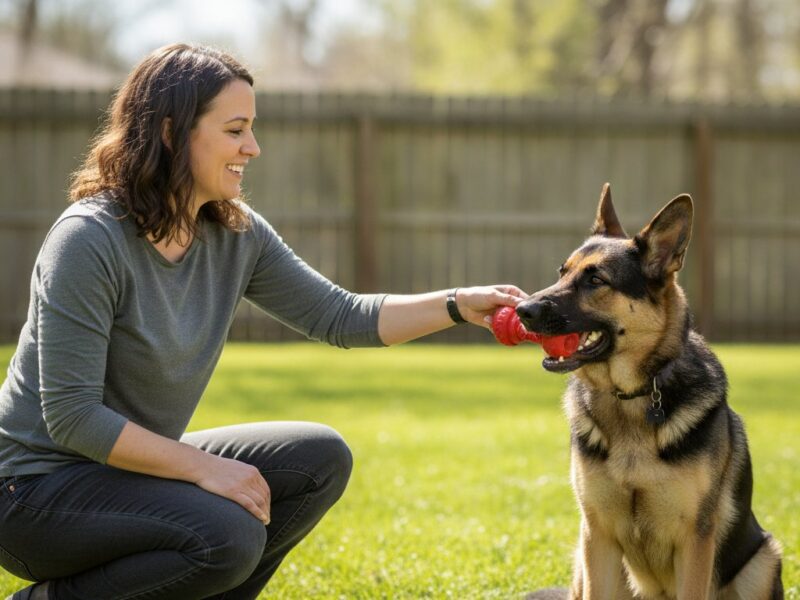
Your dog isn’t “mean” or “broken” because they growl over a bone; they’re simply waiting for a leader to show them a better way to communicate. It’s a terrifying feeling to see your best friend turn into a snarling stranger over a simple chew toy. You want to enjoy your pet without the constant fear of a bite or the anxiety of having guests near your dog’s food bowl.
We understand that frustration. You deserve a home where structure leads to freedom, not a household where you’re walking on eggshells. This guide will show you exactly how to stop resource guarding in dogs by shifting their psychological state from defensive to cooperative. You’ll learn how to replace possessive aggression with calm, reliable obedience through proven professional techniques that prioritize both your safety and your dog’s well-being.
We are going to dive into the exact training drills and leadership shifts required to build a trusting, respectful relationship. From mastering the command to drop any item to establishing clear environmental boundaries, we’ll provide the roadmap to total reliability and lasting peace of mind in your home.
Key Takeaways
- Understand the biological roots of possessive aggression to address the core problem rather than just managing the symptoms.
- Establish immediate safety protocols and “no-conflict zones” to keep your household secure while you begin the training process.
- Discover why traditional “bribing” fails and learn the professional secrets of how to stop resource guarding in dogs through structured leadership.
- Practice five specific training drills designed to replace reactive guarding with a calm, respectful response to your presence.
- Learn how immersive programs like Board and Train can fast-track your results and bring permanent peace to your home.
The Psychology of Possessive Aggression: Why Dogs Guard
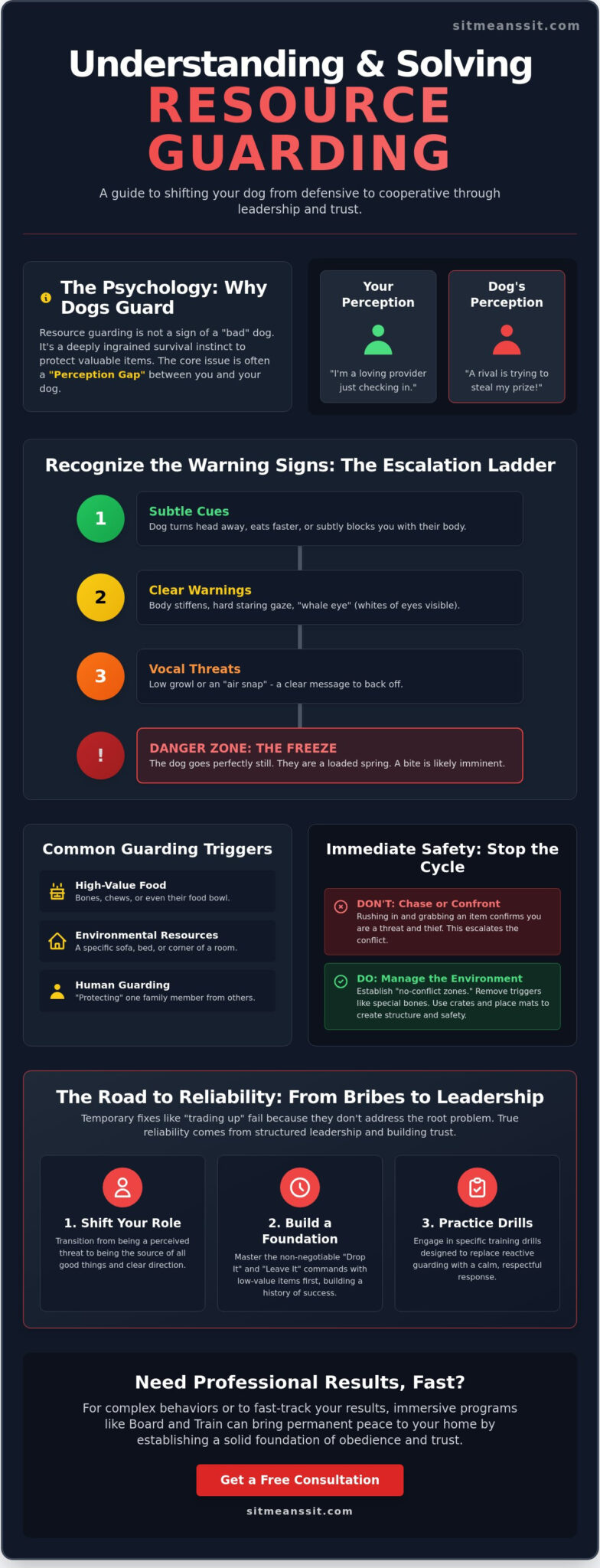
Resource guarding is a reactive behavior where a dog uses distance-increasing signals to protect a valuable item. It isn’t a sign of a “bad” dog; it’s a deeply ingrained survival mechanism. Even the sweetest family pet can show teeth when they feel a resource is at risk. This instinctual drive is known as canine resource guarding. It stems from a biological need to secure food, territory, and social status. When you understand the “why” behind the snarl, you can begin to bridge the communication gap. Understanding this mindset is the first step in learning how to stop resource guarding in dogs effectively.
Most owners fall into the “Perception Gap.” You see yourself as a loving provider approaching your pet to share a moment. Your dog, however, sees a rival moving in to steal their prize. This misinterpretation creates a cycle of conflict. Mild guarding might start with a dog turning their head away or eating faster. If left unaddressed, it quickly escalates into dangerous possessive aggression. This isn’t just about a toy; it’s about a total breakdown in the leadership dynamic. You must shift from being a threat to being the source of all good things.
Common Triggers for Guarding Behavior
- High-value food items: This includes raw hides, marrow bones, or even their standard dinner bowl.
- Environmental resources: Your dog might claim the sofa, your bed, or a specific corner of the room as their exclusive territory.
- Human guarding: Some dogs “protect” one specific family member from others. They see you as a resource they must control.
Reading the Warning Signs
You must learn to read your dog before the growl happens. Subtle cues often go unnoticed until it’s too late. Watch for body stiffening, a hard staring gaze, or “whale eye,” where the whites of the eyes become visible. These are clear directives telling you to back off. Vocal warnings like low growls or air snaps are serious escalations. The most dangerous sign is “The Freeze.” When a dog goes perfectly still, they are loaded like a spring. A bite is often seconds away. Recognizing these moments allows you to intervene safely. We focus on transforming these reactions into calm, reliable obedience through structured practice. Mastery of these signals is vital for anyone looking for how to stop resource guarding in dogs and reclaim peace in their home.
Stopping the Cycle: Immediate Management and Safety Strategies
Safety is your first priority. You cannot effectively teach your dog while you’re both in a state of high alert. Start by establishing a “no-conflict zone” in your home. This means removing triggers like high-value chews or specific toys until you’ve built a foundation of trust. If your dog guards the sofa, they lose sofa privileges for now. Management isn’t a permanent fix, but it’s the bridge to total reliability. It stops the rehearsal of bad behavior while you learn how to stop resource guarding in dogs through structured leadership.
Stop the chase immediately. When your dog steals a forbidden item, your instinct is to rush in and grab it. This is a mistake. To the dog, this confirms that you’re a thief. Instead, stay calm. Use a high-value lure or a squeaky toy to move them away from the object. Once they leave it, secure the item quietly. We want to eliminate the “Finders Keepers” mentality by proving that your presence isn’t a threat to their possessions. If you’re struggling with these initial steps, our private lessons can help you navigate these high-tension moments with confidence.
Structure creates safety. Use physical boundaries like crates, tethers, or place mats to manage the environment. According to veterinary behavior specialists, clear environmental management is critical for reducing the frequency of aggressive outbursts. By controlling the space, you control the outcome. This prevents your dog from feeling the need to defend a “staked claim” in the middle of your living room. It’s about creating a predictable world for your pet.
The “Drop It” and “Leave It” Foundation
These two commands are your lifeline. They’re non-negotiable for any dog owner. Start training with low-value items that your dog doesn’t care about, like a plain rubber toy. Build a massive history of success before you ever try to take away a bone. You want the command to be an automatic reflex, not a negotiation. Reliability comes from thousands of successful repetitions in low-stress environments. This is the core of how to stop resource guarding in dogs before the situation escalates.
Safe Interaction Protocols
Transform your approach into a bonus. Use the hand-feeding technique to build a positive association with your hands near their food bowl. If you’re walking past your dog while they chew, toss a high-value treat their way without stopping. You’re teaching them that your approach predicts something better, not a loss. In multi-dog households, always feed pets in separate rooms or crates. Preventing inter-pet guarding is just as important as preventing guarding against humans. Consistent protocols ensure everyone stays safe and relaxed.
Beyond “Trading Up”: Why Structure Outperforms Temporary Fixes
Stop the bribes. Many owners rely on “trading up” as their primary strategy. While resources like the SPCA of Northern Nevada on resource guarding explain the basics of trading, this method often fails during high-stakes moments. If your dog values the bone more than the treat, your leverage disappears. This creates a “Bribe Trap” where the dog only cooperates when you have a better prize. To master how to stop resource guarding in dogs, you must shift the focus from the object to the owner.
True reliability comes from structure, not snacks. In 2026, household safety depends on a dog that listens regardless of distractions. The Sit Means Sit methodology creates a clear line of communication that overrides possessive instincts. We replace the “negotiation” mindset with a “directive” mindset. This isn’t about restriction. It’s about liberation through clear boundaries. When a dog understands their role in the family, the need to guard resources naturally fades away.
The Science of Attention
A dog focused on you cannot be focused on guarding. We use the Remote Training Collar as a gentle “tap on the shoulder” to gain focus. This signal breaks the dog’s fixated stare on the resource. It’s a neutral, clear way to say “look at me.” When your dog understands that your commands are definitive agreements, the anxiety of “protecting” an item vanishes. They learn to trust your leadership instead of their own defensive instincts. This shift in attention is the secret to total reliability.
The Role of Professional Tools
Forget the myths you’ve heard about electronic collars. When used professionally, these tools provide the clear feedback a dog craves. Confusion is the primary driver of dog anxiety. A consistent, predictable signal removes that confusion entirely. This steady practice is the only way to achieve long-term behavioral transformation. It’s the most effective way to learn how to stop resource guarding in dogs because it replaces conflict with cooperation. You aren’t just stopping a behavior. You’re giving your dog the gift of a joyful, structured life.
The Road to Reliability: 5 Drills to End Resource Guarding
Theory is useless without action. You’ve learned the “why” of possessive behavior, but now it’s time to build the habits that last a lifetime. These five drills move you beyond simple avoidance and into the world of total reliability. This is the definitive path for how to stop resource guarding in dogs through structured, high-energy practice. We don’t just want a dog that tolerates your presence. We want a dog that looks to you for direction in every high-stakes moment. Mastery comes from the quiet moments of repetition that happen long before a conflict ever arises.
- The “Place” Command: This creates a neutral zone where the dog knows the rules. When they’re on “Place,” they’re working. This mental shift reduces the impulse to guard because they’re focused on the task of staying put.
- The “Approach and Add” Drill: This is the cornerstone of building trust. You want your dog to view your approach as a winning lottery ticket.
- The “Out” Command: A clean drop is non-negotiable. We don’t pry mouths open; we command a release. This requires a history of clear feedback and high-value rewards.
- The “Look at Me” Reset: Fixation is the enemy of safety. Breaking that hard stare with a focus command resets the dog’s emotional state instantly.
- The “Recall from Resource” Challenge: This is the ultimate test of your leadership. Calling your dog away from a high-value item proves that your bond is stronger than their instinct.
Step-by-Step: The Approach and Add Drill
Start outside your dog’s “reaction bubble” while they have a low-value chew. Don’t reach for the item or stop moving. Simply toss a high-value treat near them as you walk past. Gradually decrease your distance over several sessions as your dog shows relaxed body language. The goal is simple: your dog should look up at you expectantly when you approach. You’re rewiring their brain to see your movement as a bonus, not a threat. This is a foundational step in how to stop resource guarding in dogs and replacing tension with excitement.
Mastering the “Place” Command
Define the boundaries of the “Place” mat or bed clearly. Your dog must understand that “Place” is a definitive agreement to stay until released. Build duration and distance while your dog has a resource on the mat. This links dog obedience training directly to impulse control. When your dog can stay calm on their mat while you move around them, you’ve achieved a massive win for household peace. If you’re ready to transform your dog’s behavior with professional precision, contact us for a consultation and see the difference structure makes.
Professional Results: How Sit Means Sit Solves Complex Behavior Problems
Stop walking on eggshells in your own home. While home drills are a vital start, some cases require the steady hand of a professional. If your dog has a high drive, a stubborn streak, or a history of snapping, DIY methods might not be enough to ensure total safety. Recognizing when you need expert help is a sign of a responsible owner. We specialize in high-tension cases where generic advice fails. Our mission is to show you exactly how to stop resource guarding in dogs while rebuilding the bond you once enjoyed with your pet.
Mastery is our standard. We don’t just manage symptoms; we transform the dog’s internal state. Whether through customized Private Lessons in your home or our immersive programs, we provide the clarity your dog craves. You deserve to feel empowered and proud of your pet’s progress. Our approach replaces your frustration with a definitive plan for success. We’ve encountered every possible challenge and remain unfazed, projecting the confidence you need to reclaim your household peace.
The Board and Train Transformation
Immersive conditioning is the fastest path to results. The Board and Train advantage allows our experts to work with your dog in a controlled, high-stimulation environment. We do the heavy lifting of breaking deep-seated guarding habits and building a rock-solid foundation of obedience. During this program, your dog learns that every directive is a definitive agreement, not a suggestion. When you pick them up, we teach you how to maintain these skills easily. It’s a total lifestyle change that brings permanent peace to your family.
Puppy Prevention: Starting Right
The best way to handle possessive aggression is to stop it before it ever begins. Our puppy training classes focus on early socialization and proactive handling drills. We teach young dogs that human interaction around resources is always a positive experience. By setting clear boundaries from day one, you ensure a lifetime of reliability. Prevention is the ultimate strategy for how to stop resource guarding in dogs from developing in the first place.
Your journey ends with a happy, confident dog and a sense of absolute liberation. Discipline isn’t a restriction; it’s the key to an adventurous and joyful life together. Imagine taking your dog to the park or having guests over without a second thought about their behavior. That’s the Sit Means Sit promise. We turn your anxiety into pride, creating a trusting relationship built on respect and clear communication. Your dog’s transformation starts the moment you decide to lead.
Reclaim Your Peace and Your Dog’s Trust
You’ve learned that stopping the snarl isn’t just about the toy; it’s about the relationship. Moving from management to mastery requires a shift in how you communicate. By using structured drills like the “Approach and Add” and establishing clear boundaries with the “Place” command, you’re giving your dog the clarity they need to relax. Structure is the ultimate gift you can give your pet. It replaces their anxiety with a sense of security and purpose.
Now you have the definitive roadmap for how to stop resource guarding in dogs and transform your home into a safe haven. Sit Means Sit brings over 25 years of professional dog training excellence to your doorstep. Our specialized Remote Training Collar methodology provides the off-leash control necessary for real-world reliability. We offer results-oriented programs tailored to even the most severe behavioral issues. You don’t have to navigate this journey alone. Our experts are ready to turn your frustration into pride.
Find a Sit Means Sit trainer near you and reclaim your home today!
Your dog is waiting for a leader. Take the first step toward a more adventurous, joyful life together. You have the tools and the support to achieve total reliability. Let’s make your home a place of peace and connection once again.
Frequently Asked Questions
Is resource guarding in dogs a sign of dominance?
Resource guarding is an instinctual survival mechanism, not a sign of dominance. Dogs guard because they fear losing something they value. If you view this as a power struggle, you’ll only increase their anxiety. Focus on building trust and clear leadership instead of fighting for a “dominance” spot. We replace that insecurity with a foundation of structure and confidence.
Can resource guarding be cured, or just managed?
You can achieve total reliability through behavioral modification rather than just settling for management. While management prevents immediate conflict, professional training addresses the psychological root of the behavior. By changing the dog’s emotional response to your approach, you move from “hiding items” to a dog that happily yields any resource. This is the core of how to stop resource guarding in dogs for good.
Should I punish my dog for growling when they have a bone?
Never punish a dog for growling. The growl is a vital communication tool that warns you of their discomfort. If you punish the growl, you don’t fix the underlying fear; you simply remove the warning system. This creates a “silent biter” who lunges without notice. Respect the warning and address the cause through the structured training drills we’ve discussed.
How do I stop my dog from guarding me against my spouse or children?
Guarding a person requires a shift in household leadership and clear boundaries. The guarded person must stop being a resource the dog controls. Practice drills where the guarded person remains neutral while others provide rewards and direction. Establishing a solid “Place” command ensures the dog remains in a neutral zone during family interactions, preventing them from “claiming” a specific person.
What is the best way to handle a dog that guards the sofa or bed?
The most effective way to handle furniture guarding is to implement a strict “off” policy until the behavior is resolved. Use a leash to guide the dog off the sofa without a physical confrontation. Replace sofa time with a designated “Place” mat. Once the dog understands that furniture access is a privilege you grant, you can slowly reintroduce it under strict command.
How long does it take to fix resource guarding with professional training?
Results vary based on the dog’s history, but professional programs often see significant shifts within two to four weeks. Immersive options like a Board and Train provide the fastest path to reliability because the dog lives in a structured environment. Consistency from the owner after the program is the key to maintaining these life-changing results and ensuring total household peace.
Can a puppy develop resource guarding behavior?
Yes, puppies as young as eight weeks can show signs of guarding behavior. This often happens during the critical socialization window between 3 and 16 weeks of age. Early intervention with handling drills and “Approach and Add” exercises is vital. Starting early ensures your puppy grows into a confident adult who doesn’t feel the need to protect resources from their family.
Is it safe to use a remote training collar for a dog with possessive aggression?
It is safe and highly effective to use a Remote Training Collar when it’s applied as a professional communication tool. We use it to gain focus and break the dog’s fixated stare on an object. This gentle signal provides the clarity the dog needs to listen in high-stress moments. It’s a key component in how to stop resource guarding in dogs because it replaces confusion with neutral feedback.
Comments are closed.