
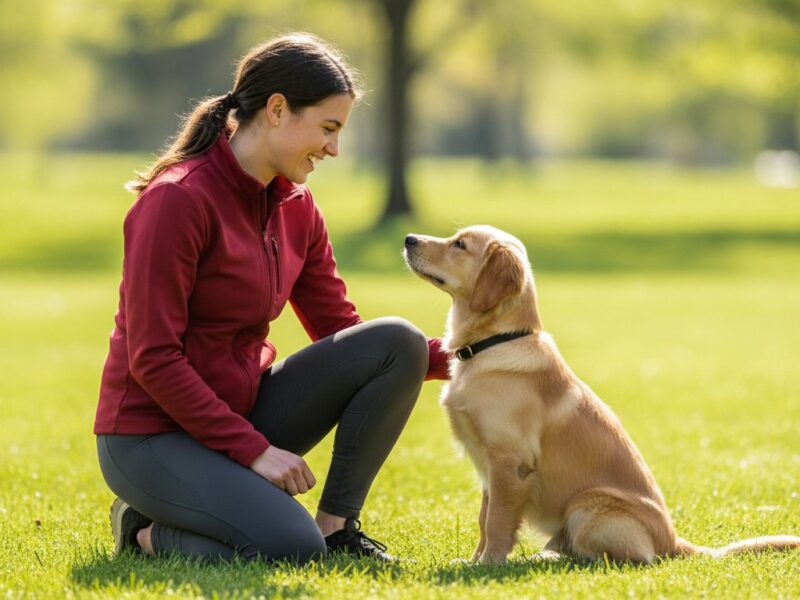
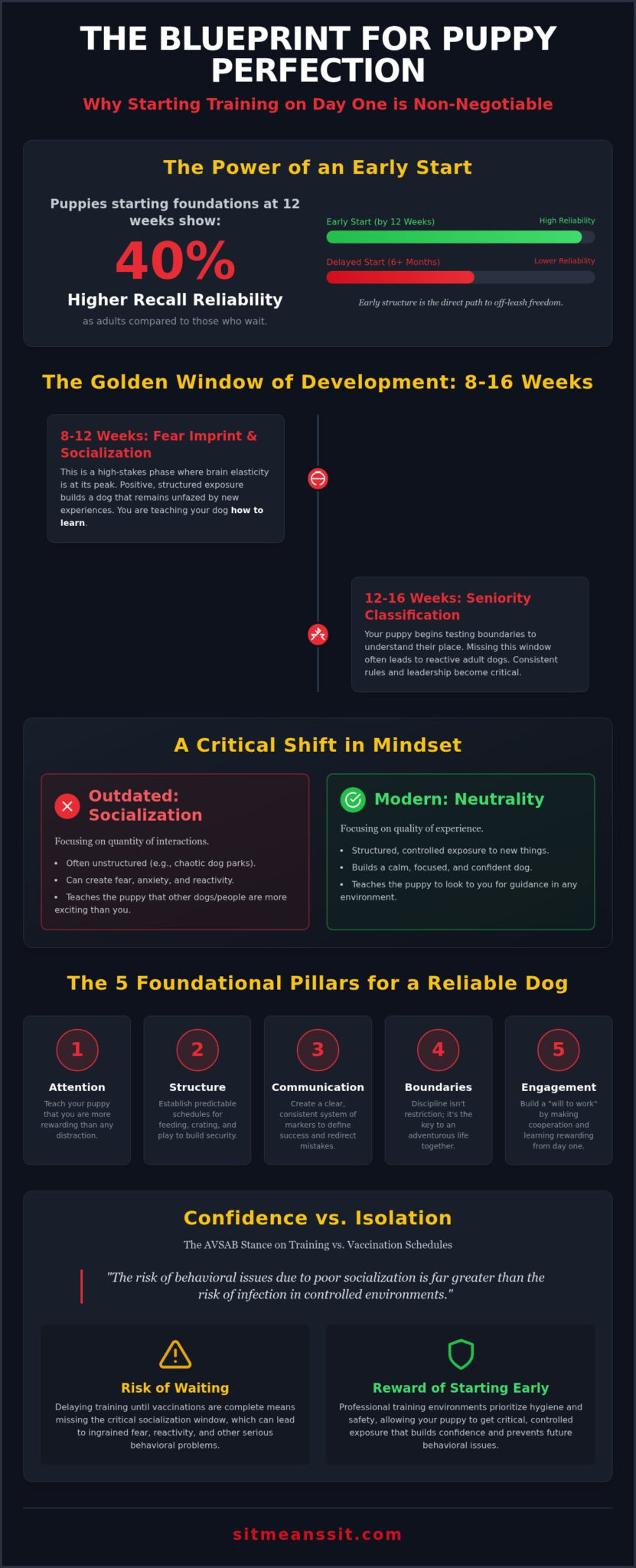
Puppies who begin off-leash training foundations at just 12 weeks old show 40% higher recall reliability as adults compared to those who wait. If you are wondering when to start puppy training, the answer is the very moment they step into your home. You likely feel the pressure of the critical socialization window while dealing with the daily frustration of nipping and potty accidents. It is exhausting to sift through conflicting advice online while your carpet is at risk. We hear you, and we have the definitive solution.
Starting puppy training on day one is the secret to total reliability and off-leash freedom. This guide replaces your uncertainty with absolute confidence and a clear path to mastery. You will learn how to leverage the golden window of development to ensure your dog listens the first time, every time. We are diving into the exact 2026 success strategy to transform your puppy into a focused, adventurous partner. Let’s stop the guesswork and start building the bond you deserve through structure and clear communication.
Key Takeaways
- Knowing when to start puppy training is the difference between a reactive dog and a reliable partner; start at eight weeks to avoid common behavioral pitfalls.
- Shift your focus from basic socialization to environmental neutrality to ensure your puppy remains calm and focused in any high-stimulation setting.
- Master the five foundational pillars of training early to turn discipline into a tool for lifelong off-leash freedom and adventure.
- Learn why professional Puppy Preschool is a strategic investment that builds a sophisticated communication system far beyond what standard play classes offer.
The Golden Window: Why You Should Start Puppy Training at 8 Weeks
Stop waiting for your puppy to “grow up” before you start teaching them how to behave. The outdated advice to wait until six months is a recipe for behavioral disaster. By that age, your dog has already spent months practicing bad habits that will take twice as long to fix. Puppies are cognitive sponges. They begin learning the moment they walk through your front door. When owners ask when to start puppy training, they are often surprised to hear that the clock is already ticking. If you don’t provide a blueprint for behavior, your puppy will invent their own, and you likely won’t enjoy their choices.
The period between 8 and 16 weeks represents the peak of brain elasticity. This is your window of opportunity to install a communication system that lasts a lifetime. Understanding the science of dog training reveals that early engagement creates permanent neurological pathways. You aren’t just teaching a “sit” or a “stay” right now. You are teaching your dog how to learn and how to look to you for guidance in a busy world. This early structure is the direct path to the off-leash freedom every owner craves.
Day One Foundations
Effective training starts with engagement and attention rather than specific commands. Your first goal is to make yourself the most interesting thing in your puppy’s environment. Establish a predictable schedule for feeding, crating, and play immediately. This routine builds a foundation of security and trust. Remember, “un-training” a destructive habit is ten times harder than starting correctly from the beginning. By setting clear boundaries on day one, you replace future frustration with immediate empowerment. Discipline isn’t a restriction; it’s the key to an adventurous life together.
The Vaccination vs. Training Debate
Many new owners hesitate to start because of unfinished vaccination schedules. However, the American Veterinary Society of Animal Behavior (AVSAB) is clear: the risk of behavioral issues due to poor socialization is far greater than the risk of infection in controlled environments. You can safely determine when to start puppy training by choosing professional programs like our Puppy Preschool. These environments prioritize hygiene while ensuring your puppy gets the critical exposure they need. Controlled exposure during this window prevents fear-based reactivity and builds the environmental neutrality required for a well-behaved adult dog. Choose confidence over isolation.
The Science of Early Learning: How Puppies Absorb Information
Puppies are biological sponges. From the moment they arrive, they are gathering data about their environment and the humans within it. This is why deciding when to start puppy training must happen immediately. Every jump, nip, or quiet moment is being reinforced by environmental feedback. Operant conditioning isn’t a complex academic theory; it’s the reality of daily life. Your puppy performs an action, and the consequence determines if they do it again. If you don’t control the consequences, the environment will. You want to be the one shaping their worldview before the world does it for you.
Building a “will to work” is easiest while the puppy is naturally inquisitive and food-motivated. During these early weeks, their desire to engage is at an all-time high. You aren’t just teaching tricks; you’re building a lifestyle of cooperation. This engagement prevents the frustration that comes when an older dog decides the environment is more interesting than their owner. Start now to ensure that listening to you becomes their default setting, not an optional suggestion. Structure today means freedom tomorrow.
Cognitive Development Milestones
Between 8 and 12 weeks, puppies experience their primary socialization and fear-imprint period. This is a high-stakes phase where a single negative experience can leave a lasting mark. Conversely, positive, structured exposure builds a dog that remains unfazed by sirens, vacuum cleaners, or strangers. Once they reach 12 to 16 weeks, they enter a phase of seniority classification. They begin testing boundaries and determining their place in the household hierarchy. Missing these milestones often results in reactive adult dogs that struggle to process new information. Applying effective obedience training tips and strategies will help you stay ahead of these developmental shifts and keep your puppy on the right path.
Attention-Based Methodology
The most critical skill your dog will ever learn is attention. Without it, a “sit” command is useless in a crowded park. You must teach your puppy that you are more rewarding and interesting than a squirrel or a passing car. This requires clear markers to define success and redirect mistakes instantly. At Sit Means Sit Dog Training, we focus on clear, consistent communication that cuts through the noise of a high-stimulation world. We build focus by tapping into their natural curiosity before it turns into stubbornness. If you want to see this transformation in action, our Puppy Preschool is designed to build this unbreakable focus from the ground up. Reliability starts with a single look.
Socialization vs. Neutrality: Building a Confident Puppy
Most owners mistake socialization for a never-ending party where their puppy must meet every person and dog on the street. This approach is a recipe for a reactive adult dog. If your puppy learns that every stranger is a playmate, they will eventually become a “frustrated greeter” who lunges and barks when they aren’t allowed to say hello. You want a dog that is neutral, not obsessed. When deciding when to start puppy training, you are choosing the moment to teach your dog how to ignore the world in favor of your guidance. Neutrality is the true mark of a confident, well-adjusted partner.
At Sit Means Sit Dog Training, we prioritize environmental neutrality through controlled exposure. We don’t just “expose” a puppy to a situation; we provide the structure they need to process it calmly. This creates a dog that can walk through a crowded festival or sit at a busy outdoor cafe without losing focus. You are building a communication system where your commands carry more weight than any external distraction. This isn’t about restricting your dog’s life. It is about giving them the skills to participate in your life safely and confidently.
The Exposure Checklist
Building environmental stability requires a diverse checklist of experiences. Your puppy needs to feel different surfaces under their paws, hear various high-pitched sounds, and exist in busy environments without direct interaction. The goal is for these things to become “background noise.” Focus on these categories during your first few weeks:
- Diverse Surfaces: Metal grates, slick tile, gravel, and wobbly bridges.
- Varied Sounds: Sirens, vacuums, lawnmowers, and cheering crowds.
- Controlled Environments: Shopping centers, parks, and parking lots.
For the best results, join our puppy training classes to practice these skills in a structured group setting. This allows your puppy to learn when to start puppy training foundations while surrounded by other dogs, teaching them that they can be near others without needing to play or react. This is how you build a dog that remains calm anywhere.
Impulse Control in the Real World
Impulse control is the invisible leash that keeps your dog safe. It starts with small, daily expectations: waiting for their food bowl, staying calm at the front door, and keeping all four paws on the ground during greetings. These moments teach your puppy that patience leads to rewards. This transition from “puppy brain” to a focused partner is essential for a safe, off-leash lifestyle. A dog that can control their impulses is a dog that can be trusted in high-stimulation environments. Start these habits today to ensure total liberation tomorrow.
Core Puppy Skills: The 5 Foundations for a Reliable Dog
Structure is the backbone of a joyful life with your dog. Without clear boundaries, your puppy is left to guess how to behave in a human world. This confusion leads to the very anxiety and destruction you want to avoid. By implementing a consistent system now, you are building the reliability required for future adventures. If you are still debating when to start puppy training, remember that every day without a plan is a day spent practicing bad habits. These foundations prepare your dog for high-level dog obedience training as they reach physical maturity.
1. Crate Training and Housebreaking
Think of the crate as a safe haven, not a punishment. Proper crate training utilizes a dog’s natural denning instinct to provide a secure space where they can relax. It is the most effective tool for establishing a foolproof potty schedule. By controlling your puppy’s environment through strategic confinement, you eliminate the opportunity for accidents before they happen. Confinement is a vital life skill. Whether at the vet or traveling, a dog that is comfortable in a crate is a dog that remains calm under pressure. Establish this routine immediately to build long-term security.
2. Leash Communication and Pressure
A leash should be a communication tool, not just a tether. Most owners allow their puppies to pull, which teaches the dog that tension on the neck is the way to get what they want. You must flip this narrative. Teach your puppy to move with you by using light leash pressure as a form of clear direction. When they feel pressure, they should learn to yield to it rather than fight it. This simple shift in communication sets the stage for future off-leash freedom. You are building a partnership where the dog stays tuned into your movement, regardless of the distractions around them.
3. The “Place” Command and Thresholds
Mastering the art of doing nothing is a superpower for a high-energy puppy. The “place” command acts as a physical boundary that tells your dog exactly where to be and how to act. It is the “settle” button every owner needs during dinner time or when guests arrive. Similarly, teaching your puppy to respect thresholds like doorways and car ramps prevents bolting and promotes impulse control. You want a dog that waits for a directive before moving into a new space. If you want to see how these foundations transform your daily life, contact our expert trainers to start your journey today.
Professional Puppy Preschool: When to Call the Experts
Professional Puppy Preschool is a strategic investment in your dog’s future. Many owners view training as an expense to be deferred, but this is a mistake. Fixing deep-seated behavioral issues like aggression or extreme reactivity later in life is far more costly than starting correctly on day one. When you decide when to start puppy training, you are choosing the quality of your dog’s adult life. Professional guidance ensures you navigate the critical socialization window with precision and purpose. You don’t have to guess if you are doing it right when you have an expert in your corner.
A typical “play class” at a local big-box store often lacks the structure required for real-world reliability. These classes frequently become chaotic environments where puppies learn to ignore their owners in favor of other dogs. Sit Means Sit Dog Training programs are different. We focus on environmental neutrality and engagement from the very first session. You have the choice between our immersive Board and Train programs or tailored Private Lessons. Both paths lead to the same goal: a dog that listens the first time, every time, regardless of the distraction.
The Sit Means Sit Dog Training Advantage
Our Puppy Preschool is specifically designed for early development. We don’t just let dogs play; we teach them how to focus in the presence of other puppies. A key part of our results-oriented approach is the introduction of the Remote Training Collar as a sophisticated communication tool. At Sit Means Sit Dog Training, we use this to establish clear, consistent signals that cut through the noise of a high-stimulation world. This isn’t about restriction. It’s about creating a common language that empowers your puppy to succeed. This clarity builds a more joyful bond because your dog finally understands exactly what you expect.
Transitioning to Adult Obedience
The puppy phase is just the beginning of your journey. Maintaining momentum is the only way to achieve total off-leash control as your dog matures. Puppies eventually enter adolescence, a period where they naturally test boundaries and seniority. Professional trainers help you navigate these transitions without losing the progress you’ve worked so hard to achieve. You’ll know your dog is ready for advanced training when they consistently offer engagement in busy parks or shopping centers. Don’t let your hard work fade. Keep the standards high and the rewards even higher.
Ready for a transformation? Schedule your free puppy consultation today!
Take Control of Your Puppy’s Future Today
Waiting to train is a gamble you don’t need to take. By understanding when to start puppy training, you’ve already prioritized a lifetime of off-leash freedom over years of behavioral frustration. Focus on the golden window of 8 to 16 weeks to build environmental neutrality and unbreakable attention. Structure is not a restriction. It is the definitive path to a joyful, adventurous life where your dog listens the first time, every time.
Sit Means Sit Dog Training has delivered proven results since 1998. Our expert trainers specialize in off-leash communication and offer customized programs ranging from Puppy Preschool to immersive Board and Train options. We replace your uncertainty with absolute confidence and a clear roadmap for success. Don’t wait for bad habits to take root. Transform your puppy into a focused partner, schedule your FREE consultation!
Your journey to total reliability starts right now. We are ready to help you build the unbreakable bond you’ve always imagined.
Frequently Asked Questions
Is 8 weeks too young to start puppy training?
Eight weeks is the perfect age to begin building a communication system with your new pet. At this stage, their brains are highly elastic and ready to absorb environmental rules and engagement habits. Starting early prevents bad habits from ever taking root and ensures your dog looks to you for guidance. Waiting longer only makes the process more difficult for both of you as they age and grow.
What is the most important command to teach a puppy first?
Attention is the single most important skill to master before any specific command like sit or stay. You must teach your puppy that you are more interesting than anything else in the environment. Once your dog defaults to looking at you for direction, every other part of obedience becomes significantly easier. This focus is the foundation of total off-leash control and a joyful, adventurous life together.
Can I train my puppy before they are fully vaccinated?
You can and should begin training in safe, controlled environments before the final round of shots. While you should avoid high-traffic public dog parks, professional Puppy Preschool programs prioritize hygiene and safety. The behavioral risk of missing the socialization window is often greater than the medical risk of controlled exposure. Consult your vet to balance these factors while keeping your puppy’s development on the right track.
How long should puppy training sessions be?
Keep your puppy training sessions short and high-energy, typically lasting between five and ten minutes. Puppies have limited attention spans, and you want to end every session on a successful note while they are still excited to work. Multiple short bursts of practice throughout the day are far more effective than one long, exhausting session. Consistency in these small moments leads to a lasting lifestyle transformation.
What is the “fear period” and how does it affect training?
The fear period is a natural developmental phase, often occurring between 8 and 12 weeks, where puppies are more sensitive to scary experiences. During this time, a single negative event can cause long-term reactivity. Use structured, positive exposure to build confidence and help them navigate new sights and sounds calmly. Professional guidance during this window ensures your puppy remains neutral and resilient in any high-stimulation environment.
Should I use a crate for my puppy?
Yes, a crate is an essential tool for providing structure, safety, and a clear housebreaking schedule. It mimics a dog’s natural denning instinct and gives them a dedicated place to rest without distractions. When used correctly, a crate becomes a safe haven rather than a punishment. It also prevents destructive behaviors and keeps your puppy safe when you cannot provide direct, active supervision during the day.
When is a puppy old enough for a Board and Train program?
Puppies can typically enter an immersive Board and Train program once they are around 16 weeks old and have completed their vaccinations. This intensive environment allows professional trainers to establish deep-seated reliability in a short period. If you are wondering when to start puppy training in a professional setting, we offer Puppy Preschool for younger pups to bridge the gap until they are ready for advanced programs.
How do I stop my puppy from biting and nipping?
Stop puppy biting by immediately redirecting their mouth to an appropriate toy or chew. If the nipping continues, use a brief time out or remove your attention to show that the behavior ends the fun. Consistency is the only way to teach your puppy that human skin is off-limits. Deciding when to start puppy training includes addressing these mouthy behaviors the very first day they enter your home.
Comments are closed.