
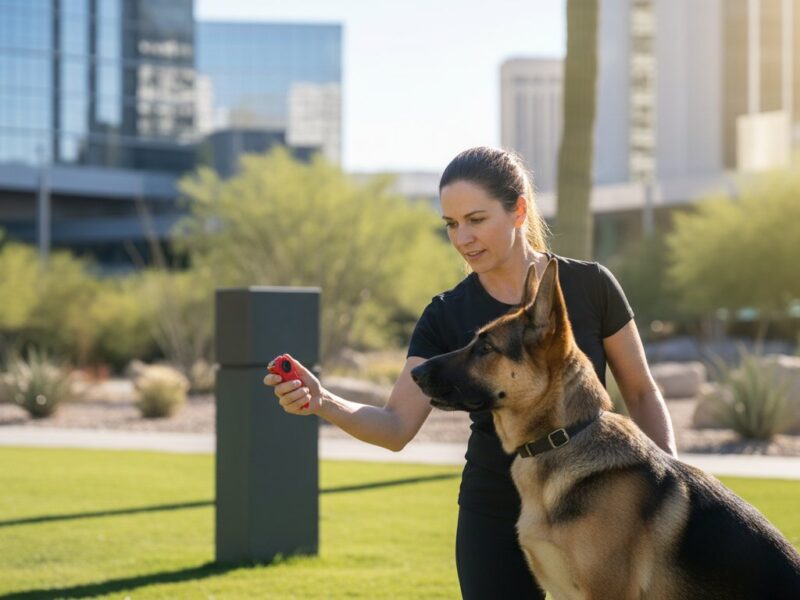
If you feel like you are just a human vending machine for treats, you aren’t training your dog; you’re bribing them. It is a frustrating reality for many of the 65.1 million American households that own at least one dog. You hold a piece of kibble, they sit. You don’t have a treat, they ignore you completely. To break this cycle and regain your authority, you must learn how to clicker train a dog with professional precision. This method is not about snacks. It is about creating a high-speed, clear contract between you and your pet that works every single time.
You deserve a companion that snaps to attention the moment you speak, even when a squirrel or a delivery truck passes by. We agree that training should be a conversation, not a negotiation. This guide will teach you how to master the science of clicker timing to build a clear line of communication and achieve reliable focus in any environment. We will walk through the exact mechanics of the mark, how to eliminate the need for constant food rewards, and the specific drills that lead to total off-leash control. Get ready to transform your relationship and enjoy the freedom that comes with a truly obedient dog.
Key Takeaways
- Master the “bridge” concept to communicate with surgical precision and tell your dog exactly when they have succeeded.
- Follow our professional starter guide to clicker train a dog using high-value motivation and the essential “charging” technique.
- Transform your training sessions by prioritizing focus over simple tricks, teaching your dog to instinctively check in with you in any environment.
- Identify and fix the “nagging” mistake to ensure your commands are definitive contracts rather than optional suggestions.
- Bridge the gap to total off-leash control by evolving your communication from a handheld clicker to long-distance reliability.
What is Clicker Training? The Science of Clear Communication
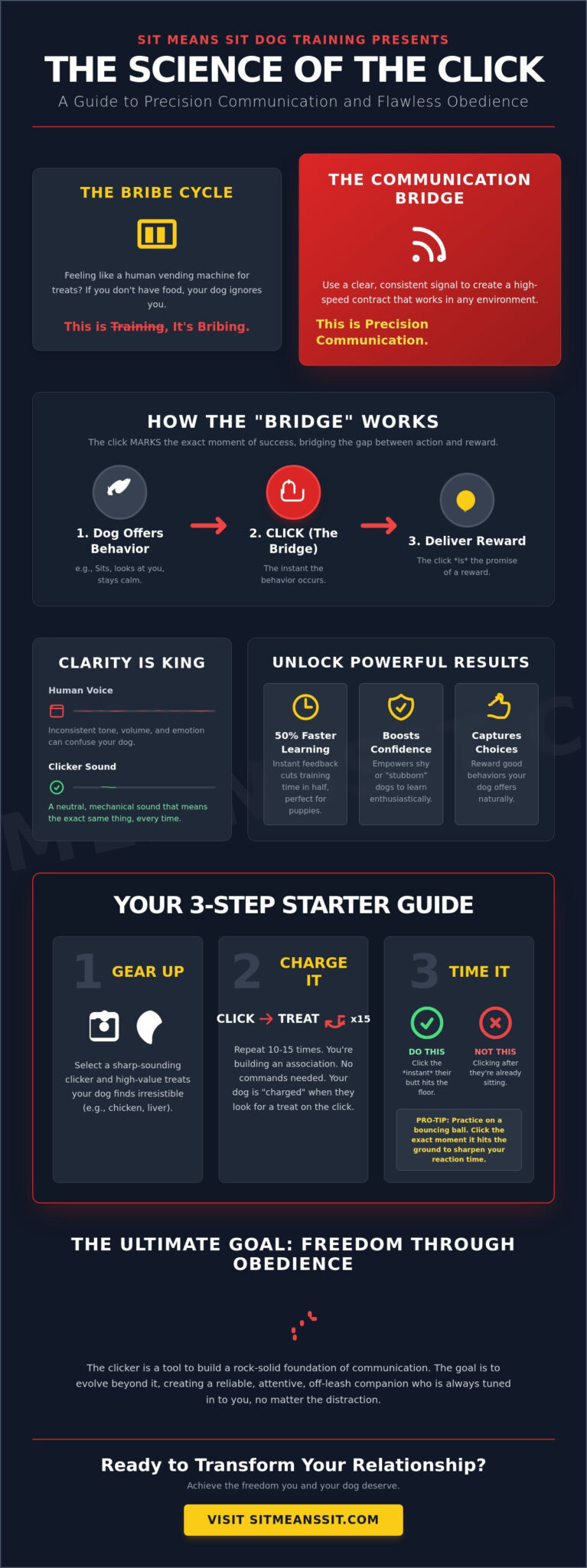
Stop guessing what your dog is thinking and start communicating with absolute precision. Clicker training is a form of marker training rooted in the science of operant conditioning. It uses a distinct, consistent sound to mark the exact moment your dog performs a desired behavior. This sound acts as a “bridge” between the correct action and the reward. It eliminates the confusion that often stalls progress during standard training sessions.
When you clicker train a dog, you’re moving away from traditional methods that rely heavily on physical corrections. Those older techniques often create hesitation or fear in a pet. Instead, we focus on clear signals that build trust and enthusiasm. This approach is the heartbeat of the Sit Means Sit philosophy. We believe that clear communication leads to “freedom through obedience.” By setting high standards and providing instant feedback, you transform a chaotic household into a harmonious partnership. A dog that understands exactly what is expected is a dog that can safely enjoy more of the world with you.
The Conditioned Reinforcer: Why the Click Works
A human voice is naturally inconsistent. You might sound happy one second and tired or frustrated the next. These subtle shifts in tone can confuse a dog. A clicker provides a neutral, distinct mechanical sound that remains the same every single time. B.F. Skinner’s research into reinforcement schedules during the 1940s proved that immediate feedback is vital for learning. The sharp “click” triggers a dopamine spike in the dog’s brain. It tells them that a reward is guaranteed. This turns a simple plastic box into a powerful motivator that captures their full attention.
Benefits of the Clicker for Puppies and Adult Dogs
Speed is the most significant advantage of this method. Our puppy training classes utilize these markers to cut learning time by roughly 50 percent compared to voice-only methods. Puppies have short attention spans, so the instant feedback keeps them engaged and excited. For adult dogs labeled as “stubborn” or “shy,” the clicker builds massive confidence. It allows you to “capture” natural behaviors without using force. If your dog looks at you in a crowded park, click. If they sit quietly when the doorbell rings, click. You’re rewarding the choices they make on their own. This creates a dog that is eager to work and ready for reliable off-leash control in any environment.
How to Clicker Train Your Dog: A Step-by-Step Starter Guide
Precision training transforms a chaotic household into a structured, happy home. To clicker train a dog, you must first master the mechanics of the reward. Start by selecting a clicker with a distinct, sharp sound and high-value treats that your dog finds irresistible. This Step-by-Step Starter Guide details how to choose the right motivators for your specific breed. Whether you have a high-drive Malinois or a laid-back Bulldog, the principles of clear communication remain the same. Use small pieces of boiled chicken or freeze-dried liver to ensure 100 percent engagement from the start.
Charging the Clicker: The “Power Up” Phase
Charging is the process of making the clicker mean “something good is coming.” To begin, click the device once and immediately deliver a high-value treat. Repeat this sequence 10 to 15 times in a single session without asking for any specific behavior. You’ll know your dog is successfully charged when they immediately look at your hand or the treat bag the moment they hear the click. This physiological response confirms they’ve associated the sound with a positive outcome. They’re now ready to work for that sound.
Mastering the Timing: The “Snap-Shot” Technique
Precision is the difference between a confused pet and a reliable companion. You must click the exact second the desired behavior occurs. If you’re teaching a sit, you must click the millisecond their butt hits the floor. A common mistake is clicking too late, which accidentally marks the wrong behavior, such as the dog standing back up or looking away. This creates confusion and slows down your progress.
To sharpen your own reaction speed, practice clicking a bouncing ball. Try to click only when the ball makes contact with the ground. This drill builds the 0.5-second reaction time required for professional-level results. Once your timing is sharp, practice marking simple behaviors like eye contact. Wait for your dog to look at you, click, and reward. This builds a foundation of focus that is essential for off-leash control in high-distraction environments.
As your dog masters basic commands like sit, down, and stay, begin to fade the treats. Don’t stop the rewards entirely; instead, move to an intermittent schedule. This keeps the dog motivated and ensures the command is a definitive contract, not a suggestion. Consistency builds the reliability you need for a truly adventurous life together. If you want to accelerate this transformation and see real results, reaching out for professional training support can help you bridge the gap between basic obedience and total mastery.
Remember, any dog, any age, and any breed can learn these boundaries. Discipline isn’t a restriction. It’s the key to a more joyful and safe life for your pet. Stick to the plan, stay consistent, and watch your dog’s confidence soar.
Achieving Focus: Using the Clicker for Real-World Obedience
Stop thinking of the clicker as a tool for teaching party tricks. A dog that can “play dead” is charming, but a dog that maintains focus in a crowded park is safe. When you clicker train a dog, your primary objective is capturing attention. You are building a mental bridge between your dog’s brain and your own. This shift from simple tricks to total engagement is what separates basic ownership from true mastery.
Real-world obedience requires your dog to choose you over every other stimulus in the environment. Whether it’s a bolting squirrel or a passing cyclist, your dog should look to you for the next move. This isn’t just about discipline. It’s about creating a lifestyle where your dog enjoys more freedom because they are reliable under pressure. We replace the owner’s frustration with a sense of empowerment and pride.
Capturing Voluntary Attention
Success begins with the eyes. Eye contact is the absolute foundation for all in home dog training success. Instead of constantly barking commands, wait for your dog to “check in” with you naturally. The moment their eyes meet yours without a prompt, click and reward immediately. You’re marking the choice to pay attention.
By rewarding this voluntary focus, you build a “default” behavior. Your dog learns that looking at you is the most rewarding thing they can do. This simple habit prevents 90% of common behavioral issues before they even start. It turns a distracted pet into a focused partner that waits for your lead. It’s the first step toward the ultimate goal of off-leash control.
The 3 Ds: Testing Your Clicker Skills
Once your dog understands the click means a reward is coming, you must proof the behavior. Professionals use the “3 Ds” to move from the quiet living room to the busy real world. This is where dog obedience training becomes bulletproof and reliable.
- Duration: Increase the time your dog must hold a command. Don’t click the instant they sit. Wait 5 seconds, then 15, then 30. Build that mental endurance.
- Distance: Start marking success from across the room. Gradually move to the backyard and click from 25 feet away. This ensures they listen even when you aren’t standing right over them.
- Distraction: Introduce controlled chaos. Practice while a family member tosses a toy or a neighbor walks their dog. If your dog stays focused on you, they’ve earned that click.
Mastering these variables is the key to achieving total control in any environment. It replaces your frustration with a sense of absolute confidence. You won’t just have a dog that knows a few commands. You’ll have a dog that is happy, confident, and ready for any adventure you choose to take together. This is the Sit Means Sit way: transforming lives through structured, joyful communication.
Common Clicker Training Mistakes and How to Avoid Them
Training shouldn’t feel like a hostage negotiation. Many owners struggle with a dog that only listens when the treat bag is visible. This happens when the clicker becomes a bribe instead of a professional communication tool. When you clicker train a dog, precision is the difference between a pet that guesses and a pet that knows. You want a partner that responds to your leadership, not a negotiator looking for a payout. Stop the “nagging” immediately. If you repeat a command three times, you’ve taught your dog that the first two don’t matter. One command. One action. One click. This clarity is the foundation of freedom through obedience.
The “Bribe vs. Reward” trap is a common pitfall. A bribe is shown before the behavior to lure the dog into position. A reward is delivered after the click to reinforce a choice the dog made. If you have to wave a cookie to get a “Sit,” you’re bribing. This creates a dog that checks your pockets before deciding to obey. To fix this, keep your treats out of sight in a pouch or on a high counter. Only reach for the reward after the click has sounded. Mastering these corrections is the fastest way to clicker train a dog for real-world reliability.
The “Treat-Dependent” Dog
Transitioning away from constant food is vital for total control. Once your dog reaches an 85 percent success rate in a quiet environment, move to a variable reward schedule. You don’t need a cookie for every rep. The clicker is a promise of a reward, but that reward doesn’t always have to be food. Use life rewards to build engagement. A door opening for a walk, a toss of a favorite toy, or a high-energy “Good boy!” can be just as reinforcing. This teaches your dog that obedience is the key to everything they love in life.
Timing and Consistency Errors
Consistency is the heartbeat of mastery. If one family member clicks for “jumping up” while another clicks for “sitting,” the dog becomes confused and eventually “deaf” to the sound. Everyone in the household must use the same criteria for every command. If your timing is off by even one second, you might accidentally reward the wrong movement. If you find yourself struggling with the mechanics, a personal dog trainer can provide the professional oversight needed to correct handling errors before they become habits. We focus on transforming your frustration into absolute confidence.
Contact Sit Means Sit today for a free evaluation and start your journey toward a happier, more obedient dog.
Moving Beyond the Clicker: Achieving Total Off-Leash Freedom
You’ve mastered the basics. You know how to clicker train a dog to sit, stay, and focus in your living room. But what happens when a squirrel darts across the street? A mechanical clicker is a brilliant teaching tool, but it has physical limits. It relies on sound that can be drowned out by city traffic or heavy wind. It requires your dog to be close enough to hear the device clearly. In a high-stakes emergency, you need a connection that never fails. We replace that uncertainty with absolute confidence.
The Remote Collar: A Professional Communication Tool
At Sit Means Sit, we bridge the gap between the living room and the real world. We use the Remote Training Collar as a tactile, long-distance marker. Think of it as an invisible leash that provides a gentle tap to get your dog’s attention. This tactile signal works exactly like the clicker you’ve already used; however, it offers 360-degree communication. It doesn’t matter if your dog is looking away or running toward a distraction; the signal is clear and consistent. This isn’t about restriction. It’s about safety. Our goal is a happy, confident dog that can enjoy off-leash freedom in any environment. We believe that discipline is the key to a more adventurous life for you and your pet. This method has allowed thousands of owners to walk their dogs without the fear of a broken leash or an ignored command.
Why Professional Coaching Makes the Difference
Precision requires practice. While you can clicker train a dog on your own, achieving total reliability under pressure often requires an expert eye. Our trainers provide the immediate feedback necessary to perfect your timing and technique. To see results faster, many owners choose our professional board and train programs. These immersive experiences allow our experts to establish a rock-solid foundation in a controlled setting. Once the foundation is set, our group classes help your dog generalize their skills around other dogs and people. We have a proven track record with any dog, any age, and any breed. We turn frustration into pride by making every command a definitive contract. With over 160 locations across North America, our industry-leading approach is accessible to everyone.
Stop worrying about “what if” and start enjoying your dog. Transform your relationship today by experiencing the Sit Means Sit difference. Contact us for a free consultation to see our results in person. Let’s unlock the off-leash lifestyle you’ve always imagined.
Unlock a Lifetime of Off-Leash Freedom
Mastering the skills to clicker train a dog is the first step toward a lifetime of adventure. You now understand that clear communication and precise timing are the foundations of a happy, well-behaved pet. By avoiding common mistakes and focusing on real-world distractions, you’re setting the stage for total reliability. The journey to true freedom doesn’t stop at the clicker. It requires a proven system that works in every environment, from busy city streets to wide-open parks. We turn discipline into a gateway for a more joyful life.
Sit Means Sit brings industry-leading expertise to your doorstep, having already transformed the lives of thousands of families across the U.S. and Canada. Our results-oriented approach ensures off-leash control for any dog, any age, and any breed. We replace your daily frustrations with a sense of pride and empowerment. Don’t settle for a dog that only listens when there’s a treat in your hand. Choose the path of mastery and watch your bond grow stronger than ever before. Your dog is capable of greatness, and we’re here to help you unlock it.
Experience the Sit Means Sit difference. Schedule your FREE consultation today!
Get ready to enjoy the focused, happy companion you’ve always wanted. Let’s start this transformation together.
Frequently Asked Questions
Is clicker training better than traditional dog training?
Clicker training is a highly effective form of marker training that increases learning speed by up to 50 percent compared to methods without a clear signal. It provides the precision needed for off-leash control. While traditional methods vary, the clicker offers a consistent sound that never changes its tone. This clarity builds a happy, confident dog who understands exactly when they have earned a reward.
Can you clicker train an older dog or a rescue?
Yes, you can successfully clicker train a dog of any age or breed, including senior rescues. Dogs over 7 years old often thrive with this mental stimulation. It helps them build a new, positive association with their environment. At Sit Means Sit, we have seen 10 year old dogs master new boundaries within their first 3 sessions. It’s never too late to replace old habits with reliable obedience.
How long does it take to clicker train a dog to sit?
Most dogs learn to associate the click with a reward in 15 to 20 repetitions. Once they understand the marker, you can often capture a reliable Sit in under 10 minutes of active training. Consistency is the key to mastery. If you practice for 5 minutes, 3 times a day, your dog will likely offer the behavior automatically within 48 hours. This rapid progress builds your confidence as a leader.
What if my dog is afraid of the clicking sound?
If your dog is sensitive to noise, you can muffle the sound by keeping the clicker in your pocket. Studies from the Journal of Veterinary Behavior show that 15 percent of dogs exhibit initial noise sensitivity. You can also use a ballpoint pen for a softer sound. Gradually increase the volume as your dog builds confidence. Soon, they’ll associate the noise with high-value treats and excitement.
Do I have to use the clicker forever?
No, the clicker is a teaching tool used to acquire new behaviors, not a lifelong requirement. Once your dog performs a command with 90 percent accuracy across different environments, you can phase out the clicker. You transition to intermittent rewards and verbal praise. This ensures your dog remains sharp and responsive even when you don’t have a device in your hand. It’s about building lasting habits and freedom.
Can I use a “marker word” like “Yes” instead of a clicker?
You can use a verbal marker like “Yes,” but it often lacks the clinical precision of a mechanical click. Human voices change pitch and emotion, while a clicker provides a 100 percent consistent signal every time. This consistency is why professional trainers often prefer the clicker for high-stakes off-leash control. If you choose a word, keep it short, sharp, and identical in every single repetition.
What is the best age to start clicker training a puppy?
You can start as early as 8 weeks old, which is when most puppies join their new families. Early training prevents bad habits before they start. Starting at this age helps develop the puppy’s brain and builds a strong bond of trust. Puppies who begin structured training before 16 weeks of age show significantly higher levels of focus as adult dogs. It sets the foundation for a happy, adventurous life.
Why is my dog ignoring the clicker when we are outside?
Your dog is likely overwhelmed by environmental distractions that outcompete your reward. When you clicker train a dog in a park, you’re competing with smells, squirrels, and other pets. Increase the value of your treats and go back to basics in a low-distraction area. Research suggests that dogs need 30 percent more reinforcement when moving from a quiet living room to a busy outdoor street.
Comments are closed.