
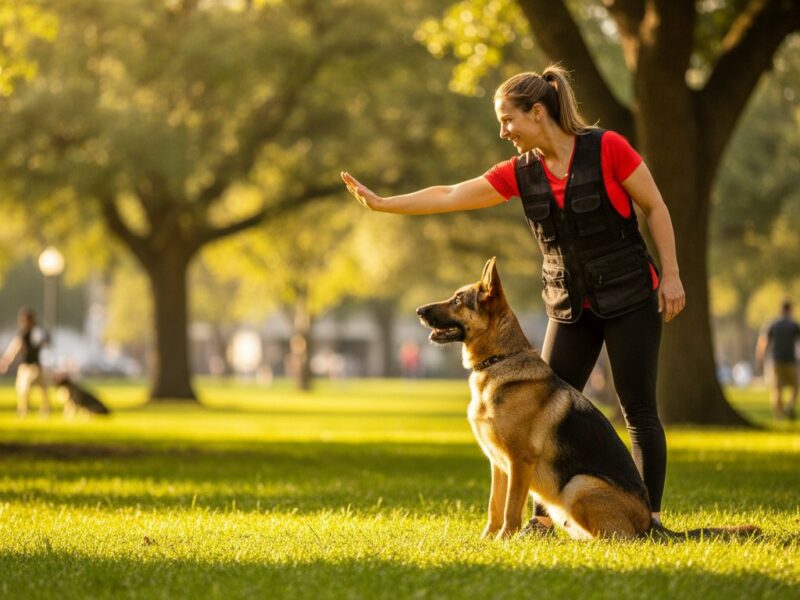
What if your dog’s “stubbornness” is actually just a misunderstanding of your expectations? It’s incredibly frustrating to have a dog that performs perfectly in the kitchen but becomes a total stranger the moment you step outside. You shouldn’t have to feel embarrassed in public or fear for your dog’s safety because they won’t listen when it matters most. Learning how to properly correct a dog’s bad behavior is the essential first step toward a life of total freedom and mutual respect.
We understand that you want more than just a pet; you want a reliable companion you can trust in any environment. This guide reveals the professional methodology for transforming unwanted habits into rock-solid obedience through attention-based training and clear communication. You’ll discover how to build a peaceful, controlled home environment and gain the confidence to enjoy off-leash walks with total pride. Get ready to move from constant frustration to the reliable, first-time listening your dog is truly capable of achieving.
Key Takeaways
- Stop the “nagging effect” by replacing repeated, ignored commands with clear, neutral signals that actually get results.
- Master the secret of attention-based training to ensure your dog listens the first time, every time, regardless of the environment.
- Learn how to properly correct a dog’s bad behavior by identifying the exact second they lose focus and redirecting them instantly.
- Discover how a Remote Training Collar serves as a sophisticated communication tool for reliable off-leash freedom and safety.
- Transition from DIY struggles to professional-level reliability by applying a structured framework to common issues like jumping and barking.
Understanding Correction: Why Your “No” Isn’t Working
You’ve shouted “No” a thousand times today. Your dog didn’t even look up. This is the reality for most owners. They think they’re correcting, but they’re actually just making noise. Professional correction isn’t a scolding or a display of anger. It’s a neutral signal that redirects your dog’s focus back to you. When you master how to properly correct a dog’s bad behavior, you stop being background noise and start being a leader your dog respects.
If you repeat a command three times before your dog listens, you’ve just taught them that the first two don’t matter. This is the “Nagging Effect.” It trains your dog to tune you out until you get loud or frustrated. That isn’t reliability; it’s a breakdown in communication. In fact, a Texas A&M University study revealed that over 99% of dogs exhibit at least one moderate to severe behavioral problem. Most of these stem from owners who are unintentionally training their dogs to ignore them.
Many owners confuse punishment with correction. Punishment is reactive. It’s meant to end a behavior through fear or discomfort after the dog has already committed the act. Communication, however, is proactive. It redirects the dog through clarity and structure. For those looking for a comprehensive overview of dog training methods, it’s clear that the most effective systems prioritize clear signals over emotional reactions. The goal is a dog that looks to you for guidance, not one that cringes in anticipation of a scolding.
The #1 reason corrections fail is the lack of a pre-established foundation of attention. You can’t correct a dog that isn’t paying attention to you. Most failures happen because the owner tries to control the dog’s body before they’ve won the dog’s mind. Without that focus, your correction is just a suggestion. We replace that guesswork with a definitive agreement between you and your pet.
The Difference Between Punishment and Redirection
Punishment often happens too late. Your dog jumps, you yell, and they’ve already enjoyed the thrill of the interaction. Professional redirection happens in the “moment of decision.” You catch the eye contact or the tensing of the muscles before the bad behavior peaks. This approach ensures your dog understands exactly what you want, transforming a chaotic moment into a teaching opportunity. It’s about winning the mind before the body follows.
The Myth of the “Stubborn” Dog
Your dog isn’t stubborn. They’re likely just confused by inconsistent signals. Behavioral confusion is the gap between owner intent and canine perception. If your signals aren’t crystal clear, your dog will choose their own path every time. Clarity in your training language is the fastest path to a well-behaved pet. When you learn how to properly correct a dog’s bad behavior, you close that gap and build a bond based on total reliability.
The Attention Foundation: The Secret to Reliable Obedience
Attention is the currency of dog training. If your dog isn’t looking at you, your commands are worthless. You can’t lead a dog that has already checked out mentally. This is the “Attention First” rule. You must win your dog’s mind before you can ever hope to control their body. When owners struggle with how to properly correct a dog’s bad behavior, the root cause is almost always a lack of focus. If they aren’t paying attention, they aren’t learning. Reliability isn’t something you hope for; it’s something you build through a series of successful interactions where focus is the non-negotiable starting point.
Measure your dog’s focus level by observing their response time in different settings. At home, your dog might be a star student with a focus score of 10 out of 10. Take that same dog to a local park, and that score often plummets to a two. The environment is now more interesting than you are. Professional behavior modification techniques emphasize managing these surroundings to set the dog up for success. By controlling the environment early on, you prevent bad habits from taking root before they even start. This proactive management allows you to gradually increase difficulty without losing the dog’s mental engagement.
Winning the Battle for Focus
Capturing eye contact is your first victory. Start in low-distraction areas like your hallway. Many owners fall into the trap of bribing their pets. They wave a treat to get a look. This fails the moment a squirrel or another dog becomes more exciting than the snack. True engagement doesn’t rely on food. It relies on a relationship where you are the most interesting thing in the world. Transitioning from food-based focus to engagement-based obedience is the key to lasting change. If you’re struggling to bridge this gap, our Private Lessons can help you master these engagement techniques in real-world scenarios.
The Power of the Sit Means Sit Methodology
Our approach transforms a simple directive into a definitive agreement. It isn’t a suggestion; it’s a promise of clarity. We build a “language of attention” that cuts through the noise of any environment. This system allows you to maintain control even in high-stimulation areas. Imagine the confidence of knowing your dog will snap back to you regardless of what’s happening around them. This level of focus is the prerequisite for Dog Obedience Training: Achieving Total Off-Leash Control in 2026. When attention becomes a habit, reliability becomes your new reality.

Using the Remote Training Collar for Clear Communication
Imagine having a leash that reaches across an entire football field. That is the power of the Remote Training Collar. We call it a “digital leash” because it provides a gentle, consistent tap that cuts through environmental noise. Many owners hesitate because they fear “zapping” their pet. Let’s clear that up right now. This is a sophisticated communication tool, not a device for punishment. It allows you to deliver a neutral signal that redirects your dog’s focus instantly. When you understand how to properly correct a dog’s bad behavior, you realize that clarity is more important than volume.
The real magic happens at a distance. If your dog is 50 yards away and heading toward a busy street, a shouted command might get lost in the wind. A remote tap does not. It provides the same clear, calm signal as if you were standing right next to them. This level of consistency is what builds true off-leash liberation. It removes the guesswork and replaces it with a definitive agreement between you and your dog. It’s about safety, confidence, and the ability to enjoy life together without the constant fear of a runaway pet.
The Science of the Gentle Tap
The collar mimics a physical touch, much like a tap on the shoulder. It captures the dog’s attention without causing pain or fear. This is essential for maintaining the emotional bond you’ve worked hard to build. We always recommend seeking veterinary-backed training advice when addressing unruly behaviors to ensure the approach is humane and effective. Professional instruction is vital here. You wouldn’t hand a high-performance car to a student driver without a lesson. The collar is a bridge to better communication, not a replacement for a bond.
Achieving Off-Leash Reliability
True freedom means moving beyond the physical constraint of a leather leash. It means having total control in the park, on the trail, or in your front yard. This confidence comes from knowing your dog will return regardless of distractions. You stop worrying about squirrels or other dogs because you have a reliable way to get their attention. For owners who want to fast-track this transformation, our Board and Train: The Ultimate Guide to Immersive Dog Training provides the perfect environment for mastering these tools. It is the ultimate reset for a life of adventure and safety.
Step-by-Step: Correcting Common Behavioral Struggles
Correcting a dog isn’t about stopping a bad habit. It’s about starting a good one. Most owners wait until their dog is mid-jump or halfway down the street to react. By then, you’ve already lost the battle for their mind. Success requires a structured framework that interrupts the dog’s thought process before the action peaks. When you master how to properly correct a dog’s bad behavior, you turn every struggle into a win for your bond.
Follow this professional methodology to regain control in any situation:
- Step 1: Identify the moment of focus loss. Watch for the tensed muscles, the locked stare, or the ignored “heel.” This is the moment they choose the distraction over you.
- Step 2: Use your attention signal. Deliver a neutral, consistent tap to interrupt their internal monologue. You aren’t scolding; you’re saying, “Look at me.”
- Step 3: Direct the dog into a positive command. Immediately give them a job to do. A “Sit” or “Place” gives them a constructive way to channel their energy.
- Step 4: Reward the successful transition. Praise the choice to listen. This reinforces that focus on you is the most rewarding path they can take.
Stopping Jumping and Bolting
Turning your back on a high-energy jumper often fails. It’s a passive response that doesn’t provide a clear alternative. Instead, use the “Place” command to create a definitive boundary at your front door. This gives your dog a specific “job” to do when guests arrive. In public, create a safety bubble by maintaining a consistent perimeter around your dog. If they try to bolt toward a distraction, use your attention signal to snap them back to your side instantly. Consistency here is the key to total reliability and safety.
Managing Barking and Leash Pulling
You must differentiate between alert barking and demand barking. Alert barking is a reaction to a stimulus. Demand barking is a pushy attempt to control you. Both require you to reclaim the lead. Stop the physical tug-of-war that only builds more tension in the leash. Use your attention signal to redirect their focus back to your leg during walks. If you want to master these high-stimulation environments, join our Group Classes to practice focus around real-world distractions. Maintaining focus while passing other dogs is the ultimate test of your partnership. You’ll move from a stressful walk to a confident stroll in no time.
Achieving Total Transformation with Professional Support
DIY training has its limits. You can only do so much between work, family, and daily responsibilities. If you’ve spent months struggling with how to properly correct a dog’s bad behavior without seeing real-world results, it’s time to call in the experts. Professional intervention isn’t a sign of failure; it’s a commitment to your dog’s success. Many owners find that while they can teach a “sit” in the living room, they lack the tools to handle a lunging dog at the park. We bridge that gap by installing a foundation of reliability that holds up under any pressure.
Professional programs like Board and Train provide a total “reset” for deeply ingrained behaviors. These immersive environments allow trainers to provide 24/7 consistency that is nearly impossible to replicate at home. We replace confusion with clarity. Sit Means Sit is the industry leader in real-world, high-distraction obedience because we don’t just train for the classroom. We train for the street, the trail, and the front door. We turn your frustration into empowerment by proving that your dog can be the reliable companion you’ve always wanted.
The transformation doesn’t end when you pick up your pet. Your role in the post-training transition is vital. You are the guardian of the new boundaries we’ve established. Keeping these results for life requires you to maintain the “language of attention” we’ve built. A directive is a definitive agreement, not a suggestion. When you uphold this standard, you ensure a lifetime of adventurous and joyful living for both you and your pet. Discipline is the key to your dog’s liberation.
Immersive Solutions: Board and Train
Our Board and Train program offers the benefit of professional conditioning in a controlled, high-standard environment. It is the fastest path to a reliable, happy dog because it removes the “nagging effect” from the start. Your dog learns that every signal has a meaning and every command requires a response. When choosing a facility, look for one that prioritizes the bond with the animal while maintaining clear structure. We ensure that the technical aspect of the process always links back to your dog’s well-being and confidence.
Take the First Step Toward a Better Life
Imagine a life where your dog is a source of pride, not stress. Picture yourself walking through a crowded park with total confidence, knowing your dog is focused entirely on you. This isn’t a dream; it’s the result of a Sit Means Sit education. We replace embarrassment with mastery. You deserve the freedom that comes with a perfectly behaved pet. Ready to transform your dog’s behavior? Find a Sit Means Sit trainer near you today!
Step Into a Life of Total Freedom and Confidence
You now have the framework to move from constant frustration to absolute reliability. By replacing the “nagging effect” with a foundation of attention and clear communication, you’ve taken the first step toward a more adventurous life with your pet. Mastering how to properly correct a dog’s bad behavior is about winning the mind before the body, ensuring your dog listens the first time, every time. It’s time to stop shouting and start leading with clarity.
With over 25 years of industry-leading experience, Sit Means Sit is here to ensure your success. Our specialized Remote Training Collar methodology and national network of professional trainers provide the structure your dog needs to thrive in high-distraction environments. We don’t just teach commands; we provide a transformation that empowers you and liberates your dog from the constraints of a leash. You’ve seen the path to success, and now it’s time to take action.
Don’t let another day of embarrassment or fear hold you back from the bond you deserve. Get a Free Consultation and Transform Your Dog’s Behavior Today! Your journey to a peaceful, controlled home starts right now. We’re ready to help you unlock your dog’s full potential and enjoy a lifetime of pride in your pet.
Frequently Asked Questions
Is it ever too late to correct a dog’s bad behavior?
It is never too late to transform your dog’s habits and build a better bond. Dogs are capable of learning at any age as long as you provide clear signals and consistent structure. Older dogs may have deeply ingrained patterns, but they respond quickly once they understand the new rules of the house. Mastery is a journey that can begin today, regardless of your pet’s birthday.
What is the most effective way to punish a dog for not listening?
Correction is far more effective than punishment because it prioritizes communication over fear. Punishment is reactive and often happens too late, while professional correction is a neutral signal that redirects the dog’s attention back to you. Focus on winning your dog’s mind during the “moment of decision.” This approach ensures they look to you for guidance rather than cringing in anticipation of a scolding.
How long does it take to see results when correcting bad behavior?
Expect to see immediate changes in focus during your very first session with professional guidance. While initial focus shifts happen quickly, true reliability in high-distraction environments typically takes several weeks of steady practice. If you are struggling with how to properly correct a dog’s bad behavior on your own, immersive programs can fast-track this timeline. Consistency is the engine that drives lasting transformation.
Can I train my dog to stop jumping on guests without using a crate?
Absolutely, you can achieve a calm entryway through clear boundary training and the “Place” command. Instead of physically restraining your dog, give them a specific job to do that is incompatible with jumping. Direct them to a designated spot and reward their choice to stay there. This method builds internal discipline and removes the need for physical barriers like crates or gates when guests arrive.
Will a remote training collar hurt my dog?
Modern remote training collars are designed for communication, not discomfort. The collar delivers a gentle, localized pulse similar to a TENS unit used in human physical therapy. It acts as a “digital leash” to get your dog’s attention from a distance without causing pain or fear. When used correctly, it becomes a bridge to better communication that strengthens the bond between you and your pet.
Why does my dog listen at home but ignore me at the park?
Your dog lacks environmental reliability because the park is more interesting than your current commands. In a quiet kitchen, you are the only stimulus. At the park, squirrels and other dogs compete for your pet’s mind. You must learn how to properly correct a dog’s bad behavior by winning their focus in low-distraction areas before testing them in high-stimulation environments. Reliability must be earned in every new setting.
How do I stop my dog from barking at the mailman?
Interrupt the thought process with a neutral attention signal before the barking reaches its peak. Once you have their focus, immediately direct them into a positive command like “Sit” or “Down.” This sequence changes their perceived job from guarding the door to listening to your instructions. Consistent redirection turns a chaotic daily event into a routine exercise in obedience and calm.
What is the difference between a dog trainer and a dog behaviorist?
Choose a results-oriented dog trainer to master everyday obedience and real-world reliability. Trainers focus on teaching commands, building focus, and establishing clear boundaries for a joyful life together. Behaviorists often deal with clinical issues like severe separation anxiety or pathological aggression. For most owners, a disciplined and assertive trainer is the fastest path to a well-behaved pet you can take anywhere with pride.
Comments are closed.