
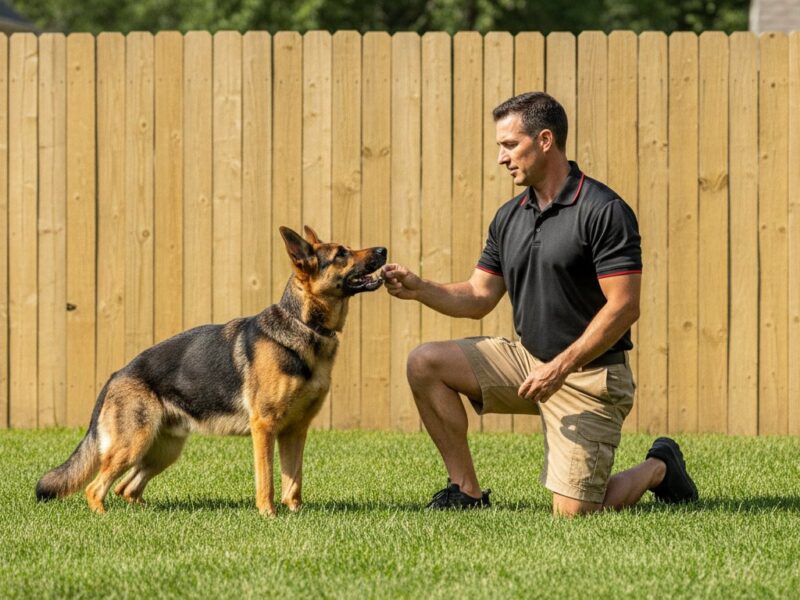
A fence is only as strong as your dog’s desire to get to the other side. You can bury all the galvanized steel barriers you want, but if your dog is determined to escape, they will find a way through, over, or under. Learning how to stop a dog from digging under the fence requires more than just a trip to the hardware store; it requires a shift from passive containment to active leadership. You’re likely exhausted from filling in holes and tired of the constant anxiety that comes with every minute your dog is out of sight. It’s frustrating when basic hardware fails and your yard looks like a construction zone.
We’re here to replace that frustration with total confidence. You’ll discover the definitive behavioral and physical strategies to secure your perimeter and transform your dog’s impulse to escape into reliable obedience. We’ll show you how to identify the hidden triggers behind the digging, from boredom to prey drive, and provide the professional training techniques that create a secure, happy home. We are going to dive into environmental management and structured discipline to ensure your dog chooses to stay put. It’s time to reclaim your peace of mind and enjoy a yard that stays beautiful and secure.
Key Takeaways
- Identify the specific motivation behind the behavior, such as prey drive or social isolation, to ensure your strategy targets the root cause.
- Harden your perimeter immediately with physical solutions like L-footers or hardscaping to prevent escapes while you focus on long-term training.
- Discover how to stop a dog from digging under the fence by using high-level engagement and mental stimulation to replace destructive impulses.
- Utilize professional tools like a Remote Training Collar to maintain clear, off-leash communication and interrupt a dog’s focus on the fence line in real-time.
- Explore immersive training options like Board and Train to achieve total reliability and transform your dog into a confident, obedient companion.
Understanding Why Your Dog Digs Under the Fence
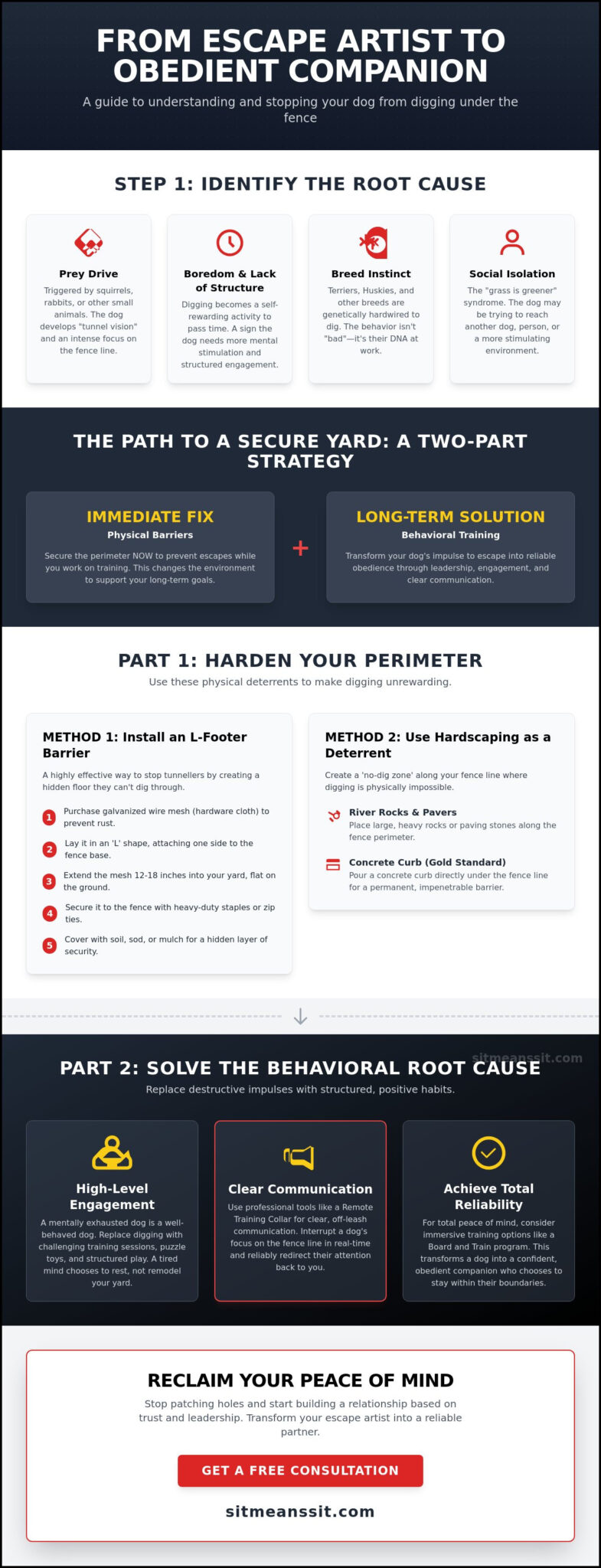
Before you can fix the hole in your yard, you have to understand the hole in your dog’s routine. Digging is a natural outlet for various canine behaviors, but when it threatens your dog’s safety, it becomes a critical issue. To learn how to stop a dog from digging under the fence, you must first identify the specific motivation driving the shovel-paws. Is your dog hunting, panicking, or simply looking for a way to entertain themselves? Identifying the ‘why’ is the first step toward a permanent, professional solution that restores your peace of mind.
Some dogs are genetically hardwired to tunnel. Terriers were bred to go to ground, while Huskies often seek the cooler soil found deep beneath the surface. This ‘Escape Artist’ profile means your dog isn’t being ‘bad’; they are being exactly what their DNA demands. However, instinct is not an excuse for an insecure perimeter. Whether it’s the ‘Grass is Greener’ syndrome triggered by the neighbor’s new puppy or a search for social interaction, the impulse to leave the yard starts with a lack of internal boundaries. You aren’t just fighting dirt; you’re competing with millions of years of evolution.
Prey Drive and Environmental Triggers
When a squirrel darts across the top of the fence or a rabbit nests just on the other side, your dog enters a high-arousal prey state. In this moment, physical barriers often fail because the dog’s focus is entirely external. They develop tunnel vision, literally. You can spot the signs before the first paw hits the dirt. Look for intense fixation, a stiffened tail, and a refusal to break eye contact with the fence line. Once this hunting instinct takes over, a simple command might not be enough. You need a reliable way to interrupt that focus and redirect it back to you.
The Role of Boredom and Lack of Structure
A massive yard is not a playground if your dog is alone and jobless. For many dogs, digging is a self-rewarding behavior that kills time. Without a clear sense of ‘place’ or structured engagement, the world outside the fence becomes infinitely more interesting than the world inside it. Boredom-based digging is recreational, but it reveals a deeper lack of structure in the dog’s life. If you want to know how to stop a dog from digging under the fence, you must realize that mental exhaustion is your best friend. A dog that has been challenged mentally through training is a dog that chooses to rest rather than remodel your landscaping. Discipline isn’t a restriction; it’s the pathway to a calm, content pet that respects the boundaries you’ve set.
Immediate Physical Barriers to Secure Your Perimeter
Secure the line today. While professional training is the definitive solution for a reliable dog, physical barriers provide the immediate safety net you need right now. If you’re wondering how to stop a dog from digging under the fence, start with a hardened boundary that makes the effort unrewarding. These methods aren’t just about blocking an exit. They’re about changing the environment to support your long-term training goals. You can’t train a dog that has already escaped the yard. Fix the perimeter first, then focus on the behavior.
Installing an L-Footer Barrier
An L-footer is one of the most effective ways to discourage a persistent tunneler. By laying wire mesh at the base of your fence, you create a physical floor that stops the digging process before it gains momentum. Follow these steps for a professional installation:
- Purchase hardware cloth: Use a galvanized mesh to prevent rust and ensure durability against determined paws.
- Lay it flat: Position the mesh so it forms an ‘L’ shape, with one side attached to the fence and the other extending roughly 12 to 18 inches into your yard.
- Secure the structure: Use heavy-duty staples or zip ties to anchor the mesh to the bottom of your fence.
- Camouflage the area: Cover the mesh with a layer of soil, mulch, or sod. This keeps your yard looking great while maintaining a hidden layer of security.
Using Hardscaping as a Deterrent
Hardscaping transforms a vulnerable fence line into an impenetrable zone. Placing large river rocks or heavy pavers along the perimeter creates a ‘dead zone’ where digging is physically impossible. For owners of heavy diggers, a concrete curb poured directly under the fence line is the gold standard for permanent security. This prevents any possibility of tunneling and provides a clean edge for lawn maintenance. You can also strategically plant dog-safe, thorny bushes like certain varieties of roses to naturally discourage your dog from approaching the fence line. These physical changes to the landscape send a clear message: the perimeter is closed.
Commercial solutions are also available for those who prefer a ready-made option. Products like the Dig Defence large animal barrier, which comes in a 25-pack of 4-gauge galvanized steel panels for $218.56, can be driven directly into the ground to block gaps. While these tools are excellent for immediate containment, don’t rely on scent-based deterrents like vinegar or citrus peels. These often wash away with the first rain and rarely stop a dog driven by high prey drive or anxiety. Physical barriers are a vital first step, but for total reliability, you should explore private lessons that address the root of the digging behavior. Once the perimeter is secure, you can focus on the mastery and transformation that leads to a perfectly behaved companion.
Solving the Behavioral Root Cause Through Engagement
Hardware stops the escape, but training stops the desire. If you want to know how to stop a dog from digging under the fence for good, you have to look at the dog’s brain. Physical barriers are static. Your dog is dynamic. They are active, thinking creatures that need a mission. Without a job, they invent their own, and usually, that job is landscaping your perimeter into a series of tunnels. We replace those destructive impulses with focused attention. This is the core of our philosophy: a dog that is focused on its owner doesn’t have the time or the interest to remodel the backyard.
Mental exhaustion beats physical exhaustion every time. A high-energy dog can run a marathon and still find the strength to dig a hole when they get home because their mind is still racing. True transformation happens when you challenge their cognitive abilities. We teach your dog that the yard isn’t just a place to exist; it’s a place to work and connect with you. When your dog values your presence more than the squirrels on the other side of the fence, the digging stops. By creating high value for staying near you, the yard becomes a zone of engagement rather than a cage to escape.
High-Stimulation Engagement Drills
Channel that prey drive into something productive. Use high-intensity games like fetch or tug to satisfy their natural instincts within the safety of your yard. The secret is the ‘Turn-On/Turn-Off’ method. We ramp up their energy during play and then immediately demand a calm command. This builds incredible impulse control in high-stress moments. For those looking to master this level of focus, our dog obedience training provides the framework for total off-leash control. This allows your dog to enjoy a more adventurous life without the constant need for a leash.
Establishing Yard Boundaries with Commands
You must define the space for your pet. A ‘Boundary Stay’ teaches your dog that the fence line is a wall, not a suggestion. By consistently rewarding them for staying a few feet back from the perimeter, you create a mental barrier that is stronger than any wire mesh. The ‘Place’ command is another essential tool in your kit. It gives your dog a specific station, like a cot or a mat, where they must remain until released. This provides the structure they crave. If you catch them eyeing the dirt, a sharp ‘Sit’ or ‘Come’ command interrupts their focus and brings it back to you. This level of reliability is how to stop a dog from digging under the fence while building a deeper bond through clear communication.
Using Clear Communication to Stop Digging in Real-Time
Timing isn’t just a factor in training; it is the entire game. If you wait until your dog has already moved three pounds of dirt, you’ve already lost the battle. To master how to stop a dog from digging under the fence, you must learn to communicate with your dog at the exact moment of intent. This is where the transition from management to mastery occurs. We don’t just want to stop the digging. We want to change the dog’s internal decision making process so they choose to stay away from the fence line even when you aren’t looking. This requires a tool that provides clear, consistent, and long-distance communication.
Introduction to the Remote Training Collar
The Remote Training Collar is the ultimate bridge between you and your dog. Think of it as a digital tap on the shoulder rather than a punishment. It allows you to maintain a connection with your dog even when they are off-leash and focused on something across the perimeter. We find the ‘working level’ for every dog, which is the lowest possible setting where the dog notices the sensation. This ensures communication is stress-free and crystal clear. By transitioning from the physical pressure of a leash to the invisible cue of the collar, you create a level of reliability that works in high-stimulation environments. It’s about building an agreement where your command is a definitive action, not a suggestion.
Steps to Correct Digging Behavior
Interrupting the ‘tunnel vision’ that precedes a dig is the most effective way to secure your yard. Use these professional steps to redirect your dog in real-time:
- Monitor the intent: Watch your dog covertly from a window or distance. Look for the intense sniffing, pacing, or fixed staring at the base of the fence.
- Interrupt the focus: Use a low-level remote cue the moment you see the intent. This breaks the dog’s concentration on the dirt and brings their attention back to the environment.
- Immediate redirection: Follow the cue with a known command like ‘Place’ or ‘Come’. You are giving them a better, more rewarding job to do than digging.
- Reinforce the choice: Reward the dog heavily when they successfully turn away from the fence. You are teaching them that ignoring the impulse to dig leads to a better outcome.
Consistency is the key to transformation. When your dog realizes that you can reach out and touch them even from across the yard, their respect for the boundary becomes absolute. This level of communication is what separates a frustrated owner from an empowered one. If you are ready to see this transformation in action, consider our private lessons to master these techniques with professional guidance. You can move beyond the struggle and enjoy a yard where your dog is a confident, obedient companion.
Achieving Total Reliability with Professional Training
Professional intervention is the difference between a temporary fix and total perimeter reliability. You’ve already explored physical barriers and real-time communication, but for some high-drive dogs, the habit of escaping is deeply ingrained. Achieving total reliability means moving beyond the ‘problem dog’ label and creating a confident, obedient companion that respects boundaries even in high-distraction environments. This is the transformation we provide every day. We replace your frustration with empowerment, ensuring your dog understands the rules of the yard with absolute clarity. Learning how to stop a dog from digging under the fence is about more than just dirt; it’s about establishing a definitive agreement between you and your pet.
Our results speak for themselves. We specialize in providing real-world control where other methods fail. When your dog is properly trained, discipline is not a restriction. It is the key to a more adventurous and joyful life. You gain the freedom to let your dog enjoy the outdoors without the constant fear of a phone call from a neighbor or a trip to the local shelter. This is the lifestyle change we offer to every client who walks through our doors. We take the stress out of pet ownership and replace it with a sense of pride in your dog’s behavior.
The Power of a Board and Train Program
Our Board and Train program offers the intensive foundation required for dedicated escape artists. By placing your dog in an immersive training environment, our professional trainers handle the heavy lifting of behavioral conditioning. We work through the repetition and high-level distractions that are difficult to replicate during a busy work week at home. This immersive approach ensures that when your dog returns to your yard, they have a new default state of obedience. We prioritize the bond with your animal while respecting the necessity of clear boundaries. Long-term success is guaranteed through our owner hand-off sessions and ongoing group classes, keeping the training sharp for years to come.
Customized Solutions for Every Dog
Every dog is an individual with unique drives and environmental triggers. For some pets, digging isn’t just a hobby; it’s a symptom of a deeper issue. In these cases, a dog behaviorist approach is vital to address anxiety-based digging or extreme prey drive. We tailor our training plans to match your dog’s specific personality and your family’s lifestyle. Whether your dog is a high-energy hunter or a nervous tunneler, we provide the structure they need to feel secure within your property lines. Reclaim your yard and your peace of mind today. Schedule a free consultation to discover how to stop a dog from digging under the fence and start your journey toward a perfectly behaved companion.
Secure Your Yard and Your Peace of Mind
You’ve moved from daily frustration to a definitive plan for success. You now understand that while physical barriers provide an immediate safety net, professional training delivers the permanent resolution your family deserves. By identifying the root cause of the behavior and mastering the Remote Training Collar, you’ve discovered the ultimate strategy for how to stop a dog from digging under the fence. It’s about replacing destructive impulses with focused attention and reliable obedience.
Our team brings over 25 years of professional training experience and proprietary technology to every yard. We’ve transformed thousands of dogs and helped owners nationwide achieve total off-leash control. You don’t have to settle for a ruined lawn or the constant anxiety of a potential escape. Discipline is the key to a more adventurous and joyful life for both you and your pet.
Reclaim Your Yard—Schedule Your Free Consultation Today!
Take the first step toward a stress-free life with your companion. We are ready to help you turn your escape artist into a perfectly behaved partner you can take anywhere with confidence.
Frequently Asked Questions
Is it possible to stop a dog from digging if they’ve done it for years?
Yes, you can absolutely break a long-standing habit with the right structure and consistent leadership. Even senior dogs can learn new boundaries when you replace their destructive impulses with focused engagement. The key is to stop treating the behavior as a personality trait and start treating it as a lack of clear communication. Once your dog understands the new agreement, they will choose to stay away from the fence line regardless of their history.
Will getting another dog stop my dog from digging out of boredom?
No, adding another dog rarely solves a digging problem and often leads to two dogs digging instead of one. Boredom-based digging is a symptom of a lack of engagement with you, not a lack of a canine playmate. You need to provide the mental stimulation and structure yourself. Focus on mastering the commands that keep your dog focused on you rather than relying on another pet to do the work of a trainer.
Is a remote training collar safe for all dog breeds and sizes?
Yes, the Remote Training Collar is a safe and highly effective tool for dogs of all sizes and breeds. We prioritize finding the ‘working level,’ which is the lowest setting your dog can perceive. This ensures the sensation is a gentle tap on the shoulder rather than a punishment. It creates a stress-free way to communicate over long distances, making it a vital part of learning how to stop a dog from digging under the fence.
How long does it typically take to see results with behavioral training?
You can expect to see a shift in your dog’s focus almost immediately once clear boundaries are established. However, achieving total reliability in high-stimulation environments typically requires several weeks of consistent practice. The goal is a lifestyle change, not a quick fix. By sticking to a structured program, you’ll transform your dog’s impulse to escape into a permanent habit of staying put and respecting the perimeter.
What should I do if my dog only digs when I am not at home?
You must first establish a rock-solid foundation of obedience while you are home before expecting your dog to follow the rules alone. Use a Remote Training Collar to monitor them from a distance or through a window. This allows you to interrupt the intent to dig even when they think you aren’t watching. Eventually, the boundary becomes a definitive agreement that the dog respects whether you are standing next to them or not.
Can certain types of grass or ground cover discourage digging?
Denser ground covers like clover or artificial turf can make digging less rewarding for some dogs. However, a determined dog will dig through almost anything if their behavioral drive isn’t addressed. Use hardscaping like river rocks or gravel as a temporary deterrent while you work on the underlying training. Physical changes to the yard support your goals, but they don’t replace the necessity of professional training and clear leadership.
Should I punish my dog if I find a hole after they’ve already finished digging?
No, never punish your dog for a hole you discover after the digging is done. Dogs live in the moment and won’t understand why they are being corrected for something that happened ten minutes ago. This only creates confusion and damages your bond. You must catch them in the act of intent to make a correction meaningful. Focus on real-time communication to ensure your dog understands exactly what behavior is expected.
How do I know if my dog’s digging is caused by separation anxiety?
Anxiety-based digging is typically characterized by frantic, repetitive motions specifically at exit points like gates or fence seams. It’s often accompanied by heavy panting, whining, or destructive behavior toward the house itself. If your dog is digging out of panic rather than recreation, you need a customized training plan. Addressing the emotional state of the animal is just as important as the technical aspect of how to stop a dog from digging under the fence.
Comments are closed.