
Your dog just finished a world-class board and train program, but that elite conditioning is only half the battle. Without you, the training is just high-end software with no one to run it. It’s natural to feel that nagging fear of your dog reverting to old habits once they are back home. You don’t want to be the weak link or feel uncertain about how to handle your tools. Industry experts confirm that the first 72 hours at home are the most critical window for reinforcing behaviors; this is where a directive becomes a definitive agreement rather than a mere suggestion.
Effective owner training sessions after board and train are the only way to bridge the gap between professional results and real-world reliability. We know you want total confidence in every environment, from quiet living rooms to busy city parks. This article promises to show you how to master the handover and take command of your dog’s new skills for a lifetime of success. We will explore how to implement a manageable routine that achieves liberation through structure, creating a more adventurous and joyful life for both you and your pet.
Key Takeaways
- Bridge the gap between our facility and your living room by understanding why owner training sessions after board and train are the final step to total reliability.
- Gain mechanical mastery over your dog’s commands to transform from a casual pet owner into a confident, expert handler.
- Protect your investment by learning the strict 72-hour protocol that stops old, unwanted habits from ever returning.
- Harness the Remote Training Collar as a clear communication tool to bridge the distance between on-leash control and off-leash liberation.
- Leverage Group Classes to proof your dog’s skills in high-distraction environments and ensure their good behavior lasts a lifetime.
The Critical Link: Why Owner Training Sessions Are Non-Negotiable
You’ve made the investment. Your dog has spent weeks with professionals, learning the nuances of command and control. But here is the reality: board and train is not a “set it and forget it” solution. It is the beginning of a new chapter, not the final period. The “Transition Gap” is the space between our structured facility and your unpredictable home environment. If you don’t bridge that gap, you risk losing the very progress you paid for. The work isn’t finished when your dog returns home. It’s just getting started.
A perfectly trained dog still needs a confident, informed leader. Without your active involvement, even the most elite conditioning can fade. Our goal is to turn professional results into a lifelong lifestyle. That transformation happens during owner training sessions after board and train. This is where you learn to speak your dog’s new language. You aren’t just picking up your pet; you are taking over the controls of a high-performance machine. Don’t let that potential go to waste by staying on the sidelines.
Software vs. Hardware: The Training Analogy
Think of professional training as installing high-performance obedience software into your dog’s brain. It is fast, efficient, and powerful. However, you are the hardware. If the hardware doesn’t know how to run the program, the system crashes. These sessions provide the essential user manual for the human handler. We rely on the principles of operant conditioning to shape behavior, but those principles must be applied by you to remain effective. Your dog’s respect must be transferred from the trainer to you, ensuring they look to you for guidance in every situation. Discipline is the key to a more adventurous and joyful life, but only if you know how to maintain it.
Overcoming the “Trainer Only” Syndrome
Dogs are masters of context. They know exactly who is holding the leash and what they can get away with. If a dog only listens to a trainer, you have a temporary fix instead of a permanent solution. Owner sessions prevent your dog from testing boundaries the moment they step back into your living room. Consistency is the only way to establish authority at home and keep your dog’s emotional state calm and focused.
- Learn the exact cues: Use the specific verbal and physical signals your dog already understands.
- Master the timing: Understand when to reward and when to correct with split-second precision.
- Identify triggers: Recognize the environmental factors that might tempt your dog to revert to old habits.
We don’t just want a dog that sits on command. We want a dog that respects your leadership because they understand the boundaries you’ve set. By participating in owner training sessions after board and train, you replace frustration with empowerment. You become the expert operator your dog needs. This isn’t just about obedience; it’s about the liberation that comes with total control in any environment.
Inside the Handover: What Happens During Your First Post-Board and Train Session
The handover is the moment of truth. It is not a simple pick-up. It is a high-energy transfer of power from the professional trainer to you. Your dog has spent weeks mastering new behaviors; now, it’s your turn to step up. The goal of owner training sessions after board and train is to replace your past frustrations with a sense of absolute empowerment. You aren’t just a spectator in this process. You are the new commander of your dog’s journey toward a more adventurous life.
We focus heavily on “Mechanical Mastery.” This means teaching you the physical skills required to handle your dog with total confidence. If your timing is off or your posture is weak, your dog will notice. We bridge the gap between professional conditioning and your daily life by ensuring you can execute every command with precision. Discipline is the key to freedom, and that discipline begins with your own movements and mindset.
Phase 1: Observation and Theory
You begin by watching your trainer demonstrate your dog’s new skills in real-time. This isn’t just for show. You need to identify the dog’s subtle body language cues and understand the “Why” behind every action. Peer-reviewed research emphasizes the essential role of owner involvement in maintaining long-term behavioral changes. We explain the specific vocabulary and signals used during the program, ensuring you understand that a directive is a definitive agreement, not a suggestion. You’ll learn how to read your dog’s emotional state to keep them focused and calm.
Phase 2: The Hands-On Transfer
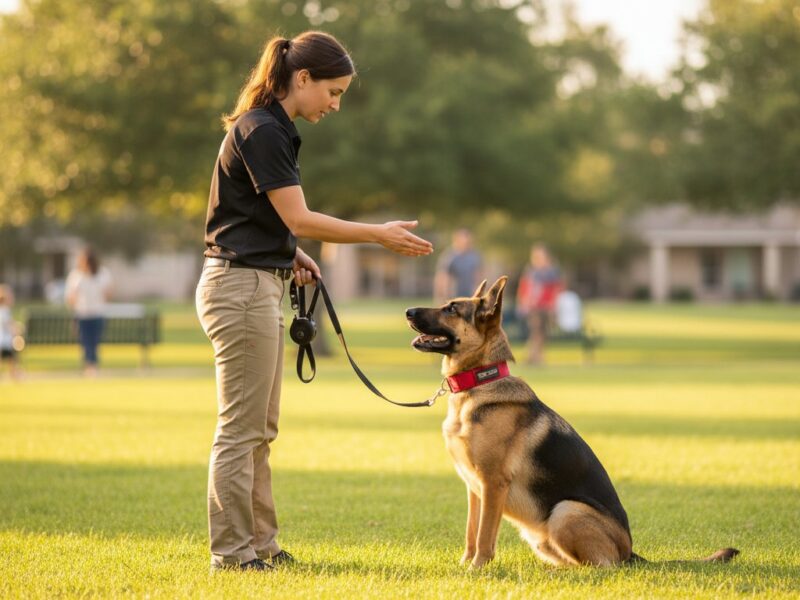
Now, you take the leash. This is where the transformation happens. You will perform your first reps under professional supervision in a controlled, low-distraction setting. We will correct your timing and your physical posture for maximum impact. If you feel you need even more focused one-on-one time, our private lessons can further sharpen these individual skills. Seeing your dog respond to you with the same respect they show the trainer is a powerful confidence builder. It proves that the system works when you lead with authority.
Phase 3: Troubleshooting the Home Environment
The real world is full of triggers like doorbells, delivery drivers, and high-energy guests. We spend the final part of the session discussing how to handle these specific challenges. We’ll help you set up a “Success Zone” in your house to prevent old, unwanted habits from resurfacing. The primary goal of this session is the definitive Transfer of Authority from the trainer to the owner. By the time you leave, you won’t just have a trained dog; you’ll have the mastery to keep them that way.
The Transition Period: Maintaining Results in the First 72 Hours at Home
The first 72 hours back home are the most critical window in your dog’s entire journey. This is the “make or break” period where you either solidify the new foundation or allow old, unwanted habits to creep back in. We call this the “Training Bubble.” During this time, your home environment must mirror the structure and discipline of our facility. You have already learned the essential mechanics during your owner training sessions after board and train, and now it is time to apply them without compromise. Discipline is not a restriction; it is the key to a more adventurous and joyful life for you both.
Limit freedom initially. High-arousal play or excessive, unearned affection can wait. Right now, your dog needs to understand that the rules they mastered elsewhere apply in your living room too. Reinforcing the board and train foundation through three to five daily mini-sessions keeps commands sharp. These sessions should be short, punchy, and successful. You are not just practicing commands. You are establishing a new way of living together that prioritizes respect and clarity.
The First 24 Hours: Decompression and Rules
Your dog needs a quiet “reset” period upon returning home. They have just completed an intense, immersive experience and need time to decompress. Avoid the temptation of a “pity party.” Many owners feel guilty and immediately offer unearned freedom, which only invites the dog to push boundaries. Implement the “Nothing in Life is Free” (NILIF) protocol immediately. If your dog wants to eat, go outside, or receive a head scratch, they must perform a command first. This simple structure establishes you as the definitive leader from the very first hour.
Days 2 and 3: Testing the Waters
By the second and third day, you can gradually introduce minor distractions. Start small. Practice the “place” command while you fold laundry or a “sit-stay” while the television is on. The secret to long-term success is 100% follow-through. If you give a command, you must ensure your dog completes it every single time. Never let a directive become a suggestion. Keep a training log to track progress and note any specific questions that arise. This discipline replaces your past frustration with a sense of empowerment and pride. You are becoming the expert operator your dog deserves.
Mastering the Remote Training Collar: Your Key to Off-Leash Freedom
Imagine walking your dog through a bustling park without the restriction of a leash, knowing they will return the second you call. This isn’t a distant dream; it’s the reality of mastering the right tools. The Remote Training Collar is your bridge to that total liberation. It acts as a “Language of Attention,” allowing you to communicate clearly across distances and through high-stress environments. During your owner training sessions after board and train, we move beyond the physical tether to show you how this technology transforms your relationship. Integrating this tool into your dog obedience training ensures real-world reliability that lasts a lifetime.
Professional instruction is the only way to ensure proper collar conditioning. We replace the misconception of “punishment” with the reality of refined communication. You don’t need to raise your voice or feel frustrated when your dog gets distracted. You simply provide a clear, undeniable prompt that redirects their focus back to you. This creates a definitive agreement between you and your pet, allowing for a more adventurous and joyful life together. Discipline is the foundation of that freedom.
Communication vs. Correction
Most owners view collars as tools for correction, but we use them for communication. Low-level stimulation acts like a gentle “tap on the shoulder.” It cuts through environmental distractions like squirrels, bikes, or other dogs without causing fear or stress. You achieve total focus without ever losing your cool. By using this technology to manage your dog’s emotional state, you ensure they remain calm and responsive even in high-stimulation settings. It’s about being heard when the world is at its loudest.
Mechanical Skills for the Owner
Mastery requires more than just pushing a button; it requires precise timing and sensitivity. During your owner training sessions after board and train, we help you find the specific “Working Level” for your dog’s unique temperament. Every dog is an individual. Finding that sweet spot is essential for humane, effective communication. We also cover safety protocols and proper fit to ensure your dog remains comfortable and responsive at all times.
- Button Timing: Sync your signal with the behavior to provide maximum clarity for your dog.
- Working Levels: Learn to adjust intensity based on the environment and your dog’s current level of focus.
- Safety Protocols: Master the daily checks that keep your equipment functioning perfectly and your dog safe.
Don’t settle for “good enough” behavior when total off-leash liberation is within your reach. Learn more about our Remote Training Collar programs to start your journey toward true mastery today.
The Sit Means Sit Advantage: Lifetime Support and Group Class Integration
The completion of your program is not a goodbye; it is the official launch of our partnership. Many trainers provide a service and then disappear, leaving you to handle future challenges alone. We take a different approach. The Sit Means Sit Dog Training Advantage is built on the foundation of lifetime support. We don’t just train dogs; we transform lives. Your initial owner training sessions after board and train provided the tools you need to succeed at home, but our national network ensures you have help wherever your adventures take you. Whether you move across the country or just need a refresher a year from now, our experts are ready to keep your dog’s performance at its peak.
The Sit Means Sit Dog Training Promise means we are committed to your long-term success. We understand that life changes. New distractions will inevitably arise. Because we operate from a place of absolute confidence, we provide the infrastructure to handle every behavioral hurdle you might encounter. This commitment replaces the anxiety of the “what ifs” with a sense of permanent empowerment. You aren’t just buying a training program. You are joining a family that prioritizes the bond between you and your pet while respecting the necessity of clear boundaries. Discipline is not a restriction but the key to a more adventurous and joyful life for both you and your dog.
Group Classes: The Ultimate Distraction Lab
Group Classes are the secret weapon for proofing your dog’s behavior in the real world. While your owner training sessions after board and train focused on individual mastery, these classes provide a safe, social environment to test those skills around other dogs and people. This is the ultimate distraction lab. You will learn from professional coaches who have encountered every possible challenge and remain unfazed. It is also an opportunity to build a community of like-minded, responsible dog owners who share your commitment to a structured lifestyle. Practicing in this high-stimulation setting ensures that a directive remains a definitive agreement, no matter what is happening around you.
Taking the Next Step
Consistency is the only path to total reliability. To maintain the momentum you’ve built, make sure to schedule your follow-up private lessons to fine-tune your handling as your dog matures. You also have access to our library of digital resources and training tips to keep your skills sharp between sessions. We are here to ensure that your dog remains perfectly behaved even in the most intense environments. Ready to start the journey? Find a Sit Means Sit Dog Training location near you! and discover the liberation that comes with true structure.
Take Command of Your Dog’s Future Today
You now have the roadmap to move from frustration to absolute empowerment. Your dog has the foundation; now you have the skills to lead. Mastering the handover is about more than just obedience. It’s about securing a lifetime of adventure and joy. By committing to owner training sessions after board and train, you ensure that every command remains a definitive agreement. You’ve learned how to navigate the critical first 72 hours and how to use the Remote Training Collar as a refined language of attention.
With over 150 locations nationwide and our industry-leading methodology, we are here to support you at every step. Our group classes and lifetime support options mean you are never alone in this journey. We replace uncertainty with the confidence that comes from professional mastery. Your dog is ready to follow. It’s time for you to lead. We can’t wait to see the transformation you achieve together.
Frequently Asked Questions
What happens if my dog doesn’t listen to me as well as the trainer?
Your dog is a master of context and knows exactly who is holding the leash. If they listen to the trainer but not you, it is a sign that the transfer of authority isn’t complete. We use our sessions to fix your timing and posture. Once you lead with the same confidence as our pros, your dog will respond with the same respect. Consistency is the only way to establish your role as the definitive leader.
How long does an owner training session typically last after a board and train?
Expect your initial handover session to last approximately 90 minutes to two hours. This isn’t a rushed meeting. We take the time to ensure you understand every command and tool. You will watch demonstrations and then take the leash yourself. We don’t let you leave until you feel empowered and capable of handling your dog in high-distraction environments.
Can I bring my family members to the owner training sessions?
Yes, we highly encourage all household members to attend the owner training sessions after board and train. Consistency is the foundation of reliable behavior. If one person allows jumping while another forbids it, your dog will become confused. When everyone uses the same vocabulary and signals, your dog learns that the rules apply to everyone, everywhere. This unified front ensures long-term success for the whole family.
Will my dog lose their personality after an intensive board and train program?
Absolutely not. Training doesn’t change who your dog is; it removes the stress and anxiety that cause bad behavior. A structured dog is a happy, confident dog. Once they understand the boundaries, their true personality can shine through without the interference of reactivity or non-compliance. Discipline is the key to a more adventurous and joyful life for your pet. You’ll see more of their spirit, not less.
How often should I practice the commands at home to maintain results?
Aim for three to five short sessions every day during the first few weeks. These should only last five to ten minutes each. Integration is better than isolation. Practice “place” while you eat dinner or “heel” during your morning walk. Steady practice ensures that obedience becomes a lifestyle rather than just a series of tricks. This routine replaces frustration with a sense of pride and mastery.
What if I forget how to use the remote training collar correctly?
Don’t panic if you feel uncertain. We provide lifetime support and follow-up private lessons to ensure you stay on track. You can also access our digital resources for a quick refresher on button timing and working levels. We are your partners in this process. Our goal is your total confidence. We are always just a phone call away to help you troubleshoot any mechanical or behavioral issues.
Are follow-up group classes included in the board and train package?
Yes, our group classes are a standard part of our commitment to your success. These classes act as the ultimate distraction lab. They allow you to proof your dog’s skills around other people and pets in a controlled environment. Participating in these sessions after your initial owner training sessions after board and train is the best way to ensure your dog’s new skills last a lifetime.
When is the best time to schedule the first owner training session?
Your first session happens the moment you come to pick up your dog. This “go-home” session is non-negotiable for success. It bridges the gap between our facility and your home environment. We schedule this handover when your dog has mastered their new skills and is ready to show them off. This immediate transfer ensures you start the critical first 72 hours with total clarity and command.
Comments are closed.