
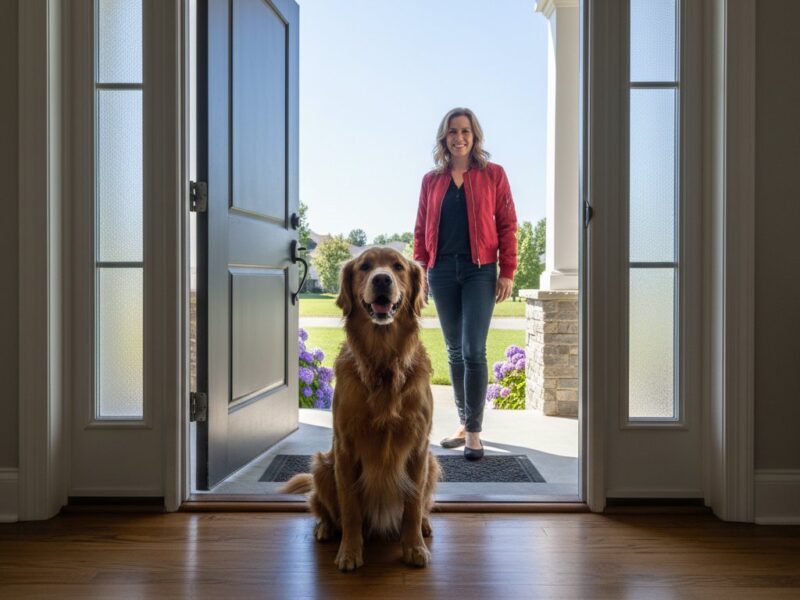
Imagine the front door swings wide open and your dog doesn’t move a muscle. They don’t lunge. They don’t scramble for the gap. They simply sit and wait for your permission. For many owners, this feels like an impossible dream, but the reality is often much more stressful. You’ve likely felt that heart-stopping jolt of adrenaline when your pup disappears toward the street, or the physical strain of wrestling them back while trying to greet a guest. You aren’t alone in this struggle. In 2026, nearly 40% of dog owners reported they cannot control their pets in public spaces, and the front door is where that control often breaks down first.
If you’re tired of the embarrassment and the fear, it’s time to learn how to stop a dog from bolting out the door once and for all. We’ll show you how to replace your dog’s impulsive triggers with a rock-solid sense of boundary and respect. This guide breaks down professional threshold control techniques that transform your home into a peaceful, secure environment. You’ll master the drills that turn “stay” from a suggestion into a definitive agreement, ensuring your dog remains a focused, respectful companion even when the world outside is calling.
Key Takeaways
- Understand the “Freedom Reward” psychology to shift your dog’s focus from the exit to your command.
- Master professional drills on how to stop a dog from bolting out the door by using spatial pressure instead of physical force.
- Desensitize your dog to the sounds and sights of an opening door with the “Doorknob Touch” and “Crack of Light” exercises.
- Transition to total off-leash reliability by utilizing the Remote Training Collar as a precise communication tool.
- Learn when to seek immersive professional solutions, like a board and train program, for high-drive dogs that need a complete reset.
Why Dogs Bolt: The Psychology of the Door Dash
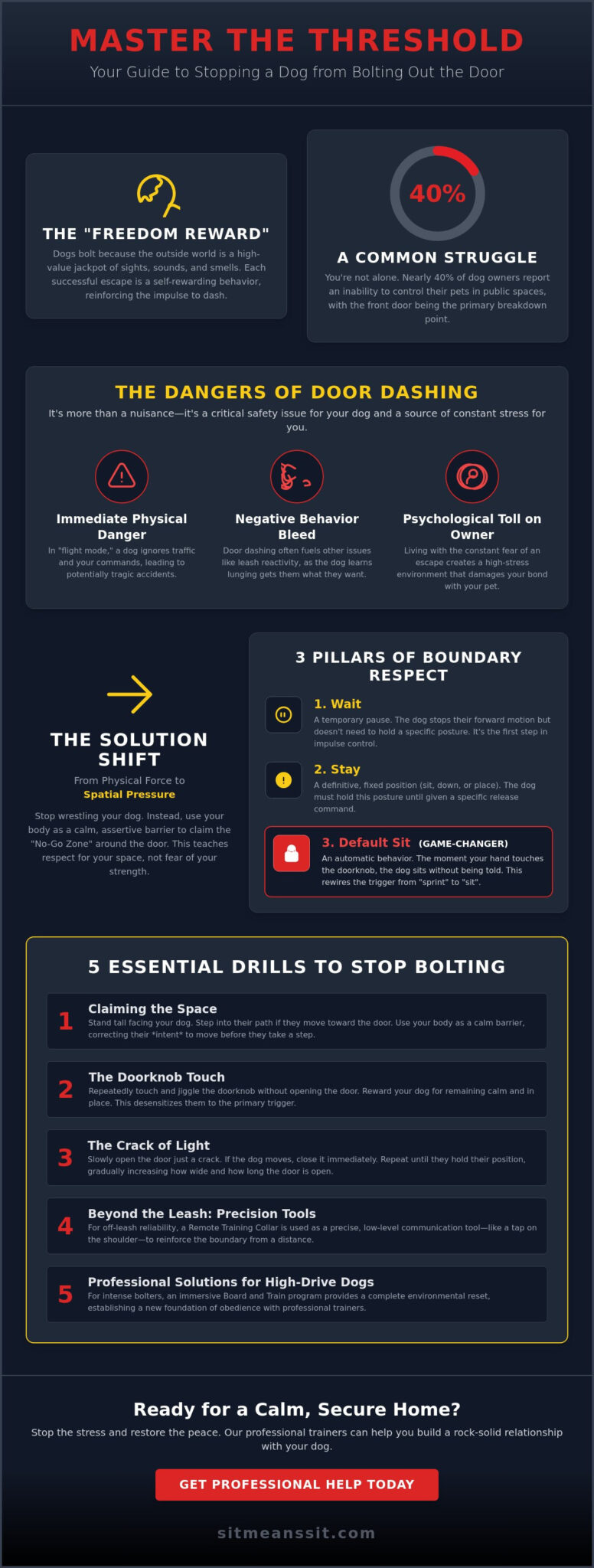
Door bolting isn’t just a nuisance; it’s a total breakdown of impulse control. When your dog sees that door crack open, they aren’t thinking about your rules. They’re focused on the “Freedom Reward.” To them, the outside world is a high-value jackpot filled with sights, sounds, and smells that provide an immediate dopamine hit. Every time they successfully scramble past you, the behavior is reinforced. This cycle makes learning how to stop a dog from bolting out the door feel like an uphill battle. High-energy breeds with intense prey drives are especially prone to this, as their curiosity overrides their training. You might try using baby gates or physical restraint, but these are just temporary band-aids. They don’t address the root cause. True transformation requires teaching your dog to respect the threshold as a definitive boundary, not just a barrier to be breached.
The Safety Risks of Threshold Bolting
The dangers of a bolting dog are immediate and severe. When a dog enters “flight mode,” their ears effectively turn off. They don’t see the car coming or hear your desperate shouts. This behavior also bleeds into other areas, often fueling leash reactivity because the dog learns that lunging forward is the only way to reach what they want. Just as professional transport specialists like Jagelo Haulage prioritize security and reliability on the road, pet owners must ensure their dogs are managed safely near traffic. Beyond the dog’s safety, there’s the psychological toll on you. Living in a home where you can’t trust your own front door is exhausting. It creates a high-stress environment that damages the bond between you and your pet. You deserve to feel confident every time the doorbell rings.
Instinct vs. Obedience: Why Your Dog Ignores You
Why does a dog who sits perfectly for treats suddenly ignore you at the door? We call this the “Squirrel Factor.” In high-arousal states, instinct takes the wheel. This is why understanding fundamental dog training principles is vital. You aren’t just teaching a command; you’re managing an emotional state. The threshold acts as a psychological trigger point where your dog’s excitement peaks. You must shift the dynamic from forced restraint to a conscious choice. Threshold respect is the dog’s internal decision to wait for your permission before crossing a boundary. When you achieve this, you’re no longer wondering how to stop a dog from bolting out the door; you’re leading a dog who understands their role in your pack. It’s about building a relationship where your voice carries more weight than the distractions on the sidewalk.
The Foundation of Door Manners: Teaching Boundary Respect
Stop thinking about leashes and baby gates. Real control happens in your dog’s mind, not in your biceps. Most owners spend their lives wrestling their pets, trying to physically hold them back from the exit. This only creates tension and excitement. Instead, you must shift your focus to communicating boundaries through spatial pressure. This technique involves using your physical presence to claim the entryway as your own. When you dive into understanding canine behavior problems, you realize that dogs naturally respect physical space more than vocal noise. You aren’t just blocking the path; you’re establishing that you own the threshold.
Consistency is the key to mastery. You must distinguish between a temporary pause and a fixed position to provide your dog with a clear roadmap. We use three specific pillars to build this foundation:
- Wait: A temporary pause where the dog stops but doesn’t necessarily hold a specific posture.
- Stay: A definitive, fixed position that the dog must maintain until you give a release command.
- Default Sit: An automatic behavior where the dog sits the moment your hand touches the doorknob.
The “Default Sit” is a game-changer for anyone wondering how to stop a dog from bolting out the door. It turns your movement into the command itself. When the doorknob becomes a cue for sitting rather than a cue for sprinting, the entire energy of the house changes. If you find yourself struggling to get these basics to stick, exploring Private Lessons can provide the one-on-one coaching needed to refine your timing and body language.
Creating a ‘No-Go’ Zone
Use your body as a calm, assertive barrier. Stand tall and face your dog. If they move toward the door, step into their space rather than backing away. You’re claiming the “No-Go” zone. Success depends entirely on your timing. You must correct the “intent” to bolt before their feet even move. Watch for the tensing of muscles or a fixed stare at the door gap. By interrupting the thought process early, you teach the dog that the door remains closed until they show calm respect.
The Power of Clear Communication
Stop repeating “No” like a broken record. To a dog in a high-arousal state, repetitive shouting is just white noise. They need a definitive agreement. A command is a contract, not a suggestion. This level of clarity is the backbone of successful dog obedience training. When the rules are black and white, your dog feels more secure. They stop guessing and start listening. This clarity is exactly how to stop a dog from bolting out the door while simultaneously building a deeper bond of trust and mutual respect.
5 Essential Drills to Stop Door Bolting for Good
Turning a door-bolter into a respectful companion requires more than a single training session. It requires a progressive system of drills that build on one another. These exercises move your dog from high-arousal impulsivity to calm, calculated obedience. By following this structured path, you’ll master how to stop a dog from bolting out the door in any environment. Start these drills inside where distractions are low before moving to the high-stakes front door. Consistency is your most powerful tool; don’t skip steps.
- Drill 1: The Doorknob Touch. Reach for the knob. If your dog stands up, take your hand away. Repeat until you can jiggle the handle while they remain in a rock-solid sit. This desensitizes the sound that usually triggers a sprint.
- Drill 2: The ‘Crack of Light’. Open the door just one inch. If the dog breaks their stay, the door shuts immediately. The goal is to reward the dog for remaining still while seeing the outside world. This aligns with AVSAB’s guide to door training, which emphasizes rewarding the absence of movement.
- Drill 3: The Step-Out. Open the door wide and step across the threshold yourself. Keep your eyes on the dog. If they try to follow, use spatial pressure to back them up. Only allow them to exit once you give a clear release command.
- Drill 4: The Distraction Test. While the door is open and your dog is staying, toss a toy or a ball onto the porch. This is a high-level impulse control test. They must value your “Stay” command more than the “Freedom Reward” waiting outside.
- Drill 5: The ‘Guest at the Door’. Have a family member ring the bell. This simulation “proofs” the behavior against the most common real-world trigger for bolting.
The ‘Door is the Cue’ Method
The ultimate goal is to fade your verbal commands entirely. You want the physical act of the door opening to be the instruction itself. When the door moves, your dog should automatically sit and look at you for guidance. This is called progressive desensitization. You move from a closed door to a wide-open gateway, ensuring the dog remains calm at every stage. When you master this level of focus, you’ve solved the puzzle of how to stop a dog from bolting out the door through communication rather than force. This shifts the responsibility of behavior from your voice to the dog’s own choices.
Proofing Under Real-World Distractions
Once your dog is perfect in a quiet house, you must add “High-Value” distractions. Practice while neighbors walk by or cars drive past. Use a “Leash-Pressure” technique to provide immediate, clear feedback if they attempt to break the boundary. Starting these habits early is crucial for long-term reliability. Many owners find that enrolling in puppy training classes provides the controlled, high-distraction environment needed to truly cement these skills. Don’t wait for a dangerous situation to occur; train for the world you live in today.
Beyond the Leash: Achieving Off-Leash Reliability at the Threshold
Real freedom isn’t found at the end of a six-foot rope. If your goal is to truly master how to stop a dog from bolting out the door, you have to move past physical restraint. A leash is a valuable safety tool during the learning phase, but it doesn’t teach internal discipline. True threshold control means your dog chooses to stay even when they are completely untethered. This transition requires a shift from physical control to total off-leash communication. By using a Remote Training Collar, you create a “digital leash” that maintains a clear line of dialogue between you and your pet, regardless of the distance or the distractions.
Why Physical Barriers Fail
Many owners struggle with a “leash-wise” dog. These dogs are experts at reading the situation. They listen perfectly when they feel the weight of the collar and the tension of the lead, but the second that clip is removed, they know they’re free to ignore you. This is why physical barriers like baby gates often fail in the long run. They are temporary obstacles, not psychological boundaries. Remote communication bridges the gap between the safety of your living room and the excitement of the front yard. It ensures reliability even when you aren’t standing right next to the dog, providing them with the structure they need to succeed.
Consistency Trumps Force
At the heart of our philosophy is the belief that discipline is the key to a more adventurous life. We don’t use the Remote Training Collar to punish; we use it to tap into the dog’s attention. Think of it as a gentle tap on the shoulder that says, “Hey, focus on me.” In the world of behavior, attention is the currency of training. When you have your dog’s focus, the “Squirrel Factor” loses its power. Mastery comes when the dog understands that their focus belongs to you, no matter what is happening on the other side of the door.
This approach is about more than just safety. It’s about transformation. A dog that respects the threshold off-leash is a dog that can go more places and experience more joy. The “Sit Means Sit” method isn’t about restriction. It’s about mastery through structure and joy. When your dog understands that a command is a definitive agreement, they earn the freedom to explore the world by your side. You stop worrying about how to stop a dog from bolting out the door and start looking forward to your next off-leash adventure together. Structure isn’t a cage; it’s the key to liberation.
Professional Training Solutions for High-Drive Bolters
Don’t let frustration become your new normal. While many owners can make progress with basic drills, some dogs require a higher level of intervention. Understanding how to stop a dog from bolting out the door is a journey, but you might hit a wall if your dog possesses a high prey drive or deeply ingrained habits. If your dog displays “red flag” behaviors, such as pulling you off your feet or showing total selective hearing at the threshold, it is time to call in the experts. Professional guidance replaces your uncertainty with a proven system of results.
Our board and train program provides the ultimate reset for high-drive bolters. This immersive experience removes the dog from their habitual environment and places them in a structured setting where every interaction reinforces the new rules. It breaks the cycle of impulsive behavior far more effectively than occasional practice. For owners who prefer a more hands-on approach in their own space, private lessons allow us to customize threshold training to your specific home layout. We address the unique challenges of your entryway, ensuring the training sticks where it matters most.
Why DIY Training Often Plateaus
Your dog is a mirror of your emotional state. If you feel a surge of panic every time you reach for the doorknob, your anxiety travels straight down the leash. This emotional feedback loop often causes DIY efforts to stall. Most home environments also lack the variety of “proofing” scenarios needed to ensure total reliability. A professional dog behaviorist offers insights that go beyond simple commands. We decode the “why” behind the bolt, addressing the underlying emotional state of the animal to create lasting change. This professional perspective is the Sit Means Sit difference, moving you past the plateau and toward total mastery.
Your Path to a Bolting-Free Life
Imagine a life where guests enter your home without a chaotic struggle. Picture the front door swinging wide open while your dog remains in a focused, respectful sit. This isn’t just a dream; it’s the inevitable result of clear structure and confident leadership. The liberation of knowing your dog is safe and responsive is worth the investment in professional training. You’ll stop wondering how to stop a dog from bolting out the door and start enjoying the adventurous, joyful life you both deserve. Find a Sit Means Sit trainer near you to start your transformation today.
Take Control of Your Entryway Today
Door bolting is a choice, not an instinct you’re stuck with. By shifting from physical restraint to clear communication, you’ve already started the journey toward a more respectful companion. Remember that threshold respect is about claiming your space and teaching your dog that the door itself is a cue to sit and wait. Mastering how to stop a dog from bolting out the door provides more than just safety; it offers the freedom to explore the world without fear. Consistency and structure are the keys to unlocking this new, adventurous lifestyle for you and your pet.
If you’re ready for a total behavioral reset, don’t wait for another close call. Sit Means Sit brings over 25 years of professional training experience to every client. From our specialized Remote Training Collar technology to our intensive, results-oriented Board and Train programs, we have the tools to ensure your dog listens every single time. Transform your dog’s behavior with a professional Sit Means Sit trainer! You deserve the peace of mind that comes with a perfectly behaved pet. Let’s start building a better bond and a more joyful life today.
Frequently Asked Questions
Why does my dog run out the door every time I open it?
Your dog bolts because they see the outside world as a high-value jackpot. This is the “Freedom Reward” in action. Without established boundaries, your dog views an open door as an invitation to explore. They lack the impulse control to resist the sights and smells of the neighborhood. Learning how to stop a dog from bolting out the door starts with shifting their focus back to you.
Is door bolting a dangerous behavior?
Door bolting is one of the most dangerous behaviors a dog can exhibit. It places your pet at immediate risk of traffic accidents or becoming lost in an unfamiliar area. When a dog bolts, they often enter a “flight mode” where they ignore all previous training. This behavior isn’t just a nuisance; it’s a critical safety issue that requires a definitive, professional resolution.
What is the best command to stop a dog from running out the door?
A rock-solid “Sit” is the most effective command for door safety. However, the ultimate goal is to make the door opening itself the command. You want your dog to see the doorknob turn and automatically sit without you saying a word. This creates a “Default Sit” that ensures safety even if you’re distracted by guests or heavy bags of groceries.
Can I stop an older dog from bolting if they’ve done it for years?
You can absolutely train an older dog to respect boundaries. While they may have years of practicing bad habits, dogs are capable of learning new structures at any age. It requires a clear reset and consistent practice to overwrite the old patterns. Professional programs, like a board and train, are often the fastest way to achieve results with senior bolters who need a fresh start.
How long does it take to train a dog to wait at the door?
Most dogs grasp the basic concept of threshold respect within a few days of consistent drilling. However, achieving total reliability under heavy distractions typically takes several weeks of steady practice. The timeline depends on your dog’s energy level and your commitment to the daily drills. Mastery is a process, not a one-time event, so keep your training sessions short and high-energy.
Do I really need a remote training collar to stop door bolting?
While you can start with a leash, a remote training collar is the key to total off-leash reliability. It provides a clear, consistent way to communicate at a distance. This “digital leash” ensures your dog listens even when you aren’t standing right next to them. It is the most effective way to proof the behavior against high-value distractions like squirrels, cars, or neighbors.
What should I do if my dog successfully bolts out the door?
If your dog escapes, do not chase them. Chasing often turns a dangerous situation into a game of “keep away” for the dog. Instead, try running in the opposite direction or dropping to the ground to pique their curiosity. Once they are safely back inside, take it as a sign that your training needs more proofing. Use the incident as motivation to refine your threshold control drills.
How do I train my dog to stay at the door when guests arrive?
Training for guests requires a simulation of the real event. Use a “Guest at the Door” drill by having a friend ring the bell while you practice spatial pressure. Your dog must learn that the excitement of a visitor is not a release from their “Stay” contract. Consistent proofing in these high-arousal states is how to stop a dog from bolting out the door when the doorbell rings.
Comments are closed.