
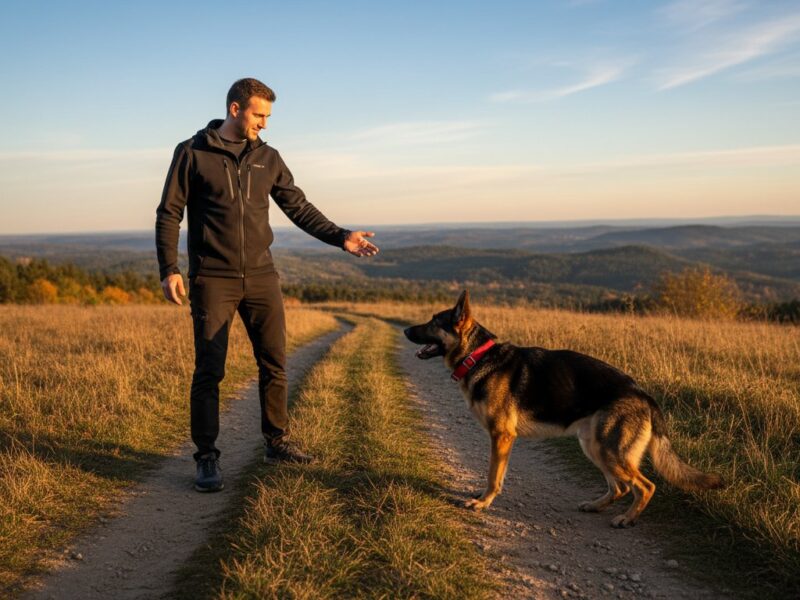
Discipline isn’t a cage; it’s the only way to truly unlock your dog’s world. You’re likely tired of feeling tethered to a six-foot leash while other owners enjoy stress-free hikes and mountain trails. It’s frustrating when your dog treats your “come” command like a suggestion rather than a definitive agreement. You worry about your dog bolting into traffic or facing a $300 fine in Chicago for a leash violation. Implementing structured off-leash reliability training drills is the definitive solution to bridge the gap between “sometimes” and “always.”
We’re going to replace your frustration with empowerment and pride. You’ll learn the specific methodology to ensure your dog chooses you over every distraction, whether you’re using a remote training collar or working through high-stimulation environments. This guide breaks down the high-stakes drills and technical mastery required to achieve total reliability in 2026. Get ready to ditch the embarrassment at the park and start living a more adventurous, joyful life with your pet. It’s time to transform your bond through the power of clear structure and unwavering communication.
Key Takeaways
- Identify the critical difference between “kitchen obedience” and real-world mastery to stop your dog from ignoring commands when distractions appear.
- Learn the “Check-In” methodology to transform your dog’s focus, making you the most important thing in their environment regardless of the setting.
- Follow a phased approach using specific off-leash reliability training drills to build a rock-solid communication loop from your backyard to the local park.
- Master the “Three D’s” of proofing to ensure your dog’s response is instant and dependable, even in the most high-stimulation scenarios.
- Explore how professional pathways like Board and Train programs can accelerate your journey toward total off-leash liberation and adventure.
Why Your Dog Fails Off-Leash: The Selective Hearing Crisis
Your dog is a genius in the kitchen. They sit, stay, and spin for a piece of kibble without a second thought. But the moment that front door opens, their IQ seems to vanish. This is the selective hearing crisis. There’s a massive gulf between “kitchen obedience” and true off-leash reliability. One is a simple trick; the other is a total lifestyle shift. If your dog only listens when the environment is silent and the rewards are visible, you don’t have control. You have a fair-weather friend who is gambling with their own safety.
High-value treats are fantastic for teaching new skills, but they often fail when a squirrel streaks across your path. Adrenaline overrides appetite every single time. When your dog’s arousal level hits a specific “threshold,” their brain literally stops processing your voice. They’ve checked out. To fix this, you need more than a pocket full of jerky. You need consistent foundational dog training principles that emphasize focus over food. Mastery means your dog chooses you because you are the clear leader, not because you have a biscuit.
Constant leash tension is a silent killer of reliability. If your dog only responds because they feel the physical restraint of a tether, they’re learning to ignore you the second that tension disappears. They become “leash-wise.” They know exactly when they are “plugged in” and when they are free to bolt. True freedom comes from a mental connection, not a physical cord. Without this mental engagement, your off-leash reliability training drills will never yield the results you desire.
The Illusion of Control
A leash is a safety net, not a steering wheel. Relying on it for communication is a dangerous trap that leads to “hope-based” training. You stand in an unfenced area and pray your dog chooses you over a passing jogger or a stray cat. This isn’t a strategy; it’s a gamble. You must transition from physical restraint to a mental agreement where your voice carries more weight than any nylon tether. This shift is the absolute core of 100% reliability.
Identifying Your Dog’s Distraction Profile
Every dog has a unique distraction profile. Some are high-drive hunters triggered by movement, while others are low-focus wanderers who get lost in every scent on the wind. You can’t apply a one-size-fits-all fix to a unique animal. Identify exactly what breaks your dog’s concentration. Is it other dogs, loud noises, or fast-moving bikes? Once you know the triggers, you can set realistic goals for dog obedience training. Total mastery requires you to understand the animal in front of you before you start your off-leash reliability training drills.
Mastering the Science of Attention: The Foundation of Freedom
Reliability isn’t a suggestion; it’s a definitive agreement. True off-leash reliability is your dog’s ability to maintain focus on you despite squirrels, other dogs, or a blowing leaf. It represents an unbreakable mental bond where you are more interesting than the environment. To reach this level, you must implement a binary communication system. Your dog needs to understand exactly what “yes” and “no” mean without any gray areas. This clarity builds the confidence they need to navigate the world safely. When your directives are clear, your dog feels secure in their role, leading to a more adventurous and joyful life for both of you.
The Check-In: Your Most Important Metric
The “Check-In” is the heart of all successful off-leash reliability training drills. It starts by rewarding voluntary eye contact in low-distraction zones like your living room. You want your dog to look at you and wonder, “What’s next?” Use the “Name Game” to build an instant head-turn response every time you speak. This isn’t just about hearing their name; it’s about shifting their entire focus back to your personal space. Attention is a measurable behavioral state where the dog’s sensory intake is prioritized toward the owner’s directives. Mastering these essential off-leash skills ensures your dog stays within a safe radius even before you issue a command.
Remote Training Collar: The Bridge to Mastery
The Remote Training Collar is the most misunderstood tool in the industry. In 2026, we view this technology as an “invisible leash” that provides a gentle tap on the shoulder at a distance. It isn’t about punishment; it’s about maintaining a clear line of communication when your dog is fifty yards away. This tool allows you to whisper to your dog through the noise of a busy park. Using a collar with absolute precision requires professional guidance to ensure the emotional well-being of your pet remains the top priority. If you’re ready to move beyond the frustration of a dragging lead, our private lessons can show you how to use this technology to achieve total liberation.
Steady practice is the only way to turn these concepts into habits. Your dog wants to please you, but they need the structure to understand how. When you master the science of attention, you stop being a spectator in your dog’s life and start being their partner. This foundation is what makes the more advanced off-leash reliability training drills possible. You are replacing your frustration with a sense of empowerment. You are finally building the life of freedom you both deserve.

Phase 1 Drills: Building Instant Off-Leash Response
Mastery begins where the tether ends. Once you’ve established foundational attention, you must build a robust communication loop. This starts in controlled, low-stimulation environments. Move from your living room to a “boring” outdoor area like a driveway or a fenced backyard. These off-leash reliability training drills prove that your dog can maintain focus even when the walls disappear. You’re teaching them that your directives are a definitive agreement, regardless of the setting. This phase is about replacing the physical leash with a mental one that remains taut even at a distance.
One essential exercise is the Recall-to-Heel drill. Most owners stop at the recall; they call the dog and the job is done. We want more. Make the return a multi-step process where the dog returns and immediately transitions into a heel position. This keeps the dog mentally engaged throughout the entire movement. Similarly, the Emergency Stop drill is a lifesaver. It teaches your dog to halt momentum instantly on command. This isn’t a suggestion; it’s a safety requirement that prevents accidents before they happen. It ensures you can freeze your dog in their tracks if a car or another hazard appears.
The 360-Degree Recall Drill
This drill tests your dog’s ability to find you in space. Start with your dog on a long line in a quiet park. Begin moving in wide circles, changing your direction and pace frequently. Don’t say a word until they are looking away from you. This is the test. Issue your recall command once. If they turn and commit to you, reward them with high energy. This drill forces the dog to actively monitor your position rather than waiting for you to follow them. It builds the habit of keeping one eye on the leader at all times.
The ‘Back-Away’ Engagement Drill
Use your body language to become a magnet. When you call your dog, don’t just stand there like a statue. Back away quickly with short, punchy steps. This natural movement draws the dog toward you with increased speed and enthusiasm. You want them to “hunt” the return. This level of engagement is often first introduced in a professional puppy training class, where structure meets play. Building this drive early ensures that your off-leash reliability training drills result in a dog that truly chooses you over the world. Steady practice here creates the foundation for the high-distraction work to come.
Phase 2 Drills: Distraction-Proofing for the Real World
Proofing is where the “kitchen obedience” we discussed earlier meets the chaos of reality. Amateur trainers often skip this step because it requires patience and steady practice. We define this process through the “Three D’s”: Distance, Duration, and Distraction. You must systematically increase each variable to ensure your off-leash reliability training drills hold up under pressure. If your dog only listens when it’s easy, you don’t have reliability. You have luck. Total mastery means your dog remains locked on you even when the world is screaming for their attention.
The Squirrel Simulator drill manages high-prey drive triggers by using a flirt pole or moving toy to mimic a chase. You’re teaching the dog that your command overrides their biological instinct. Similarly, the Parallel Walk drill requires your dog to maintain focus while another dog passes nearby. If they lose focus, you use your binary communication system to provide an immediate correction and reset. This isn’t about being harsh; it’s about being clear. You are replacing their confusion with the confidence that comes from knowing exactly what is expected.
The Gate and Door Drill
Bolting through an open door is a leading cause of pet accidents. Start this drill at your front door or a park gate. Require a “wait” at the open boundary. Proof the behavior by throwing a toy or food outside the gate while the dog remains still. You’re building an invisible wall. Eventually, you will transition this to “invisible boundaries” in wide-open fields, giving you total peace of mind during any outing. This structure creates the safety necessary for a lifetime of adventure.
The ‘Leave It’ Sprint
Impulse control is the ultimate test of a reliable dog. Place a high-value item in your dog’s path and send them on a sprint toward it. Mid-stride, issue the “Leave It” command and call them away. This high-arousal drill is the perfect scenario to use the Remote Training Collar to reinforce the directive at a distance. It ensures your voice remains a definitive agreement even when your dog is moving at full speed. Ready to see these results in person? Join our group classes to practice these off-leash reliability training drills with professional coaching.
Professional Pathways to Total Off-Leash Liberation
Sometimes, your best efforts at home aren’t enough to break through deep-seated behavioral habits. While individual off-leash reliability training drills are powerful, they require a level of timing and consistency that many busy families struggle to maintain. Professional intervention isn’t a sign of failure; it’s a strategic decision to fast-track your success. If you’re tired of “selectively obedient” behavior and want a total transformation, moving to a professional pathway is the answer. You’ll go from feeling tethered to your leash to enjoying the ultimate freedom of a perfectly behaved companion. Mastering off-leash reliability training drills is a journey that doesn’t have to be taken alone.
The transition back to your home is the most critical phase of the process. We ensure you are fully equipped to handle your dog in high-stimulation environments. You’ll learn how to apply the same principles we used during the immersive stay. This ensures the results aren’t just temporary; they are a permanent shift in your dog’s character. Discipline is the key to a more adventurous and joyful life. Don’t settle for a dog that only listens when it’s convenient. Demand total mastery and start your journey toward absolute confidence today.
The Immersive Advantage
A board and train program offers the fastest route to off-leash reliability. Your dog lives with an expert who provides 24/7 professional immersion. This environment replaces confusion with clarity through thousands of repetitions in a single week. We don’t just teach tricks; we condition a new state of mind. This professional “reset” is essential for dogs with high-drive triggers that ignore standard rewards. Our goal is to achieve the “Sit Means Sit” standard of total control, where your dog chooses you over every distraction every single time. It’s about building a foundation in weeks, not years.
Finding the Right Expert
Choosing a dog trainer near me requires looking for more than just a certificate. You need a partner who offers lifetime support and group class reinforcement. Training doesn’t end when your dog comes home; it’s a lifestyle change that you must maintain. Your role as the handler is to uphold the structure we’ve built. We provide the tools and the foundation, but you provide the consistency that makes it stick. Our methodology is designed for universal applicability, ensuring every owner can achieve these results regardless of their dog’s breed or age. Join the thousands of owners who have found freedom through our proven systems. Take the first step toward liberation and book your consultation today.
Take the Lead on Your Dog’s Freedom
True off-leash mastery isn’t a pipe dream; it’s the inevitable result of clear structure and unwavering commitment. By moving past the illusion of control provided by a leash and focusing on the science of attention, you’ve already taken the first step toward a better life. You now understand that off-leash reliability training drills are the bridge between a dog that listens sometimes and a dog that is 100% dependable in any environment. You’ve learned how to handle high-prey triggers and how to build a communication loop that works at a distance.
We’ve spent over 25 years perfecting this craft and creating thousands of off-leash success stories nationwide. Our proprietary Remote Training Collar technology is the game-changer you need to achieve total confidence. Don’t let another day pass in frustration or fear. It’s time to replace your stress with the pride of a perfectly behaved companion. Transform your dog’s reliability; schedule your FREE consultation today! Your future of stress-free hikes and joyful park visits is waiting for you. Let’s make it a reality together.
Frequently Asked Questions
How long does it take to achieve 100% off-leash reliability?
Total mastery typically takes several weeks of consistent practice, though results vary based on your dog’s temperament and your commitment level. Immersive programs like our Board and Train can accelerate this timeline to just a few weeks by providing 24/7 professional conditioning. Consistency turns your directives into a definitive agreement. Focus on steady practice to ensure your dog understands that your commands are not suggestions, regardless of the environment.
Is my dog too old to start off-leash training drills?
No dog is ever too old to learn the structure required for off-leash freedom. Senior dogs often possess longer attention spans than puppies, which makes them excellent candidates for advanced focus work. We’ve helped countless older dogs replace their old habits with total reliability. It’s about building a new mental bond through clear boundaries. Your older companion deserves the same adventurous and joyful life as a younger pet.
What is the best age to begin off-leash training for puppies?
Start building the foundation for engagement as early as 8 to 12 weeks old in a controlled environment. Our Puppy Preschool focuses on teaching focus and “Check-In” behaviors before your pet develops bad habits. Early training ensures that your puppy grows up viewing you as the most important thing in their world. Starting young creates a seamless transition to more advanced work as they mature and gain confidence.
Can high-prey drive breeds like Huskies or Terriers ever be trusted off-leash?
Yes, even high-drive breeds can achieve absolute reliability with the right methodology and tools. These breeds require more intensive proofing against biological instincts like chasing squirrels or birds. Using a Remote Training Collar provides the “invisible leash” necessary to maintain communication at a distance. Don’t let your dog’s breed be a barrier to their liberation. With structure, any dog can learn to choose their owner over a distraction.
How do I use a Remote Training Collar safely for off-leash drills?
Safe use starts with professional instruction to ensure the tool is used for communication rather than punishment. Set the collar to the lowest perceptible level to provide a gentle “tap on the shoulder” during your off-leash reliability training drills. This ensures your dog remains confident and happy while learning to listen at great distances. Professional guidance ensures the technical aspect of the process always supports your pet’s emotional well-being.
What should I do if my dog ignores a recall command during a drill?
Immediately shorten the distance and use your training tool to guide them back to you without repeating the command. Repeating a command teaches your dog that your first directive was optional. Reset the scenario in a lower-distraction area to rebuild their focus before trying again. Successful off-leash reliability training drills require you to be decisive and clear every single time. Never let a failed repetition stand without a gentle correction and a successful reset.
Do I need to use treats for off-leash reliability training?
Treats are useful for teaching new skills, but they often fail in high-arousal situations where adrenaline overrides appetite. True reliability requires moving beyond food rewards to a relationship built on respect and clear communication. Your dog should listen because you are the leader, not because you have a biscuit in your pocket. We focus on creating a mental connection that stays strong even when the treats are left at home.
How do I know if my dog is ready for their first off-leash hike?
Your dog is ready when they maintain a 100% success rate during high-distraction drills in varied public settings. Test their focus in busy parks or near moving objects while using a long line to ensure safety. If they choose you over every competing motivator without hesitation, you’ve achieved the “Sit Means Sit” standard of control. This level of preparation ensures your first hike is a stress-free experience for both you and your dog.
Comments are closed.