
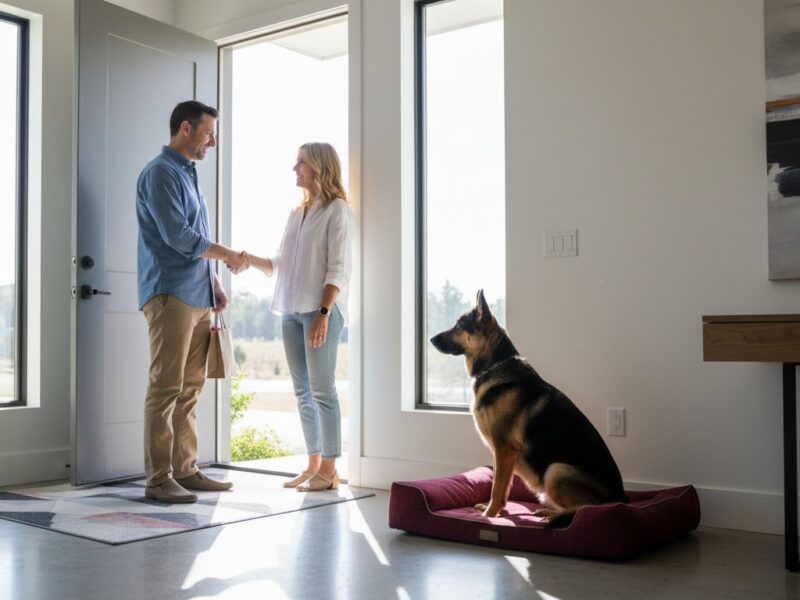
What if your doorbell ringing didn’t trigger a chaotic explosion of barking and jumping? You love your dog, but the embarrassment of a guest being tackled at the front door is enough to make you stop hosting dinner parties altogether. It’s exhausting to manage a lunging pet while trying to take a visitor’s coat. We understand that household stress. Training a dog to be calm around visitors isn’t about distracting them with a handful of treats. It’s about establishing clear boundaries through unbreakable obedience.
At Sit Means Sit, we believe in freedom through obedience. You deserve a home where your dog stays in a designated “Place” until you give the release command. We’ll show you how to transform your chaotic greeter into a quiet, respectful companion using our proven professional techniques. This article previews our industry leading approach to off-leash control and reliable greetings. You’ll gain the confidence to invite anyone over without the fear of safety concerns or constant noise. Let’s replace that frustration with pride and get your dog ready for total control in 2026.
Key Takeaways
- Understand why your dog views the doorbell as a trigger for chaos and how to break the cycle of barking and jumping.
- Discover the professional secrets to training a dog to be calm around visitors by establishing clear boundaries and unbreakable obedience.
- Learn how to use a remote training collar for consistent communication that ensures your dog listens even when the front door opens.
- Master the “Place” command to transform your dog from a frantic greeter into a respectful companion who waits for your release.
- Explore how immersive board and train programs can provide the final level of off-leash control needed for a truly stress-free home.
Why Your Dog Goes Wild When the Doorbell Rings
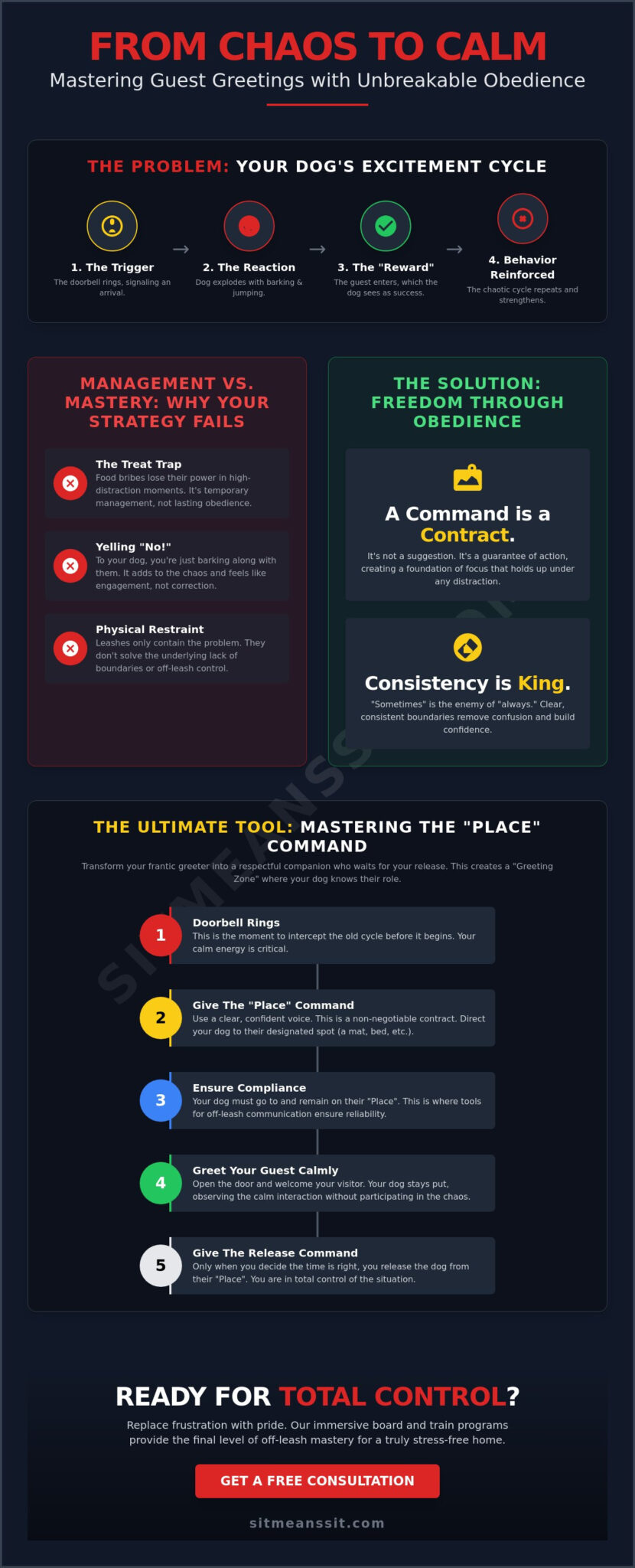
The doorbell rings. Your dog explodes. For many owners, this sound is a starting gun for a chaotic race to the front door. Barking, spinning, and jumping aren’t just random acts. They are part of the “Excitement Cycle.” These behaviors are self-rewarding. When your dog acts out and the guest eventually enters, the dog believes their frantic energy “unlocked” the door. This creates a loop where high arousal is the only way they know how to interact. Training a dog to be calm around visitors requires breaking this cycle before the first bark even happens.
Don’t confuse “happy to see you” with a total lack of boundaries. A dog can be thrilled to meet someone while still maintaining off-leash control. The problem is that the doorbell acts as a high-arousal trigger. It’s a distraction that bypasses basic manners because the dog hasn’t been taught that a command is a definitive contract. This leads to the “Visitor Gap.” You might have a pet that listens perfectly at the park but ignores every word you say the moment a stranger stands on the porch. They aren’t being “bad.” They just don’t have the structure to handle the stress of a new arrival.
The Psychology of Guest Greetings
Every breed handles visitors differently. Some have deep territorial instincts. Others suffer from social over-excitement. A huge part of understanding dog behavior involves looking at the energy you bring to the situation. If you’re anxious or frustrated when the bell rings, your dog feels that tension and ramps up their own energy. They might be seeking your attention or trying to assert control over the “intruder” at the door. Either way, the result is a household under constant stress. We focus on replacing that confusion with absolute confidence.
Management vs. Mastery: Why Your Current Strategy Fails
Most owners fall into the “Treat Trap.” They try to bribe their dog with food, but high-value treats often lose their power when a new person is standing right there. It’s a high-distraction moment that food simply can’t fix. Yelling “No” is another common mistake. To your dog, you’re just barking along with them. It feels like engagement, not a correction. Even physical restraint like leashes only manages the problem temporarily. It doesn’t solve the underlying behavior. True mastery comes from consistent boundaries. Training a dog to be calm around visitors is about teaching them that “Sit” means “Sit,” regardless of who is walking through that door.
The Sit Means Sit Philosophy: Obedience is a Contract
Imagine a life where your dog is a full participant in every family gathering. They aren’t locked in a bedroom or banished to the backyard when the doorbell rings. This is the reality of “freedom through obedience.” At Sit Means Sit, we don’t view discipline as a restriction. It’s the key to a more adventurous and joyful life for both you and your pet. A trained dog is a happy dog because they understand exactly what is expected of them. Training a dog to be calm around visitors starts with a fundamental shift in how you view every command you give.
Our standard is simple: a command is a definitive contract. It isn’t a suggestion. It isn’t something the dog chooses to do only if they feel like it or if you have a treat in your hand. When you say “Sit,” it means “Sit” every single time. This level of reliability creates a foundation of focus that holds up even under extreme distractions. We master the “Place” command as the ultimate tool for visitor management. Instead of a dog lunging at the door, you have a dog that remains on their designated bed or mat until you give the release command. This isn’t just about good manners; it’s about total control.
Establishing Clear Boundaries
Success requires defining a “Greeting Zone” in your home. You must decide exactly where your dog belongs when guests arrive and stay consistent with that boundary. Consistency is king. If you let your dog jump on you “sometimes” when you get home from work, you can’t expect them to stay down for a stranger. “Sometimes” is the enemy of “always.” Obedience is the essential bridge that connects a chaotic household to a home filled with harmony and mutual respect.
The Power of Off-Leash Communication
True mastery means moving beyond the leash to achieve total control in any room. You shouldn’t need a physical tether to keep your dog from bolting toward the front door. Clear, direct communication reduces dog frustration and anxiety because they no longer have to guess how to act around guests. By integrating a dog obedience training mindset into your daily routine, you turn every interaction into a learning moment. This isn’t just a hobby; it’s a lifestyle change that ensures your dog is welcome anywhere. If you want to see this transformation in action, our private lessons offer the personalized coaching needed to bridge the gap between chaos and calm.
Tools for Success: Beyond the Standard Leash
You can’t achieve total control if you’re always tethered to a rope. A leash is a great safety net, but it isn’t a sophisticated communication tool. To master training a dog to be calm around visitors, you need gear that bridges the gap between you and your pet from across the room. We focus on mastery and reliability. This means using professional tools to speak your dog’s language with absolute clarity. When the doorbell rings, you need a way to cut through the noise and regain your dog’s focus instantly.
The Remote Training Collar is our primary tool for clear, consistent, long-distance communication. It represents a shift from “Correction-Based Training” to “Attention-Based Training.” Instead of waiting for a mistake and punishing it, we use the collar to maintain a constant dialogue. It acts as a digital bridge. This technology allows for the off-leash control that defines the Sit Means Sit lifestyle. It ensures your dog remains a happy, included member of the family rather than a source of stress hidden away in another room.
Effective Use of the Remote Collar
Think of the remote collar as a “tap on the shoulder.” It’s a gentle signal that tells your dog to look at you for direction. You must match the stimulation level to the dog’s current distraction level. If a guest is walking through the door, your dog’s arousal is high. A subtle tap ensures they hear your command over their own excitement. Professional instruction is vital for this. Our trainers show you how to use these remote tools correctly to build trust and confidence rather than fear. We’ve seen every breed and every temperament, and we know how to dial in the perfect settings for your specific dog.
Creating a ‘Place’ for Calmness
The physical tool you choose for the “Place” command matters. We often recommend a raised cot instead of a flat rug or bed. A raised cot provides a clear psychological boundary. The dog can feel the edge, which makes the boundary tangible and harder to ignore. Training the “Place” command on a specific cot creates mental stillness. It acts as a visual cue that signals “Work Mode” to your dog. When they are on that cot, they know their job is to remain calm and wait for your release. This physical boundary helps a hyper dog find their center even when the house is full of distractions.
Step-by-Step Guide to Calm Guest Greetings
Success doesn’t happen by accident. It’s the result of a clear, repeatable process that replaces chaos with structure. When you’re training a dog to be calm around visitors, you need a game plan before the first guest even parks their car. This isn’t about hoping for the best. It’s about executing a series of phases that ensure your dog understands their role in the household. We break this down into five specific phases designed to build off-leash control and confidence in any environment:
- Phase 1: Pre-Arrival Preparation – Burn off excess physical energy and set the “Place” command early.
- Phase 2: The Doorbell – Maintain the “Place” command through the initial trigger of a knock or ring.
- Phase 3: The Entry – Manage guest behavior to ensure they don’t over-stimulate your dog.
- Phase 4: The Interaction – Allow controlled greetings only when the dog is in a relaxed state.
- Phase 5: The Release – Give the definitive release command once the household energy has leveled out.
Phase 1 & 2: Setting the Stage
Preparation starts long before the doorbell rings. First, burn off excess physical energy with a structured walk or play session. A tired dog is a more focused student. Next, use the “knock drill” to desensitize your pet. Have a family member knock on the door or ring the bell repeatedly while you practice the “Place” command. The goal is to make the sound of arrival a cue for your dog to go to their bed, not a signal to charge the door. Establishing a quiet entry is the ultimate goal for every owner who wants a peaceful home. Sending your dog to “Place” at the first sign of a visitor creates a reliable boundary that prevents jumping before it starts.
Phase 3 & 4: Managing the Human Element
Training your dog is only half the battle. You must also train your guests. Implement a strict “Ignore the Dog” rule for the first five minutes of any visit. No eye contact. No talking. No petting. This ensures the human element doesn’t sabotage your progress when training a dog to be calm around visitors. Focus on rewarding the absence of behavior. When your dog is lying quietly on their cot while the house is full of noise, they are winning. If your dog breaks the command, don’t panic or yell. Use a calm, immediate redirection to put them back in “Place.” This reinforces that the command is a definitive contract that doesn’t expire just because someone new walked in.
Phase 5 is the release. Only once your dog is visibly relaxed and the initial excitement of the guest has faded should you give the release command. This allows them to join the party as a calm, respectful companion. If they start to ramp up again, simply send them back to “Place” to reset. This cycle builds the consistency required for long-term behavioral change. If you’re struggling to bridge the gap between practice and real-world results, our private lessons provide the hands-on coaching you need to master these transitions and achieve total control.
Mastering Real-World Distractions with Professional Training
DIY tips can take you far, but high-stakes environments often require a professional touch. If your dog’s reaction to the doorbell has evolved into deep-seated anxiety or dangerous lunging, simple home drills might not cut it. Identifying when your current strategy has plateaued is the first step toward a peaceful home. Training a dog to be calm around visitors is a complex task because it involves high-value distractions that are difficult to replicate alone. We specialize in proofing behaviors against these extreme triggers so your dog remains reliable when it matters most.
Our professional trainers bridge the gap between “knowing a command” and “obeying under pressure.” We don’t just teach your dog to sit in a quiet living room. We teach them to maintain that focus while the front door is wide open and strangers are walking in. This transition from a controlled training facility to your specific front door is where the real transformation happens. It turns a frustrated pet owner into a confident leader who can handle any situation with ease.
The Board and Train Advantage
For many families, an immersive board and train program is the ultimate solution for visitor-related chaos. This model provides 24/7 consistency that builds reliable habits much faster than once-a-week lessons. Your dog lives with a professional who provides constant “proofing” in various environments with different people. This immersion is how we achieve the signature off-leash control that Sit Means Sit is known for. It removes the guesswork for the owner and returns a dog that understands boundaries as a way of life, not just a temporary suggestion.
Private Lessons for Personalized Results
Every home has a unique layout and every dog has specific triggers. Our private lessons allow us to customize a visitor protocol that fits your lifestyle. We address the exact issues you face, whether it’s a delivery driver dropping off a package or neighborhood children running past the window. We empower you with the skills to maintain the “Sit Means Sit” standard in your own space. Training a dog to be calm around visitors becomes a seamless part of your daily routine. We believe in any dog, any age, and any breed. No matter how chaotic your greetings have been in the past, we have the tools and the expertise to fix it. You deserve the freedom that comes with a perfectly behaved companion.
Reclaim Your Home and Host with Confidence
You don’t have to live with the stress of a lunging, barking dog every time someone knocks. Real transformation happens when you replace chaos with clear boundaries and a definitive “Place” command. By breaking the excitement cycle and utilizing industry-leading remote training technology, you create a home where guests are welcomed with respect. Training a dog to be calm around visitors isn’t just a dream; it’s a standard we’ve helped thousands of owners achieve for over 25 years. We believe in any dog, any age, and any breed.
It’s time to stop managing the mess and start enjoying the freedom that comes with absolute obedience. Imagine the pride you’ll feel when your dog remains perfectly still as your friends walk through the door. We have a proven track record of turning even the most difficult behaviors into success stories. Take the first step toward a happier, more adventurous life with your pet. Schedule your FREE consultation with Sit Means Sit today! We’re ready to show you how simple off-leash control can be.
Frequently Asked Questions
How long does it take to train a dog to be calm around visitors?
Results vary based on your dog’s history and your commitment to consistency, but many owners see a transformation during their very first session. For those seeking rapid mastery, an immersive board and train program typically delivers total control within two to three weeks. We focus on building a foundation that lasts a lifetime. Your dog learns that obedience isn’t optional; it’s a way of life that leads to more freedom.
Can an older dog learn to stop jumping on guests?
Absolutely, because we live by the signature “any dog, any age, any breed.” Older dogs often have a longer attention span than puppies; this makes them excellent candidates for advanced obedience. It is never too late to replace bad habits with reliable boundaries. We’ve helped senior dogs achieve off-leash control even after years of jumping. Your dog wants to please you; they just need a confident leader to show them the way.
What should I do if my dog is aggressive toward visitors, not just excited?
Aggressive behavior requires immediate professional intervention to ensure the safety of your guests and your pet. This is more than just over-excitement; it’s a deep-seated behavioral issue that needs a clear, structured resolution. Our trainers are experts in behavior modification for aggression. We replace the dog’s fear or territorial instinct with a sense of security through discipline. Training a dog to be calm around visitors is possible even if they’ve shown aggression in the past.
Is it okay to use a crate when guests arrive instead of training?
Using a crate is a management tool, but it’s not a substitute for real training. While a crate keeps a guest safe temporarily, it doesn’t fix the underlying behavior or teach your dog how to act. Our goal is “freedom through obedience.” We want your dog to be a happy, included part of the household. Training your dog to stay in “Place” allows them to be in the room without causing chaos or stress.
How do I stop my dog from barking at the doorbell when I’m not expecting anyone?
You must desensitize the sound of the doorbell through repetitive drills and consistent boundaries. Practice the “Place” command with family members until the bell becomes a cue for your dog to go to their bed. This turns a high-arousal trigger into a predictable routine. Training a dog to be calm around visitors includes these unexpected moments. Reliability means your dog listens every time, not just when you’re expecting company.
Should I let my guests give my dog treats when they arrive?
No, you should not let guests give treats during the initial greeting. This often rewards a high-energy state and teaches the dog to “hustle” visitors for food. Instead, have your guests ignore the dog for the first five minutes. Once your dog is in a calm, relaxed state in their “Place,” you can allow a quiet interaction. This ensures your dog values the boundary more than the bribe.
What if my dog listens to the trainer but not to me?
This usually happens when there is a gap in consistency or leadership at home. Our programs are designed to train you just as much as your dog. We provide the tools and coaching necessary to ensure you are the one in control. A command is a definitive contract between you and your pet. We’ll show you how to maintain that contract so your dog respects your authority in every environment.
Can any breed of dog be trained to stay calm during greetings?
Yes, every breed is capable of learning calm greeting behaviors. Whether you have a high-drive working breed or a small companion dog, the principles of clear communication and boundaries remain the same. We take pride in our “any dog, any age, any breed” approach. Our methodology is universal and effective because it focuses on the dog’s natural desire for structure. We’ll help you unlock your dog’s full potential.
Comments are closed.