
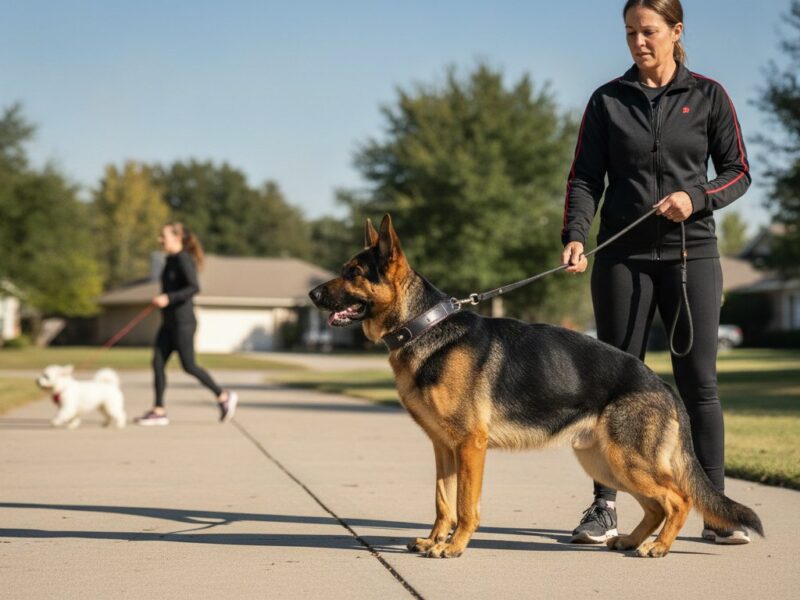
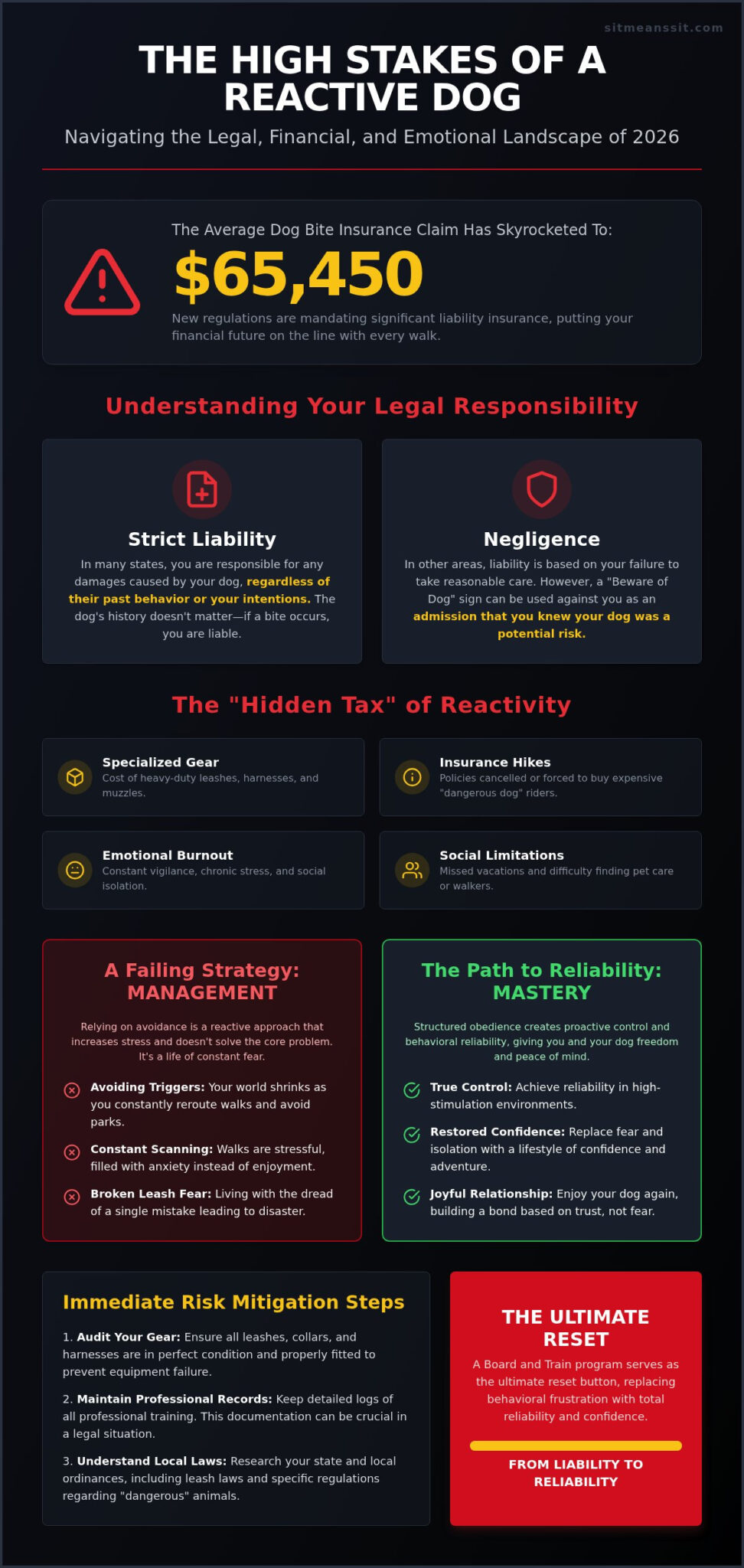
Did you know that the average dog bite insurance claim skyrocketed to $65,450 last year? In 2026, the stakes are higher than ever for pet owners. If you dread every walk or scan the horizon for other dogs, you already feel the weight of this burden. You aren’t just dealing with a behavioral quirk; you are managing the serious liability of owning a reactive dog. Across the nation, new regulations are mandating significant liability insurance for dangerous animals, putting your financial future literally on the line every time you step outside.
It’s exhausting to live in fear of a single mistake or a broken leash. We understand that you want to protect your pet, but you also need to protect your life. This article will teach you how to navigate the tightening legal and financial landscape of 2026. You’ll learn exactly what the law requires and how to achieve the absolute behavioral reliability that restores your peace of mind. We will explore the path from social isolation to total confidence; showing you how structure and discipline create the freedom you both deserve. Prepare to replace your frustration with total mastery.
Key Takeaways
- Master the legal landscape of 2026 by understanding how strict liability and state-specific regulations like Avery’s Law impact your personal responsibility.
- Learn why avoiding triggers is a failing strategy and how structured obedience provides the true control you need in high-stimulation environments.
- Take immediate action to mitigate the liability of owning a reactive dog by auditing your gear and maintaining professional training records.
- Discover how a Board and Train program serves as the ultimate reset button to replace behavioral frustration with total reliability.
- Restore the joy in your relationship with your pet by replacing fear and isolation with a lifestyle of confidence and adventure.
Understanding the Legal and Social Liability of Owning a Reactive Dog
Owning a dog that lunges, barks, or snaps isn’t just an emotional burden; it’s a legal minefield. While you see a pet that is scared or overstimulated, the law sees a potential threat. Understanding the liability of owning a reactive dog starts with recognizing how the legal system views these behaviors. Courts often don’t distinguish between a dog that is defensive and one that is aggressive if someone gets hurt. If your dog causes an injury, your intentions don’t matter as much as the result. You cannot rely on other people to manage their pets properly. Even if another owner shouts “she’s friendly” while their off-leash dog approaches, your dog’s reaction is still your responsibility.
The legal framework varies wildly across the country. Many states follow U.S. dog bite laws that lean toward strict liability. In these jurisdictions, you are responsible for damages regardless of your dog’s past behavior. Other areas use the one-bite rule, where you’re liable only if you knew the dog had a propensity for violence. Regardless of where you live, the social liability is immediate. A reactive dog leads to complaints from neighbors and pressure from HOAs. Managing the liability of owning a reactive dog is about more than just avoiding bites; it’s about protecting your reputation and your right to live peacefully in your community.
Strict Liability vs. Negligence
Your responsibility changes based on where you stand. In strict liability states, the law doesn’t care if your dog was a saint for five years. If they bite, you pay. In negligence-based systems, the victim must prove you failed to take reasonable care. Surprisingly, hanging a “Beware of Dog” sign can backfire. While you think it’s a warning, a lawyer might argue it’s an admission that you knew the dog was dangerous. Once a dog receives a formal “dangerous dog” designation from animal control, your legal requirements, like mandatory muzzling or specific fencing, become permanent and expensive.
Homeowners Insurance and Breed Restrictions
Insurance companies are in the business of calculating risk, and a reactive dog is a massive red flag. A single reported incident can trigger an immediate policy cancellation or a refusal to renew. You might find yourself forced to buy “dangerous dog” riders, which can add hundreds or thousands to your annual costs. Transparency is a double-edged sword. If you don’t disclose your dog’s history, the company can deny your claim entirely. If you do disclose it, you might be blacklisted from standard coverage. This financial pressure makes achieving total behavioral reliability a necessity, not a luxury.
The High Cost of Reactivity: Financial, Emotional, and Legal Risks
Living with a reactive dog feels like carrying a ticking time bomb. It isn’t just the stress of a lunging dog at the end of the leash; it’s the looming financial disaster that follows an incident. The liability of owning a reactive dog extends far beyond a simple apology to a neighbor. While insurance claims are rising, the “hidden tax” of reactivity is what drains owners daily. You pay for specialized heavy-duty gear, private dog walkers who can handle aggression, and the missed opportunities of vacations you can’t take because no kennel will accept your pet. These costs add up to thousands of dollars annually before a lawyer ever gets involved.
The emotional burnout is just as real. Constant vigilance leads to a state of chronic stress for both you and your dog. This psychological toll often results in owners withdrawing from social life, creating a cycle of isolation. Ultimately, the greatest risk isn’t just financial. If a severe incident occurs, you face the heartbreaking possibility of behavioral euthanasia. This is the ultimate price of unmanaged reactivity, and it’s a tragedy that structure and proper training can prevent.
Litigation and Settlement Realities
If your dog bites, the legal system moves fast. As of May 2026, national average settlements range between $40,000 and $65,000, but severe cases involving nerve damage or scarring frequently exceed $100,000. Lawyers will scour your dog’s history to prove you knew they were a risk. They check social media posts, neighbor statements, and past vet records. Many states operate under strict liability statutes, which hold you accountable regardless of the dog’s past. Once your dog is labeled “vicious” by the court, your life changes forever. You may be required to carry massive insurance policies or even lose the right to keep your pet in certain jurisdictions.
The Cost of Ineffective Training
Many owners fall into the trap of “treat-streaming.” This approach might work in your living room, but it often fails the moment a real-world distraction appears. You end up spending thousands on sessions that offer management rather than mastery. Management is a perpetual expense; a real solution is an investment. If you are struggling to decide between different approaches, understanding the difference between a Dog Behaviorist vs. Trainer: Finding the Right Expert for Your Dog in 2026 is a critical first step. Choosing the right path now reduces the liability of owning a reactive dog and saves you from the ongoing financial drain of failed attempts. If you’re ready to stop managing and start living, exploring our Board and Train options can provide the definitive reset your family needs.
Management vs. Mastery: Why Avoidance Isn’t a Liability Strategy
Many owners spend years hiding. They wake up at 4:00 AM to walk their dogs in the dark. They scan every corner like they’re in a high-stakes thriller. This is management. It feels like safety, but it’s actually a trap. Management is a temporary band-aid. It doesn’t solve the underlying behavioral issue; it just delays the inevitable encounter. When you rely solely on avoidance, you aren’t actually reducing the liability of owning a reactive dog. You’re just hoping the world stays quiet. But the world is loud, unpredictable, and full of surprises. You need a strategy that works when things go wrong, not just when things go right.
Mastery is the only real solution. It replaces the “reactive” label with a new identity: a dog that listens. Discipline isn’t a restriction; it’s the key to your dog’s freedom. Instead of a life sentence of isolated walks, mastery allows you to reclaim your neighborhood. The goal is simple. You want a dog that looks to you for direction the moment the world gets loud. That level of reliability doesn’t happen by accident. It happens through structured obedience that holds up under pressure.
The Failure Point of Avoidance
Management breaks the moment a trigger appears unexpectedly. Imagine you’re walking in a quiet area and a neighbor’s dog suddenly bolts out of an open garage. If your only strategy is maintaining distance, you have nowhere to go. This is the danger of “flooding” and the inevitable failure point of avoidance. Avoidance relies on external factors you cannot control. Mastery relies on your dog’s training. Reliable commands are the only true safety net. Without them, you’re just gambling with your pet’s future every time you step off your porch.
Achieving Total Off-Leash Control
Structured training replaces fear with clear communication. We don’t just train in quiet backyards because life doesn’t happen in a vacuum. True reliability is tested in high-distraction environments where the stakes are high. You deserve a dog that responds to your voice because they understand the directive as a definitive agreement. Achieving Dog Obedience Training: Achieving Total Off-Leash Control in 2026 is the most effective way to mitigate the liability of owning a reactive dog. It transforms your daily walks from a source of anxiety into a source of pride. Stop managing the struggle and start mastering the bond.
Risk Mitigation: Steps Every Reactive Dog Owner Should Take Today
Proactive risk mitigation is the only way to manage the liability of owning a reactive dog while you work toward a permanent solution. Don’t wait for a crisis to force your hand. Start with a gear audit today. If your dog can slip their collar or snap a plastic clip, you aren’t in control. Every walk requires a fail-safe system that ensures your pet remains tethered to you at all times. Beyond physical tools, you must document your journey. Keep a detailed log of every training session, every veterinary check, and every successful outing. In a legal dispute, this documentation proves you are a responsible owner taking active steps to ensure public safety. It shows a pattern of care that can be your strongest defense.
Condition your dog to wear a muzzle immediately. It isn’t a sign of failure or a “bad dog” label; think of it as a seatbelt for your pet. A muzzle provides a physical layer of protection that gives you the breathing room to train effectively without the constant fear of a bite. Most importantly, stop waiting for the behavior to fix itself through maturity or luck. Waiting “one more month” only increases your risk profile and deepens the reactive habit. Professional intervention is the most decisive step you can take to protect your family and your future. The sooner you act, the smaller your liability footprint becomes.
Gear and Environmental Safety
Mitigating the liability of owning a reactive dog requires more than just a strong leash; it requires a shift in equipment strategy. While many owners prefer harnesses, these often encourage pulling by engaging a dog’s opposition reflex. For maximum control in high-stimulation environments, a properly fitted collar is usually superior. Many high-risk owners benefit from the “Double Leash” method. This involves attaching one leash to a collar and another to a harness, ensuring you have a backup if one piece of gear fails. You should also create a “Safe Exit” strategy for every walk. Map out your route and identify driveways, side streets, or parked cars you can use to create a visual barrier if a trigger appears unexpectedly.
The Remote Training Collar as a Safety Bridge
Our specialized Remote Training Collar acts as a safety tether for public reliability. It provides clear, quiet communication that cuts through the mental fog of a reactive episode. While visual signals like “In Training” vests are helpful, they don’t stop a lunging dog. This tool allows you to tap your dog on the shoulder mentally, correcting the “lunge” before it even starts. It shifts the dynamic from a reactive dog to a responsive one, giving you the ability to reach your pet even in total chaos. This bridge of communication is essential for transitioning your dog into a reliable companion. If you’re ready to secure your dog’s future, contact Sit Means Sit for a results-based training plan.
Transforming Liability into Reliability with Sit Means Sit Training
You don’t have to live in a state of constant alert. The liability of owning a reactive dog shouldn’t define your relationship with your pet or dictate your daily schedule. At Sit Means Sit Dog Training, we specialize in replacing that heavy burden with a sense of total empowerment. Our methodology is built on clear, high-energy communication that both you and your dog can understand. We don’t just teach simple tricks; we build a foundation of reliability that works in the real world. In our program, a directive is a definitive agreement, not a suggestion. By focusing on this level of structure, we unlock a life of freedom and adventure for your family.
Every dog is unique, and so are their triggers. That’s why we offer Private Lessons to address the specific challenges you face on your daily route. Whether it’s a neighbor’s barking dog or a crowded sidewalk, we tailor our approach to ensure you have the tools to handle any situation with absolute confidence. You will move from feeling frustrated and isolated to feeling proud and capable. This transformation is the key to a Sit Means Sit Dog Training graduate: a pet that remains focused on you regardless of how loud the world gets. We turn your pet’s reactivity into responsiveness, ensuring safety for everyone involved.
The Board and Train Advantage
For many owners, the cycle of reactivity feels impossible to break within the home environment. Our Board and Train programs provide the intensive reset your dog needs to succeed. By placing your pet in an immersive environment with our professional handlers, we build a rock-solid foundation of mastery. We handle the heavy lifting of breaking old habits and establishing new, reliable behaviors through steady practice. You receive a dog that is ready to listen in high-stimulation environments. It’s the most decisive way to minimize the liability of owning a reactive dog and start enjoying your life together again.
Mastery in Every Environment
True reliability must be proofed in the real world. Once your dog has established a foundation of obedience, our Group Classes provide the perfect high-stimulation environment to test their skills. You’ll practice around other dogs and people in a controlled, supportive setting, ensuring your dog remains responsive under pressure. This is how you achieve the adventurous and joyful life you promised your dog when you first brought them home. Don’t let fear keep you indoors or limit your dog’s world. Schedule your free evaluation with Sit Means Sit Dog Training today and take the first step toward the peace of mind and restored bond you deserve.
Reclaim Your Freedom and Protect Your Future
The landscape of 2026 demands more than just good intentions from pet owners. You’ve seen how the legal and financial stakes have shifted; making the liability of owning a reactive dog a risk that you simply cannot ignore. Avoiding triggers and walking at midnight isn’t a strategy; it’s a temporary survival tactic that keeps you and your dog in a cycle of stress. True protection comes from mastery and structured obedience that holds up when the world gets loud. You deserve a life where public spaces are sources of joy, not anxiety.
Sit Means Sit Dog Training brings over 25 years of experience to your doorstep. Our nationally recognized training methodology and specialized off-leash reliability programs provide the definitive reset your family needs. We replace your daily frustration with absolute confidence and pride. Stop managing the struggle and start living the adventurous life you both deserve. Take Control of Your Dog’s Future-Schedule a Free Evaluation Now! Your journey toward a transformed bond and total peace of mind starts today. We are ready to help you succeed.
Frequently Asked Questions
Can I be sued if my reactive dog doesn’t actually bite but just lunges?
Yes, you can face legal action even without physical contact. Lunging or aggressive barking that causes someone to fall or suffer emotional distress can lead to a personal injury lawsuit. In many jurisdictions, this falls under negligence or creating a public nuisance. Proactive training is the best way to eliminate the liability of owning a reactive dog before a simple lunge turns into a costly legal battle.
Does homeowners insurance cover dog bite incidents for ‘reactive’ breeds?
Standard homeowners policies typically provide between $100,000 and $300,000 in liability coverage, but breed restrictions are strict in 2026. Major carriers often blacklist specific breeds or dogs with a history of aggression. If you haven’t disclosed your dog’s history, your insurer may deny your claim entirely. Always check your policy’s specific exclusions to ensure your financial future remains protected against the risks of pet ownership.
Is it better to use a muzzle if I know my dog is reactive?
Using a muzzle is a highly responsible choice that demonstrates you are taking active steps to ensure public safety. It acts as a physical safety net while you work on behavioral transformation. However, a muzzle is a tool for management, not a cure. You must pair muzzle use with a structured program to address the root cause of the behavior and achieve true reliability.
How do I explain my dog’s reactivity to neighbors to avoid complaints?
Clear communication is your best defense against neighborhood tension. Tell your neighbors that your dog is in a structured training program and request the space required for safe passage during walks. Most people appreciate transparency and will support you when they see you are taking active responsibility. This proactive approach reduces social friction and prevents the “problem dog” label from affecting your reputation.
What is the difference between a reactive dog and a dangerous dog legally?
Reactivity is a behavioral state, while a “dangerous dog” is a specific legal label issued by animal control or a court. A dog is typically designated as dangerous after an unprovoked attack or multiple reported incidents of aggressive behavior. Once this label is applied, you face harsher penalties and mandatory muzzling requirements. Mastering the liability of owning a reactive dog through structured obedience prevents this permanent and expensive legal designation.
Can professional training really fix reactivity, or just manage it?
Professional training moves your dog from fear-based reactions to focused responsiveness. Sit Means Sit Dog Training focuses on achieving total behavioral reliability in high-stimulation environments rather than just managing triggers. Through consistent practice and clear communication, your dog learns to look to you for direction regardless of the surroundings. This isn’t just a temporary fix; it is a fundamental transformation that provides the adventurous life you both deserve.
What should I do immediately if my dog has an incident in public?
Secure your dog immediately and move away from the trigger to prevent further escalation. Exchange contact information with any involved parties and take photos of the scene if possible. Once you are home, document the event in detail while the memory is fresh. Your very next step should be calling an expert to schedule an evaluation. Addressing the issue immediately shows you are a responsible owner committed to safety.
Comments are closed.