
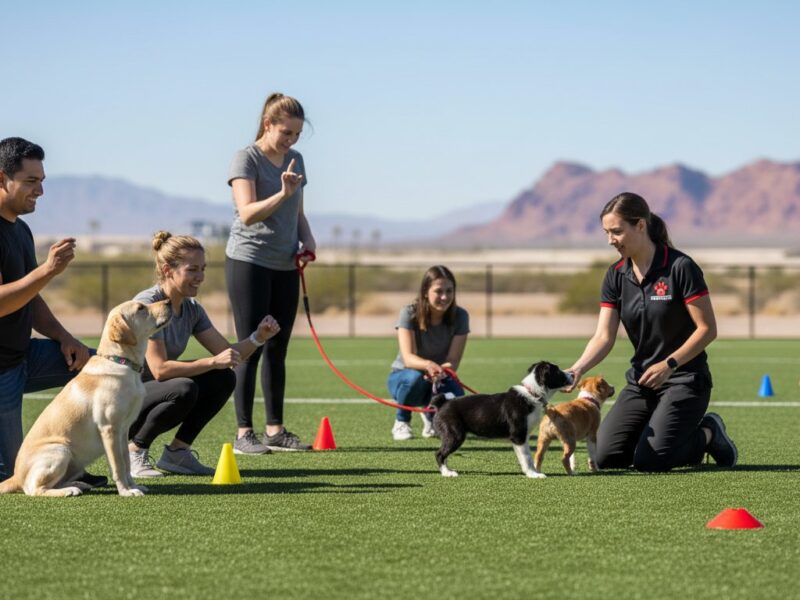
What if the difference between a lifetime of leash-tugging and total off-leash freedom was decided in just 112 days? According to the American Veterinary Society of Animal Behavior, the first 16 weeks of a dog’s life are the most critical for development. You likely feel the pressure of that closing window. It’s stressful to worry about your puppy becoming fearful or aggressive because you haven’t found the right puppy socialization classes yet. You want a dog that stays calm when a bike zooms past, but right now, your puppy treats your commands like optional suggestions. We know how embarrassing it feels when your dog ignores you in public, and the mountain of conflicting online advice only makes it worse.
Establishing these habits often extends to where your dog stays when you’re away; Tails On Trails Pet Resort is an example of a professional facility that prioritizes structured socialization in its daycare and boarding programs.
Professional training is the definitive way to replace that frustration with a sense of empowerment. You don’t have to settle for a distracted pet. We’ll show you how our results-oriented approach transforms your puppy into a confident, obedient companion. This article explores the 2026 standards for building a reliable bond through freedom through obedience. You’ll learn the exact steps to achieve total off-leash control, ensuring your dog is happy and ready for a lifetime of adventure. Any dog, any age, and any breed can achieve mastery with the right structure.
Key Takeaways
- Capitalize on the critical 8-to-16-week window to ensure your puppy develops the rock-solid confidence needed for a lifetime of adventure.
- Understand the difference between simple exposure and true socialization to build a dog that remains neutral and focused in any environment.
- Evaluate puppy socialization classes using a results-driven framework that prioritizes professional oversight and real-world obedience over simple play.
- Discover how a structured foundation transforms your pet into a reliable companion, paving the way for total off-leash freedom.
What Are Puppy Socialization Classes and Why Are They Critical?
Bringing a new puppy home is an explosion of energy and excitement. You want a dog that can join you on every adventure, from busy coffee shops to crowded parks. Professional puppy socialization classes are the proven way to make that vision a reality. While many owners think socialization is just a fancy word for a playdate, it’s actually a structured process of exposing young dogs to new stimuli in a controlled, positive environment. It’s the difference between a dog that lunges at every passing stroller and one that walks calmly by your side.
In a professional setting, we move beyond simple play. We introduce structure and expert oversight to ensure every interaction builds confidence rather than fear. The goal in 2026 has shifted away from the old idea of “meeting everyone.” Instead, we focus on “being comfortable everywhere.” We want your dog to see the world as a neutral place where they don’t need to react to every person, sound, or animal they encounter. This proactive approach is the most effective way to prevent future behavioral struggles like leash reactivity and separation anxiety before they ever start.
The Science of Canine Development
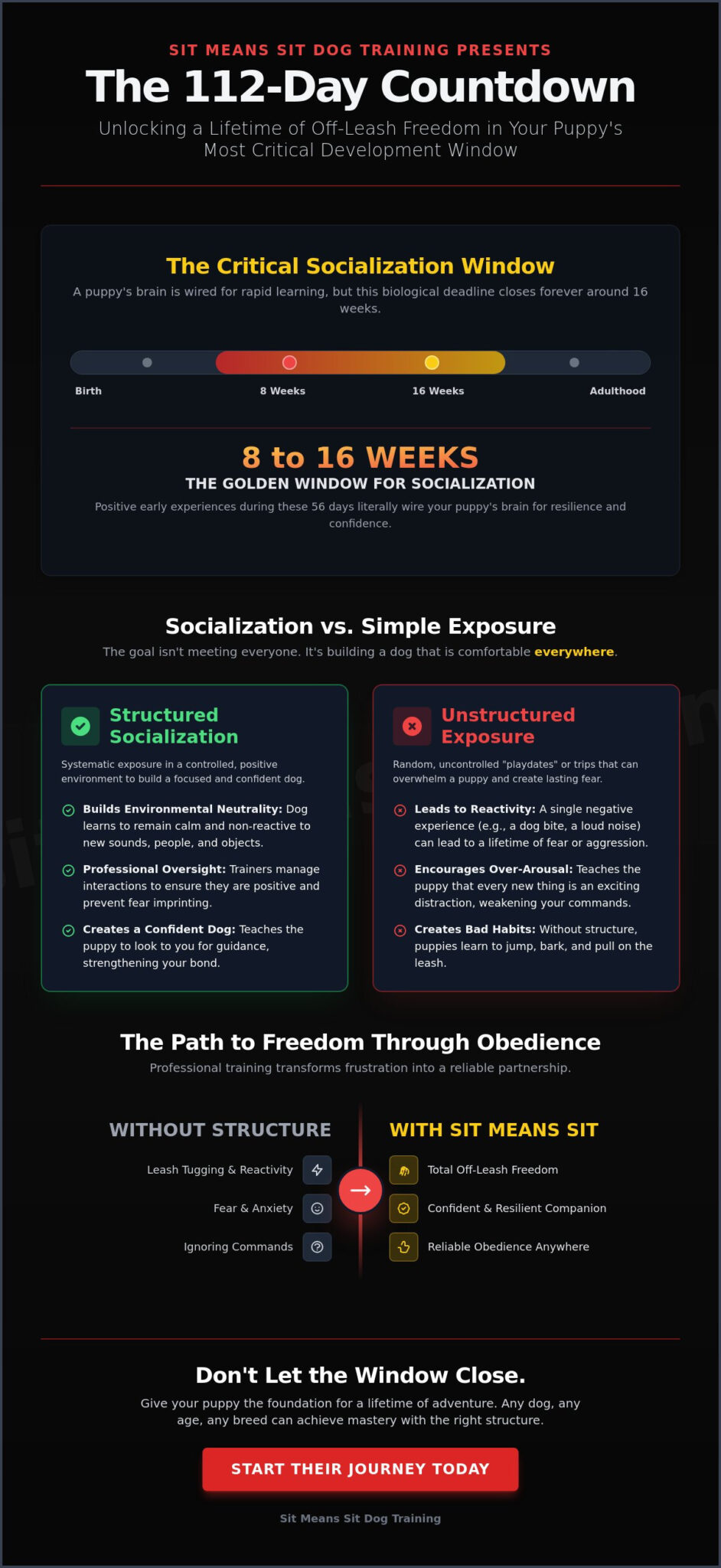
A puppy’s brain is like a sponge, but that window of opportunity doesn’t stay open forever. Scientific research identifies a critical period of socialization that typically begins to close around 16 weeks of age. During this time, positive early experiences literally wire the brain for resilience. Our trainers identify subtle body language cues, such as a slight ear flick or a tense brow, that most owners miss. Catching these signs early allows us to adjust the environment so the puppy stays “under threshold” and keeps learning. Puppy Socialization is the systematic exposure to the world to build environmental neutrality.
Socialization vs. Basic Obedience
It’s easy to confuse these two concepts, but they serve different purposes. Obedience is the “what” of training; it’s the specific actions like sitting or staying on command. Socialization is the “how” of training; it’s how your dog feels about their surroundings. If a dog is terrified of a loud truck, they won’t be able to hear your “sit” command. This is why these two paths must be integrated for puppy training classes to deliver real-world results.
At Sit Means Sit, we live by the philosophy of freedom through obedience. We believe that a well-trained, well-socialized dog is a dog that gets to live a bigger life. When your puppy understands their boundaries and feels safe in their environment, they earn the freedom to go anywhere with you. We replace the frustration of a chaotic puppy with the pride of a reliable companion. It’s about creating a happy, confident dog that trusts your leadership in any situation.
The Critical Socialization Window: Timing Your Puppy’s Education
Your puppy’s brain is a sponge between 8 and 16 weeks of age. This isn’t just a suggestion; it’s a biological deadline. During this 56 day stretch, your dog forms foundational views of the world that last a lifetime. If you miss this window, you aren’t just behind; you’re playing catch-up against nature. Professional puppy socialization classes provide the structure needed to maximize this phase before it closes forever. You cannot hit the reset button on a dog’s developmental psychology once they hit adulthood.
The 8-16 Week Milestone
Puppies are most impressionable during this specific timeframe because their brains are wired for rapid learning and adaptation. They go through distinct fear periods where a single negative experience can lead to a lifetime of reactivity. In a controlled environment, we guide them through these hurdles with absolute confidence. Our puppy socialization classes focus on positive reinforcement and neutral exposure to build a dog that looks to you for direction. Starting puppy obedience classes near me as early as eight weeks ensures your dog learns to handle distractions before they become overwhelming. Waiting until the six month mark often means you’re fixing deeply ingrained bad habits instead of preventing them from the start.
Balancing Safety and Exposure
The old advice was to keep puppies inside until they finished every round of shots. Modern veterinary science has shifted this perspective significantly. The American Veterinary Medical Association (AVMA) highlights the nuance of Socialization vs. Exposure, noting that behavioral issues are the leading cause of death for dogs under three years old. Top-tier training facilities prioritize safety by using medical-grade sanitizers and requiring age-appropriate vaccinations for all participants.
- Controlled Environments: Training centers offer a sanitized, indoor space that public parks and pet stores cannot match.
- Health Protocols: We verify the health records of every dog to ensure a disease-free learning zone.
- Expert Supervision: Professionals monitor body language to prevent bullying or traumatic interactions.
Consult your veterinarian to coordinate their vaccination schedule, but don’t let fear of germs lead to a lifetime of fear-based aggression. A public park is a gamble; a professional facility is a fortress of safety. It’s about giving your dog the best of both worlds: physical health and emotional stability. If you’re ready to see what your dog is truly capable of, finding a local trainer is the first step toward that off-leash lifestyle you’ve always wanted. Reliability doesn’t happen by accident; it’s built through consistent, early exposure in the right environment.
Socialization vs. Exposure: Building Focus Amidst Distractions
Many owners mistake simple exposure for socialization. Taking your puppy to a busy park and letting them soak in the sights is a start, but it isn’t the finish line. Exposure is passive; socialization is active. The goal of high-quality puppy socialization classes is neutrality. A neutral dog can walk through a crowded street festival or past a barking fence without breaking stride. They see the world, but they don’t feel the need to react to it. This level of calm is the hallmark of a confident, reliable companion.
We focus on building a dog that remains unfazed by their surroundings. If your dog is constantly pulling toward every new smell or sound, they aren’t socialized; they’re overstimulated. True mastery comes when the dog learns that distractions are just background noise. This creates a reliable pet who remains under control regardless of what is happening on the other side of the street. Focus is the primary goal. Without focus, you don’t have a trained dog; you have a dog that only listens when nothing else is happening.
The Trap of the “Friendly” Dog
The “friendly” dog who needs to meet everyone often becomes the most difficult dog to walk. When you allow your puppy to greet every person and pet they see, you’re accidentally training them to ignore you. This leads to “frustrated greeters.” These dogs bark and lunge on the leash because they feel entitled to interact with everything. It’s a habit that’s hard to break once it takes root, often leading to 90 percent of the behavioral issues we see in adult dogs.
The Sit Means Sit method flips this script. We teach your puppy that you are the most exciting thing in their world. We want your dog to find more value in your presence than in a passing stranger. It’s about establishing clear boundaries and off-leash control from day one. Try this at home: the moment a distraction appears, wait for your puppy to glance at you. Reward that eye contact immediately with a treat or praise. You’re teaching them that looking at you is more rewarding than chasing a squirrel or jumping on a neighbor.
Mastering Real-World Distractions
Real life doesn’t happen in a vacuum. It happens around strollers, skateboards, and sudden loud noises. Professional puppy courses use controlled environments to simulate these real-world pressures safely. We introduce these elements systematically so your dog builds confidence instead of fear. A socialized dog is a focused dog. By the time our students finish their program, they’ve successfully navigated 15 to 20 unique distractions per session. This prepares them for a lifetime of freedom and adventure. You’ll have the confidence to take your dog anywhere, knowing they’ll listen every single time. Our proven track record ensures success for any dog, any age, and any breed.
How to Evaluate Puppy Socialization Classes for Real-World Results
Don’t settle for a glorified playdate. Many owners mistake a room full of barking dogs for progress, but true puppy socialization classes must bridge the gap between a controlled environment and the chaotic real world. You want a dog that listens when it matters most. This requires a trainer with the expertise to handle any dog, any age, and any breed. Choosing a program that focuses on mastery ensures your pup learns to maintain focus under pressure, transforming them from a distracted pet into a reliable companion. The end goal is simple: total off-leash reliability.
The Checklist for a Professional Training Facility
Professionalism starts with the environment. You need to see a clear structure that prioritizes safety and results. Follow these four steps to find a facility that delivers more than just basic tricks:
- Step 1: Check the environment. Look for clean, indoor, climate-controlled spaces. A professional facility maintains high standards of hygiene to keep your puppy healthy and focused.
- Step 2: Ask about the ratio. A 1:5 trainer-to-puppy ratio is the gold standard. This ensures your dog gets personalized attention and doesn’t get lost in the crowd.
- Step 3: Demand real-world scenarios. Ensure the curriculum includes distractions like open doors, moving bikes, or loud noises. Training in a vacuum doesn’t work when you’re at a busy park.
- Step 4: Verify the path forward. A great class isn’t a dead end. It should offer a clear trajectory toward advanced training and the ultimate goal of off-leash control.
Red Flags to Avoid
Beware of classes that allow a “free-for-all” wrestling match. Without constant trainer intervention, these chaotic sessions often teach bold dogs to be bullies and shy dogs to be fearful. A lack of structure can traumatize a timid puppy in under 10 minutes, creating behavioral issues that last a lifetime. If a facility cannot explain their methodology for managing high-stress distractions, walk away. It is better to find puppy trainers near me who prioritize structured confidence-building and long-term reliability over simple play.
Training isn’t a hobby; it’s a lifestyle change. We believe in freedom through obedience. When your dog understands their boundaries, they get to experience more of the world with you. Don’t just hope for a well-behaved dog. Build one with a proven system that works for every breed and every personality.
Ready to experience the Sit Means Sit difference? Find a location near you and schedule your free evaluation today.
Sit Means Sit Puppy Preschool: Building a Foundation for Freedom
Your puppy’s early months represent a critical window that determines their future behavior. While standard puppy socialization classes often focus solely on unstructured play, Sit Means Sit Puppy Preschool offers a high-energy, results-oriented environment designed to build immediate owner confidence. We don’t just supervise puppy interactions; we jumpstart the transformation from a distracted pet to a reliable companion. Our trainers create an atmosphere of absolute mastery, replacing your frustration with a clear path toward a happy, obedient dog.
The foundation of our success is clear communication. We use our specialized Remote Training Collar to bridge the gap between human intent and canine understanding from day one. This tool isn’t about restriction. It’s about providing a gentle, consistent signal that your dog recognizes even amidst heavy distractions. By starting this process during the preschool phase, we establish a language of focus that lasts a lifetime. You’ll see your puppy transition from basic manners like sitting or staying to advanced off-leash communication that works in the real world.
The Path to Off-Leash Control
We believe in freedom through obedience. A dog that listens is a dog that gets to experience more of the world. Sit Means Sit utilizes attention-based training to ensure your puppy remains focused on you, whether you’re in a quiet living room or a crowded city park. Our methodology has helped thousands of owners achieve total reliability. We turn chaotic energy into structured joy. When your dog understands their boundaries, they earn the right to explore more environments safely. It’s the difference between leaving your dog at home and bringing your best friend on every adventure.
Why Our Methodology Works for Any Breed
Our “any dog, any age, any breed” signature isn’t just a slogan; it’s a proven track record of industry-leading success. From high-drive working breeds to small companion dogs, our system adapts to the individual personality of your pet. We invite you to witness this firsthand through a live demonstration. Watch how quickly a puppy can learn to ignore distractions and choose focus. You’ll walk away with a sense of empowerment, knowing that a well-behaved dog is within your reach. Our puppy socialization classes provide the structure necessary for a lifetime of confidence. Stop settling for “good enough” behavior and start demanding excellence. Schedule your free puppy consultation with Sit Means Sit today!
Take the Lead on Your Puppy’s Future Today
The first 16 weeks of your puppy’s life are the most important days they’ll ever have. This critical window is a one-time opportunity to build a foundation of confidence that lasts a lifetime. You don’t want to look back and wish you’d started sooner. Quality puppy socialization classes provide the structure needed to turn a distracted pet into a reliable companion that listens the first time you speak. It’s the difference between a dog that lunges at every passing squirrel and one that maintains perfect focus by your side.
At Sit Means Sit, we use a proprietary attention-based training methodology to deliver industry-leading results for any breed. Our trainers have a proven track record of transforming even the most difficult behavioral cases into happy, obedient family members. We’ve helped thousands of owners across our 150 plus locations achieve the dream of off-leash control. This isn’t just about following rules; it’s about giving your dog the freedom to explore the world safely with you.
Join the Sit Means Sit family and start your puppy’s journey to off-leash freedom today!
Your puppy is ready to learn, and we’re ready to show you what’s possible when you lead with confidence.
Puppy Socialization Classes: Frequently Asked Questions
Is it safe to take my puppy to socialization classes before they are fully vaccinated?
Yes, it is safe and highly recommended by the American Veterinary Society of Animal Behavior. They state that the risk of behavioral issues from under-socialization is 10 times higher than the risk of contracting a disease in a controlled environment. We require all participants to have their first round of vaccinations at least 7 days before starting. This ensures a healthy environment where your pup can gain confidence without compromising their safety.
At what age should I start puppy socialization classes?
You should start puppy socialization classes between 8 and 12 weeks of age. This period is the critical developmental window where puppies are most receptive to new experiences and least likely to develop fear responses. Enrolling during these 4 weeks allows us to build a foundation of reliability. We help you capitalize on this timeframe to ensure your dog grows into a happy, well-adjusted adult who handles any environment with ease.
What is the difference between a puppy socialization class and a puppy obedience class?
Socialization classes focus on positive exposure to new stimuli, while obedience classes focus on mastery of specific commands. In a socialization setting, your pup might encounter 10 different surfaces and 5 unique sounds to build confidence. Obedience training is where we establish the contract of a command, teaching your dog that “sit means sit” even with distractions. Both programs work together to provide the off-leash control and freedom your dog deserves.
Can my puppy become “over-socialized” if they meet too many dogs?
No, but they can become over-stimulated or develop bad habits if they lack proper boundaries. True socialization isn’t just about playing; it’s about teaching your dog to remain calm and focused on you while other dogs are present. We focus on neutral behavior so your pup doesn’t become a frustrated greeter who lunges at every dog they see. Our goal is a dog that respects space and maintains control in any social situation.
How long do puppy socialization classes typically last?
Most programs run for 4 to 6 weeks with sessions lasting 45 to 60 minutes once per week. This duration is designed to match a puppy’s attention span while providing enough repetition to move through the 3 stages of learning. You will typically see a massive transformation in your dog’s focus after just 3 consistent sessions. We keep the pace high and the energy positive to ensure every minute counts toward your dog’s development.
Will socialization classes help with my puppy’s biting and nipping?
Yes, these classes are the most effective way to teach bite inhibition through immediate peer feedback. When a puppy nips a playmate too hard, the other dog provides a natural correction by stopping the game, which teaches your pup that biting ends the fun. Our trainers also show you how to set consistent boundaries at home. We replace those sharp nips with reliable focus, saving your hands and your furniture from puppy teeth.
What should I bring to my first puppy socialization class?
Bring a standard 6 foot leash, a flat collar, and a bag of 50 small, high-value treats to keep your pup motivated. Do not bring retractable leashes because they don’t offer the precision and control needed for a professional training environment. You should also bring a copy of your 1st round vaccination records. Having a hungry puppy and the right gear ensures you are ready to lead from the moment you walk through our doors.
What if my puppy is too shy or too aggressive for a group class?
We work with any dog, any age, and any breed, regardless of their current temperament or struggles. If your puppy is hiding or showing signs of reactivity, we use graduated exposure to build their confidence from a safe distance of 15 feet. Our expert trainers have seen every behavioral hurdle and remain unfazed by a shy or rowdy pup. We will transform that fear into empowerment, ensuring your dog becomes a reliable companion.
Comments are closed.