
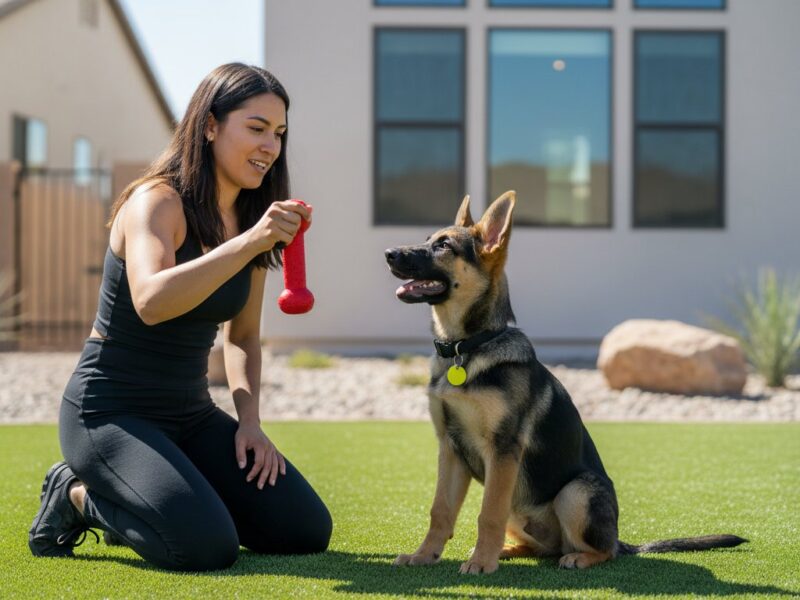
What if those painful needle-teeth punctures aren’t a sign of an aggressive dog, but a simple breakdown in communication? You’re likely exhausted from the constant nipping, the torn sleeves, and that nagging fear that your sweet pup is becoming a liability. It’s a common struggle, but with 4.5 million dog bites occurring in the U.S. annually, the stakes for early intervention have never been higher. In 2026, new regulations like Ohio’s Avery’s Law mean owners face stricter penalties and increased liability for behavioral issues from the very first incident.
We’re here to replace your frustration with absolute confidence and pride. This guide teaches you the professional Sit Means Sit approach to stopping puppy biting and nipping hard by establishing clear boundaries and reliable communication. We believe that discipline isn’t a restriction; it is the key to a more adventurous and joyful life for you and your dog. You’ll learn how to transform sharp nips into gentle play, ensuring your puppy remains a happy, well-behaved member of the family. We will walk through the exact steps to achieve reliable off-leash control and a harmonious household without the constant threat of a bite.
Key Takeaways
- Understand that mouthiness is a natural developmental stage rather than a behavioral flaw. Learn to view nipping as a communication gap that requires clear boundaries instead of just redirection.
- Master the Sit Means Sit methodology for stopping puppy biting and nipping hard by focusing on bite inhibition. Discover how to transform sharp pressure into a reliable, gentle mouth through consistent feedback.
- Identify why common advice like “yelping” often fails with high-drive dogs and how to avoid creating hand-shyness. Replace outdated myths with professional strategies that build trust and mastery.
- Implement immediate management techniques like “reverse time-outs” to remove the reward of your attention during nipping sessions. Take control of your puppy’s environment to prevent over-arousal before it starts.
- Recognize when to transition to professional puppy training classes to achieve total off-leash control. Building these early boundaries is the first step toward a lifetime of freedom and adventure with your dog.
Why Your Puppy Bites Hard: Understanding the Root Cause
Puppy biting isn’t a personality flaw. It’s a biological necessity. Your new companion doesn’t have hands to pick up a tennis ball or feel the texture of a rug, so they use their mouth for everything. This “exploration via mouth” phase is completely normal, yet it’s the primary reason owners feel overwhelmed and frustrated. You aren’t dealing with early-onset aggression; you’re dealing with a puppy that hasn’t learned the rules of the house yet. At Sit Means Sit, we see this every day, and we know that the first step toward mastery is understanding why it happens.
Many owners struggle with stopping puppy biting and nipping hard because they don’t recognize the “witching hour.” This usually occurs in the early evening when a puppy is overtired but doesn’t know how to settle down. Like a toddler having a meltdown, an overtired puppy enters “shark mode.” They lose all self-control and begin snapping at anything that moves. Without structure and boundaries, this behavior escalates from a nuisance to a painful habit. Recognizing this pattern allows you to intervene before the first tooth even touches your skin.
Exploration vs. Over-Arousal
Understanding the difference between a curious pup and an over-stimulated one is vital for effective training. Gentle mouthing is calm and exploratory, often occurring when your puppy is relaxed. In contrast, over-arousal is frantic and intense. You’ll notice physical red flags like glazed eyes, a stiff body, and rapid, relentless movement. Over-arousal is the point where a puppy’s brain shuts off and instinct takes over. When your dog reaches this state, standard redirection rarely works because they’re no longer capable of processing information. You need a definitive plan to reset their state of mind and regain control.
The Role of Teething and Physical Discomfort
Biology plays a massive role in how hard your puppy bites. The puppy teething timeline typically peaks between 4 and 6 months of age. During this window, adult teeth are pushing through sensitive gums, creating constant irritation and a desperate need for relief. Hard biting provides the intense pressure required to soothe that discomfort.
- Intense Pressure: Puppies seek out hard surfaces or moving targets to help “break” the teeth through the gums.
- Biological Outlets: Provide appropriate cooling chew toys or frozen treats to give them a safe way to manage pain.
- Consistency: Meeting their physical needs is essential, but it doesn’t excuse the behavior. You must remain consistent in enforcing your boundaries even during the height of the teething phase.
By addressing the physical cause and the mental state simultaneously, you stop reacting to the pain and start leading your dog toward better choices. This is the foundation of a happy, harmonious home.
The Mechanics of Bite Inhibition: Teaching a Soft Mouth
Bite inhibition is your puppy’s ability to control the force of their jaw. It is the difference between a playful nudge and a painful puncture. When we talk about stopping puppy biting and nipping hard, we are really talking about teaching your dog to manage their own strength. This is a foundational skill that every dog must master to live a safe, happy life in a human world. Without this control, even a well-intentioned dog can cause accidental harm during a high-energy game.
In a healthy litter, puppies are each other’s best teachers. They use a constant feedback loop to set boundaries. If one puppy chomps down too hard on a sibling’s ear, that sibling will let out a sharp yelp and immediately stop playing. This sudden loss of interaction is a powerful lesson. The biter learns that hard biting equals the end of the fun. Puppies removed from their mother and littermates before the eight-week mark often miss this critical education. They arrive at your home without a volume knob for their biting, making your job as their new leader even more vital.
How Puppies Learn from Each Other
The play-stop-play cycle is the gold standard of canine social education. Puppies are naturally social creatures that crave interaction. When a littermate shuns them for being too rough, it triggers a social fear of being left out. This isn’t about physical pain. It’s about the consequence of losing a playmate. By mimicking this natural cycle, you communicate in a language your dog understands. You decide when the game ends based on their behavior.
Continuing the Lesson at Home
Your goal is to generalize these lessons to human skin. Human skin is fragile, so the volume must be turned down even further. Initially, you aren’t aiming for total extinction of all mouthing. You’re teaching them to have a soft mouth. Once they understand jaw pressure, transition to a no biting rule. Consistency is your greatest tool. If one family member allows nipping while others forbid it, the puppy becomes confused and the behavior persists.
Establishing these boundaries early is the best way to prepare for puppy training classes where these skills are tested around distractions. We specialize in any dog, any age, any breed, ensuring that every pup learns the value of a soft mouth and the rewards of obedience. Discipline is not a restriction; it is the path to a more adventurous life. A dog that understands its own strength is a dog that can eventually enjoy the freedom of off-leash control.
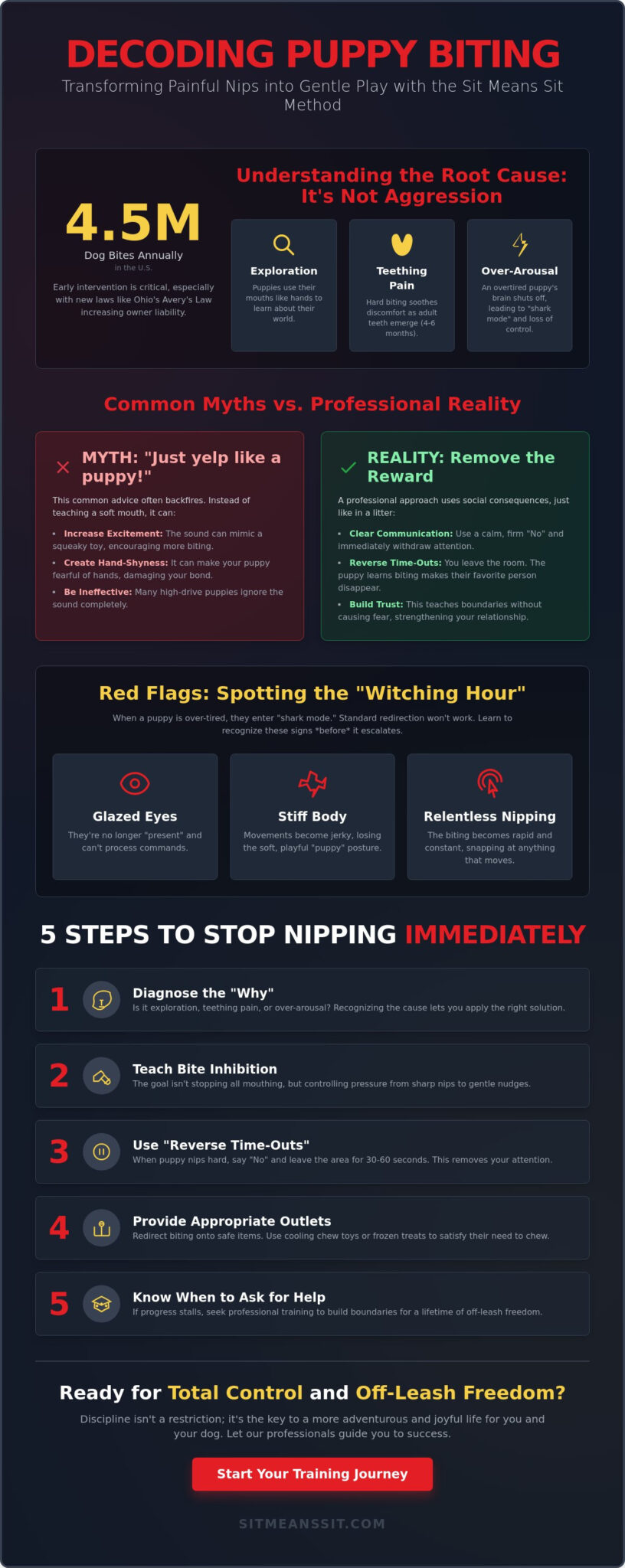
Common Puppy Biting Myths vs. Professional Training Reality
The internet is full of quick fixes for stopping puppy biting and nipping hard, but many of these suggestions are based on outdated myths that actually escalate the problem. If you’ve tried yelping like a littermate or tapping your dog’s nose, you’ve likely seen the behavior get worse, not better. These methods lack the clarity and consistency required for true behavioral transformation. At Sit Means Sit, we replace these confusing tactics with a proven system of clear communication. We believe that a happy dog is one that understands its boundaries. Mastery begins when you stop reacting to your puppy and start leading them.
Physical corrections, such as tapping the nose or holding the muzzle shut, are particularly damaging. These actions often lead to hand-shyness, where your dog flinches whenever you reach out to pet them or clip on a leash. A flinching dog is a stressed dog, and stress is a major barrier to learning. Our philosophy focuses on “freedom through obedience,” creating a relationship where the dog trusts your guidance. We don’t want a dog that fears our hands; we want a dog that respects our boundaries. This approach works for any dog, any age, any breed, ensuring that your household becomes a place of joy rather than a battleground of sharp teeth.
Why Yelping Can Make Biting Worse
Many trainers suggest letting out a high-pitched “ouch” or yelp when teeth touch skin. For a soft-tempered puppy, this might work. For a high-drive or confident breed, it’s like pouring gasoline on a fire. High-pitched noises mimic the sounds of wounded prey. Instead of stopping, your puppy’s predatory drive kicks in. They get more excited. They bite harder. They think you’ve turned into a giant squeaky toy. Stop the squealing. Use a calm, firm marker word to communicate that the behavior is unacceptable. This maintains your authority and keeps the puppy’s arousal levels under control.
The Problem with Constant Redirection
Redirection is another common trap. If your puppy bites your ankle and you immediately shove a chew toy in their mouth, you haven’t fixed the problem. You’ve rewarded it. You just taught your puppy that biting you is the fastest way to start a game of tug. This creates a behavior chain where the puppy purposefully nips to get the toy. It’s a cycle of manipulation, not a lesson in obedience. We use the “Nothing in Life is Free” approach to establish leadership. Your puppy must earn your attention and their toys through calm behavior and following commands. This switch from passive redirection to active boundary setting is what creates lasting results.
5 Actionable Steps to Stop Puppy Nipping Immediately
Stop reacting and start leading. You don’t need to wait for your puppy to grow out of it. By taking decisive action today, you can gain control and restore peace to your home. These five steps provide a clear roadmap for stopping puppy biting and nipping hard. They focus on managing energy levels and establishing a definitive contract of behavior. When you are consistent, your puppy learns that gentle behavior is the only way to keep the fun going.
- Manage the Environment: Prevent over-arousal before it starts. Use baby gates or a leash indoors to keep your puppy out of high-traffic zones where they get over-stimulated by movement.
- Execute the Reverse Time-Out: If teeth touch skin, the interaction stops instantly. You are the reward; removing yourself is the most powerful consequence you can provide.
- Structure Your Play: Use toys that create distance. This keeps your hands safe while satisfying the puppy’s biological drive to hunt and tug.
- Reward the Quiet Moments: Don’t just wait for a mistake. Give a treat and calm praise when your puppy is sitting quietly or playing gently with their own toys.
- Enforce Rest: A cranky puppy is a biting puppy. Ensure they are getting the sleep their developing brain requires to process the day’s lessons.
The Reverse Time-Out Technique
Removing yourself from the room is the most effective way to communicate a boundary. Puppies are social creatures that crave your presence and interaction. When you leave, you take the “reward” of play away. This creates a clear cause-and-effect relationship in the puppy’s mind. The moment teeth touch skin, the fun ends and you walk away. Do not yell or push the puppy; simply stand up and exit the area for 30 to 60 seconds. This brief reset is often enough to lower their arousal levels and signal that the previous behavior was a mistake.
Structured Play and Long Toys
Keep your hands out of the strike zone by using flirt poles or long tug toys. These tools allow you to engage in high-energy play while maintaining a safe distance between your skin and those needle-sharp teeth. Don’t just wave the toy around aimlessly. Use it as a reward for following a command. Ask for a “sit” or “down” before starting the game. This reinforces the idea that you are the leader of the activity. End the session while the puppy is still focused and calm. If you wait until they are frantic, you’ve missed the window for a successful lesson.
The Power of Enforced Nap Time
Most puppy biting is fueled by pure exhaustion. Puppies need between 18 and 20 hours of sleep per day to process information and grow. A puppy that has been awake for two hours straight is likely in “shark mode” because they are over-tired. They are exactly like a cranky toddler who needs a nap but refuses to stop moving. Identify the signs: frantic running, jumping, and hard nipping. When you see these, it is time for a crate break. A quiet, dark space allows their nervous system to reset, leading to a much happier and more manageable companion.
If you find yourself struggling despite these steps, it is time for professional guidance. Our puppy training classes are designed to help you master these techniques in real-world environments. We have a proven track record of transforming even the mouthiest puppies into focused, reliable companions. Don’t let the nipping steal your joy; take the first step toward a well-behaved dog today.
Achieving Total Control: The Path to a Well-Behaved Dog
Mastering the early stages of stopping puppy biting and nipping hard is about more than just saving your skin. It’s the first step in a lifelong contract of communication. When you establish boundaries now, you’re laying the groundwork for a dog that respects your leadership in every environment. This foundation makes the transition into puppy training classes seamless and successful. We don’t just want a dog that doesn’t bite; we want a dog that can thrive in the real world. Discipline is the key to that lifestyle.
Professional intervention is often the difference between a dog that barely listens and one that is a joy to live with. If your puppy isn’t responding to basic home training, don’t wait for the problem to escalate. Early correction is far more cost-effective. According to 2026 industry data, training for severe aggression can cost 40% more than standard obedience training. By acting now, you ensure your dog stays on the path toward becoming a reliable companion. Our industry-leading programs are designed for any dog, any age, any breed. We replace your frustration with a sense of empowerment and pride.
Why Professional Puppy Preschool Matters
Controlled socialization is a vital component of early development. In a professional setting, trainers supervise play to ensure it remains healthy and balanced. We identify the subtle difference between high-energy play and potential behavioral red flags that an owner might miss. This proactive approach often prevents the need for an expensive dog behaviorist later in life. You get the peace of mind that comes from knowing your puppy is learning correctly from the start. It is an investment in your dog’s long-term happiness.
Transitioning to Off-Leash Reliability
The ultimate goal of all our work is off-leash control. Imagine walking through a busy park or a crowded street with absolute confidence that your dog will listen. This level of mastery starts with the focus and attention you build during the puppy stage. Comprehensive dog obedience training transforms your pet into a partner that can handle any distraction. You deserve the freedom that comes with a perfectly behaved dog. Stop struggling and start leading. Contact a dog trainer near me today for a free evaluation and take the first step toward a happier life together.
Take Command of Your Puppy’s Future Today
You now have the tools to transform your household from a “shark zone” into a place of harmony. Remember that stopping puppy biting and nipping hard isn’t about suppression; it is about providing the clear structure your dog craves. By managing their environment and enforcing consistent boundaries through techniques like the reverse time-out, you replace confusion with mastery. These early steps are the foundation for a lifetime of adventure and joy.
Sit Means Sit brings over 25 years of proven results to your doorstep. We specialize in any dog, any age, any breed, ensuring that your pet achieves industry-leading off-leash control. You don’t have to settle for torn clothes and constant frustration. Choose the path of freedom through obedience and watch your puppy thrive as a confident, happy member of the family. We’ve seen every behavioral challenge imaginable, and we know exactly how to help you succeed.
Frequently Asked Questions
Is my puppy biting because they are aggressive?
No, your puppy is likely exploring their world, not showing true aggression. Most nipping is a result of a communication gap or over-arousal during play. At Sit Means Sit, we work with any dog, any age, any breed, and we know that almost all puppy biting is a normal developmental stage. You can replace your fear with confidence by establishing clear boundaries and consistent leadership right now.
How long does the puppy biting phase usually last?
The most intense biting typically lasts until your puppy finishes teething, which is usually around 6 months of age. The teething phase peaks between 4 and 6 months as adult teeth push through the gums. While the physical urge to chew is biological, the habit of biting humans can be stopped much sooner with consistent training. Stay disciplined and your puppy will learn to settle quickly.
Should I hit my puppy on the nose when they bite hard?
Never hit your puppy on the nose as it causes hand-shyness and breaks the bond of trust. Physical corrections often lead to a dog that flinches when you reach out to pet them or clip on a leash. This fear hinders the learning process and can lead to defensive behavior later in life. Use a “reverse time-out” to show that biting ends the fun without using any physical force.
Why does my puppy bite my ankles when I walk?
Your puppy bites your ankles because the movement triggers their natural predatory or herding instincts. This behavior is especially common in high-drive breeds that are bred to move livestock. To stop this, keep a long toy like a flirt pole nearby to redirect that energy toward a safe target. You want to satisfy their drive to chase without allowing your heels to become the prey.
Can I use a squirt bottle to stop my puppy from nipping?
No, you should avoid using squirt bottles because they only address the symptom, not the cause. Aversive tools often lead to a fearful dog that hides their behavior rather than learning control. Focus on stopping puppy biting and nipping hard by establishing a marker system. This builds a happy relationship based on trust and clear expectations rather than fear of a water spray.
What is the best toy for a puppy that bites hard?
The best toys for hard-biting puppies are made from reinforced nylon or natural rubber to withstand needle-sharp teeth. Look for cooling chew toys that you can freeze to provide relief for sore gums during the peak teething months. Long tug toys are also excellent because they create distance between the puppy’s mouth and your hands. Investing in durable equipment now prevents frequent replacements and keeps your puppy focused on safe items.
Does puppy biting mean they will be an aggressive adult dog?
Puppy biting is usually a developmental phase, but it requires active management to prevent future problems. According to the CDC, approximately 4.5 million dog bites occur in the U.S. each year. New 2026 regulations like Avery’s Law emphasize that owners are liable for their dog’s actions from the very first incident. Training today ensures your puppy grows into a safe, reliable adult with perfect off-leash control.
When should I seek professional help for my puppy’s biting?
Seek professional help the moment you feel frustrated or if your puppy’s biting persists despite your efforts. Early intervention between 8 and 16 weeks is the most cost-effective way to prevent lifelong behavioral issues. Professional trainers provide the structure needed for total control in high-stress environments. Don’t wait for a serious incident to occur before you decide to take command of your dog’s education.
Comments are closed.