
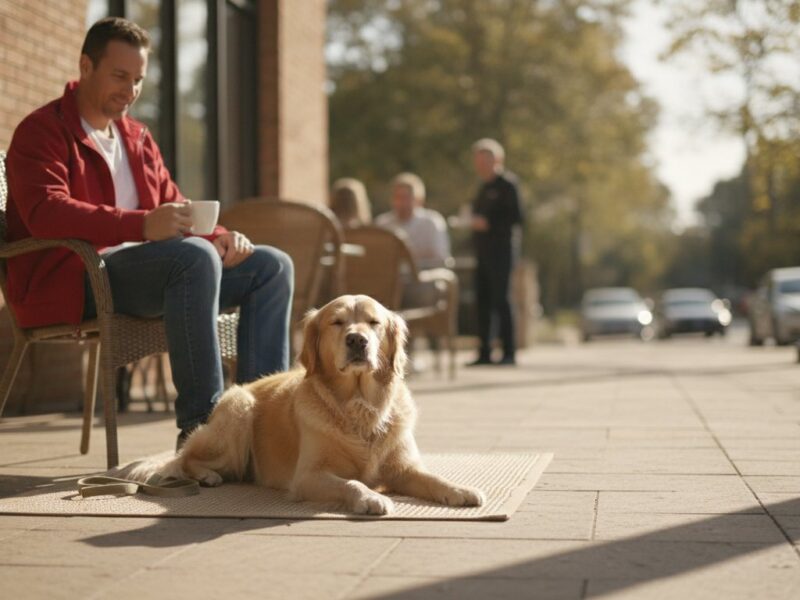
Nearly 40 percent of dog owners in 2026 report that they cannot control their pets in public spaces. If you find yourself constantly managing a dog that paces the house or jumps on every guest who enters, you are likely feeling more exhausted than empowered. Training a dog to settle on command is the definitive solution to these behavioral struggles. It is the difference between leaving your dog at home and having a calm partner who can handle any environment with ease.
We know you want the freedom to bring your dog to local patios or busy parks without the stress of over-excitement. It’s frustrating when your dog’s energy dictates your lifestyle and limits your adventures. This guide promises to help you master the settle command, turning that frantic energy into a focused state of relaxation. You will learn the exact methodology to build a peaceful household and gain the confidence to lead your dog through high-stimulation areas. Get ready to replace your frustration with pride as we break down the structure needed for a truly liberated life together.
Key Takeaways
- Shift your perspective from forcing a physical position to cultivating a genuine emotional state of relaxation in your dog.
- Master the foundational protocol for training a dog to settle on command by establishing a dedicated “place” for immediate focus.
- Break free from the “treat-loop” trap and learn why clear, consistent feedback is more effective than constant food rewards.
- Utilize the Remote Training Collar to gently guide your dog’s attention back to you, even in the most chaotic environments.
- Discover how professional Board and Train programs accelerate transformation, giving you a perfectly behaved companion in record time.
What Does It Mean to Train a Dog to Settle on Command?
Training a dog to settle on command is the ultimate goal of modern leadership. It is not about forcing your pet into a rigid “down” or demanding a robotic “stay” until they break. Instead, settling is the act of a dog choosing to relax their body and mind on a specific cue. This is the “holy grail” of dog obedience training because it addresses the animal’s emotional state rather than just their physical position. When you master this, you aren’t just managing a pet; you are liberating them from their own over-arousal. This shift provides immense peace of mind for you and vital mental health benefits for your dog. It reduces cortisol levels and replaces frantic pacing with purposeful rest. The history and evolution of Dog training show that the most effective methods focus on clear communication. Settling is the pinnacle of that communication.
The ‘Off-Switch’ Every Dog Needs
Many high-drive breeds struggle to find their natural “off-switch” without professional guidance. They are biologically wired to work. Without a clear directive, that energy often turns into destructive chewing, nuisance barking, or obsessive pacing. Training a dog to settle on command builds essential impulse control into their daily life. It teaches them that they don’t need to be “on” every second of the day. This structure prevents separation anxiety and ensures your home remains a sanctuary rather than a chaotic gym for a hyperactive pet. It is about giving your dog the permission to stop working and start resting.
Settle vs. Stay: Understanding the Difference
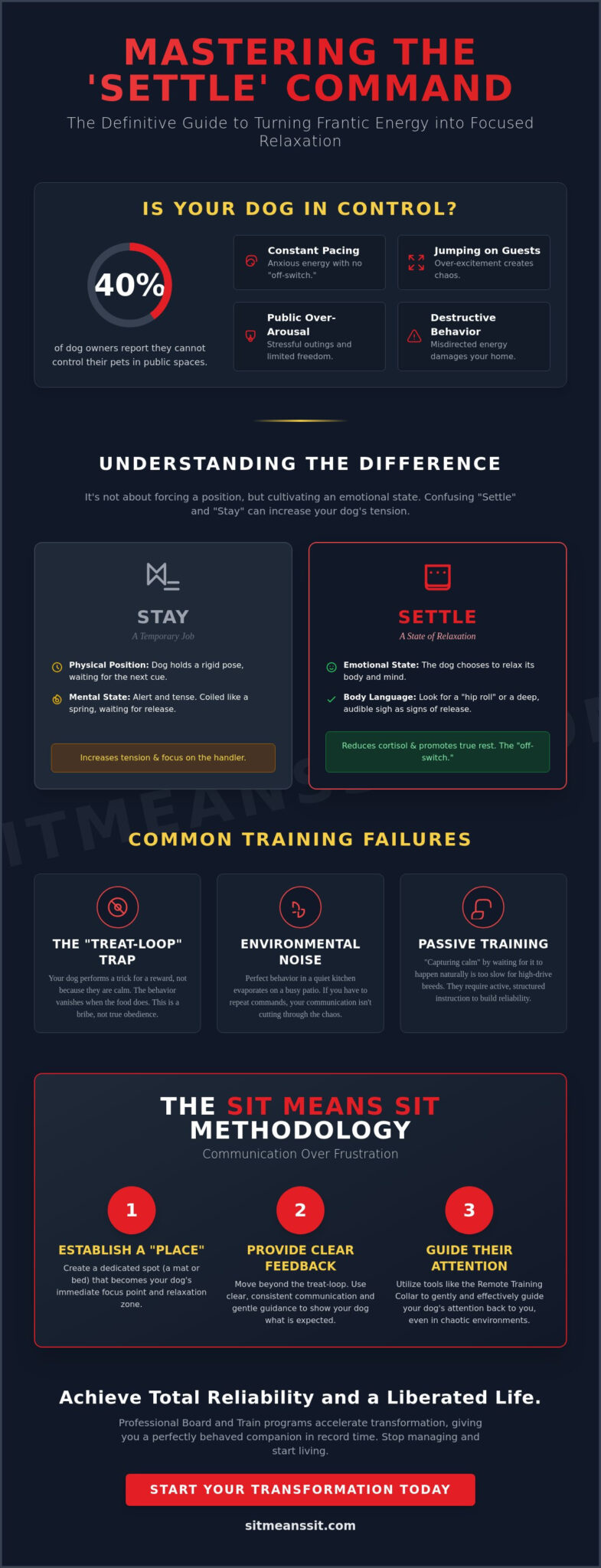
A “stay” is a temporary job. It is a rigid position where the dog is waiting for the next instruction. A “settle” is a long-term state of relaxation. You aren’t asking them to hold a pose; you are asking them to power down. You will know they have achieved a true settle when you see specific body language markers. Look for the “hip roll” where they shift their weight to one side or a deep, audible sigh. These are signs of physiological release. Using a “stay” command when you really want a “settle” can actually increase your dog’s tension. They remain coiled like a spring, waiting for your release word, which is the opposite of the relaxation you need.
Why Most ‘Settle’ Training Fails in the Real World
Most owners walk away from training because they believe their dog is simply “too hyper” for professional results. This is a fundamental misunderstanding of canine psychology. Your dog isn’t broken; they are just waiting for a clear leader to provide a roadmap. The most common reason for failure in the real world is the “treat-loop” trap. If your dog only lies down when you are holding a piece of chicken, they aren’t actually relaxed. They are performing a trick for a paycheck. True success in training a dog to settle on command requires the dog to reach an emotional state of calm without needing a constant bribe. When the food disappears, the behavior shouldn’t vanish with it.
Environmental “noise” also plays a massive role in these failures. You might have a perfect dog in your quiet kitchen, but that focus often evaporates the moment you step onto a busy patio. This happens because the communication gap between owner and pet is too wide. When the world gets loud and distracting, your signals must become clearer and more definitive. If you find yourself repeating commands or raising your voice in frustration, you have already lost the battle. Your dog needs a communication system that cuts through the chaos of the outside world.
The Problem with Purely Passive Training
Many online resources suggest “capturing” calm by waiting for your dog to lie down naturally and then offering a reward. While this might work for low-drive dogs, it is often far too slow for high-energy breeds. These dogs don’t have a natural “off” button to capture. You must provide active, structured instruction to build true reliability. Without a definitive agreement on what “settle” means, your dog will begin to negotiate with you. They might sit but keep their eyes darting around, or lie down while keeping their muscles coiled and ready to bolt. For a look at basic methods, you can review Teaching Your Dog to Settle, but remember that high-drive pets require more than just passive suggestions.
Overcoming High-Distraction Environments
Real-world reliability only comes through proofing. Your dog must learn that the command means the same thing in a quiet hallway as it does at a crowded park. This is where most DIY efforts crumble. Owners often struggle to identify the specific environmental triggers that cause their dog’s energy to spike. A professional dog behaviorist can pinpoint these stressors and help you navigate them with confidence. If you are tired of your dog ignoring you when guests arrive or pacing at the park, it is time to explore professional training options that bridge these gaps. Structure is the path to freedom, and getting the right help ensures that freedom is permanent for both you and your dog.
The Sit Means Sit Methodology: Communication Over Frustration
Structure is the bridge to a joyful life. We don’t view discipline as a restriction. It is the very thing that allows your dog to participate in your world. Training a dog to settle on command requires a shift from pleading to leading. When your dog understands exactly what is expected, their anxiety disappears. They no longer have to guess. They simply follow. This clarity replaces owner frustration with a sense of absolute empowerment. You aren’t just giving orders. You are building a partnership based on mutual respect and clear boundaries. It’s about replacing the chaos of over-excitement with the calm of a job well done.
While many basic positive reinforcement techniques to teach dogs to settle provide a good starting point, they often fall short when adrenaline is high. We move beyond the lure. We want a dog that listens because they understand the directive, not because they are hunting for a treat. This creates a reliability that works in the kitchen, the park, or a crowded festival. Training a dog to settle on command is not a suggestion; it is a definitive agreement between you and your pet. This level of mastery ensures that your dog remains a focused, relaxed partner in any environment you choose to explore.
The Power of Remote Training Collars
Think of the Remote Training Collar as a digital tap on the shoulder. It isn’t about punishment. It is about redirection. In a world full of distractions, your dog’s focus can easily fracture. The collar provides a gentle, low-level signal that cuts through the noise. It guides them back to a relaxed state without you needing to raise your voice. This tool is essential for achieving total off-leash reliability. It ensures that your command is heard, regardless of whether your dog is six inches or sixty feet away. It provides the steady feedback necessary for true transformation.
Building a Language of Mastery
Effective instruction requires a specific rhythm. Use short, punchy commands. Leave no room for confusion. Your timing must be precise to reinforce the settle state the moment it occurs. We focus on creating a rhythmic cadence in every session. This steady practice transforms the command into a second-nature response. You aren’t just teaching a behavior. You are installing a lifestyle change. Mastery comes from consistency. When you provide reliable feedback, your dog provides reliable results. This is the path to a calm companion and a more adventurous life.
How to Train Your Dog to Settle: A Step-by-Step Protocol
Mastery is not an accident. It is the result of a deliberate, structured process. To move beyond the living room, you must follow a protocol that builds reliability in the face of chaos. Start by establishing a designated “place” or mat. This physical boundary acts as a visual anchor for your dog, signaling that it is time to power down. Use your Remote Training Collar to gently guide your dog’s attention back to the mat whenever their focus fractures. Do not rush to name the behavior. Introduce the “settle” cue only once the dog begins to show physical signs of relaxation. Training a dog to settle on command requires you to be a patient but firm leader who values results over lures.
Phase 1: Creating the Foundation at Home
Begin in a quiet environment where you can control every variable. Lead your dog to their mat and wait for them to choose relaxation. The hip roll is the key indicator of a true settle, occurring when the dog shifts their weight to one side and releases muscle tension. If your dog attempts a “break-out” by leaving the mat without permission, do not lose your cool. Simply use a low-level tap from the collar to redirect them back to the task. This consistent feedback clears the confusion. It teaches the dog that the mat is a place of security and rest, not a temporary suggestion. Phase out physical lures early to ensure they respond to your verbal command alone.
Phase 2: Introducing Real-World Distractions
Once your dog is reliable at home, you must proof the behavior in the real world. Move the training to the front yard, then eventually to a local park. You are looking to create “controlled chaos” by introducing variables like bouncing balls or other dogs at a distance. This is where most DIY training fails, but it is where our methodology excels. If you find the transition to high-distraction areas difficult, puppy training classes offer the perfect environment to practice these skills under professional supervision. These classes provide the social pressure needed to test and solidify your dog’s impulse control.
Reliability is forged in the heat of distraction. By gradually increasing the level of environmental noise, you transform the settle from a parlor trick into a life-saving skill. You deserve a dog that can handle the pressure of a busy world. If you are ready to stop managing your dog’s energy and start leading it, schedule a session with a professional trainer today. Structure is the only path to the adventurous, stress-free life you imagined when you first brought your pet home.
Achieving Total Reliability Through Professional Training
DIY methods often stall when life gets busy. You might see progress in your living room, but that focus often shatters the moment a squirrel runs by or a guest knocks. This is where professional expertise changes the game. An immersive board and train program is the fastest route to a calm dog. By placing your pet in a structured environment with an expert, you skip the months of trial and error. A professional trainer sets the foundation for you, proofing the behavior against high-level distractions that are nearly impossible to replicate alone. Training a dog to settle on command becomes a seamless reality rather than a distant goal.
Private lessons follow this foundation to ensure you are as capable as your dog. You will master the specific timing and tool usage required to maintain this high standard at home. Expert instruction replaces your uncertainty with absolute confidence. You aren’t just learning how to handle a leash; you are learning how to communicate with authority. This transition from frustration to empowerment is the core of our methodology. We don’t just fix dogs. We transform the lives of owners who are tired of being held hostage by their pet’s energy.
Why Professional Instruction Matters
Most owners accidentally reward hyperactive behavior without realizing it. You might think you are soothing your dog, but you are often reinforcing their anxiety. Professional trainers identify these subtle communication gaps immediately. We customize the training plan to your dog’s unique personality, ensuring the approach resonates with their specific motivations. The long-term value of this investment is a dog that can go anywhere with you. Whether it is a crowded outdoor market or a quiet family dinner, your dog remains a focused partner. This reliability is the hallmark of true mastery.
Your Journey to a Transformed Lifestyle
Imagine a future where your dog is a welcome guest at any outdoor cafe. You no longer scan the horizon for triggers or worry about over-excitement. Instead, you feel a deep sense of pride as the owner of the best-behaved dog on the block. This isn’t a fantasy. It is the direct result of choosing discipline over chaos. Take the first step toward a more adventurous life today. Replace the pacing and attention-seeking with the peace of a reliable settle. Your dog is ready to listen. You just need to provide the structure they crave. Victory is within reach, and the liberation of a well-trained dog is waiting for you.
Reclaim Your Freedom with a Calm Companion
Your dog is capable of greatness. You just need to provide the roadmap. By focusing on the emotional state of relaxation rather than just physical obedience, you unlock a new level of partnership. We have shown that the secret to real-world success lies in moving past food bribes and embracing clear, consistent feedback. Training a dog to settle on command is the most important investment you’ll make in your pet’s well-being and your own peace of mind.
Stop settling for a lifestyle limited by over-excitement. With over 25 years of professional training experience, Sit Means Sit provides results-oriented programs tailored for every breed and age. Our specialized Remote Training Collar methodology ensures your dog listens because they understand, regardless of the distractions around them. You deserve the pride of a perfectly behaved pet on every patio and in every park.
Contact Sit Means Sit today for a free evaluation and start your journey to a calmer dog!
It’s time to replace your frustration with empowerment. A more adventurous and joyful life is waiting for both of you. Take the lead today.
Frequently Asked Questions
Is my dog too old to learn how to settle on command?
Your dog is never too old to learn new boundaries. Senior dogs often crave the mental stimulation and clarity that professional structure provides. Whether you choose private lessons or an immersive board and train, we focus on the animal’s current ability and build from there. Transformation is possible at any stage of life because the desire for a clear leader is universal across all breeds and ages.
Can I train a settle without using treats or food rewards?
You absolutely can train a settle without relying on food rewards. In fact, moving away from the “treat-loop” trap is essential for achieving true emotional relaxation. We use the Remote Training Collar to provide clear, physical feedback that doesn’t depend on your dog’s appetite. This ensures they listen because they understand the directive, not because they are hunting for a snack. It builds a bond based on respect rather than bribery.
How long does it typically take to see results with settle training?
Results vary based on the intensity of the program you choose. Training a dog to settle on command can yield immediate improvements in focus during a single private lesson. However, total reliability in high-distraction environments usually takes a few weeks of consistent practice. For those who want the fastest possible transformation, our board and train programs set the foundation in record time, allowing you to enjoy a calm companion sooner.
What should I do if my dog gets up before I release them?
Immediate redirection is the only way to maintain your standards. If your dog breaks the command before you give the release word, use a gentle signal from the Remote Training Collar to guide them back. Don’t get angry or raise your voice. Simply remain calm and insistent. Consistency is the key to showing your dog that the command is a definitive agreement, not a suggestion they can ignore when they get bored.
Is the settle command the same as the ‘place’ command?
These commands are related but serve different purposes. “Place” refers to a specific physical location, like a mat or cot, where the dog must stay. “Settle” refers to the emotional state of relaxation they should achieve while there. We often use them together to give the dog a clear boundary. The “place” provides the physical zone, while the “settle” command tells them it is time to power down their mind and body.
How do I use a Remote Training Collar to help my dog relax?
The Remote Training Collar acts as a clear communication tool to shift your dog’s focus from a distraction back to you. It functions like a digital tap on the shoulder. When your dog becomes over-aroused by a guest or another animal, a low-level signal reminds them of their current task. This gentle redirection helps them bypass the frantic energy and choose a relaxed state. It is the most effective way to achieve off-leash mastery.
Can this training help a dog with severe separation anxiety?
Developing a reliable settle is a powerful tool for managing separation anxiety. It teaches your dog how to be calm and independent even when you aren’t the center of their attention. By providing liberation through structure, you help your dog feel secure in their environment. This confidence reduces the panic often associated with being alone. It transforms their emotional state from one of constant worry to one of disciplined relaxation.
What are the best environments to practice the settle command?
Success begins in a low-distraction environment like your living room. Once the foundation is solid, you must move to more challenging areas to ensure total reliability. Practicing in the front yard or at a local park is crucial for training a dog to settle on command in the real world. Our group classes provide the perfect “controlled chaos” to test these skills under professional supervision, ensuring your dog remains focused regardless of what is happening around them.
Comments are closed.